Search hotels in Tunisia on Booking.com
Tunisia has three destinations that dominate the beach holiday conversation: Hammamet on the Gulf of Tunis, Sousse halfway down the east coast, and Djerba island in the deep south. All three are established, well-served by direct flights, and capable of supporting a week or more of beach-based travel. But they are meaningfully different from each other, and choosing the right one depends heavily on what you want from the trip.
This guide sets them against each other across the factors that actually matter for planning.
At a Glance
| Hammamet | Sousse | Djerba | |
|---|---|---|---|
| Distance from Tunis | 65 km | 140 km | 490 km |
| Airport | Tunis-Carthage (1hr) or Enfidha (30min) | Enfidha (35km) | Djerba-Zarzis (20min) |
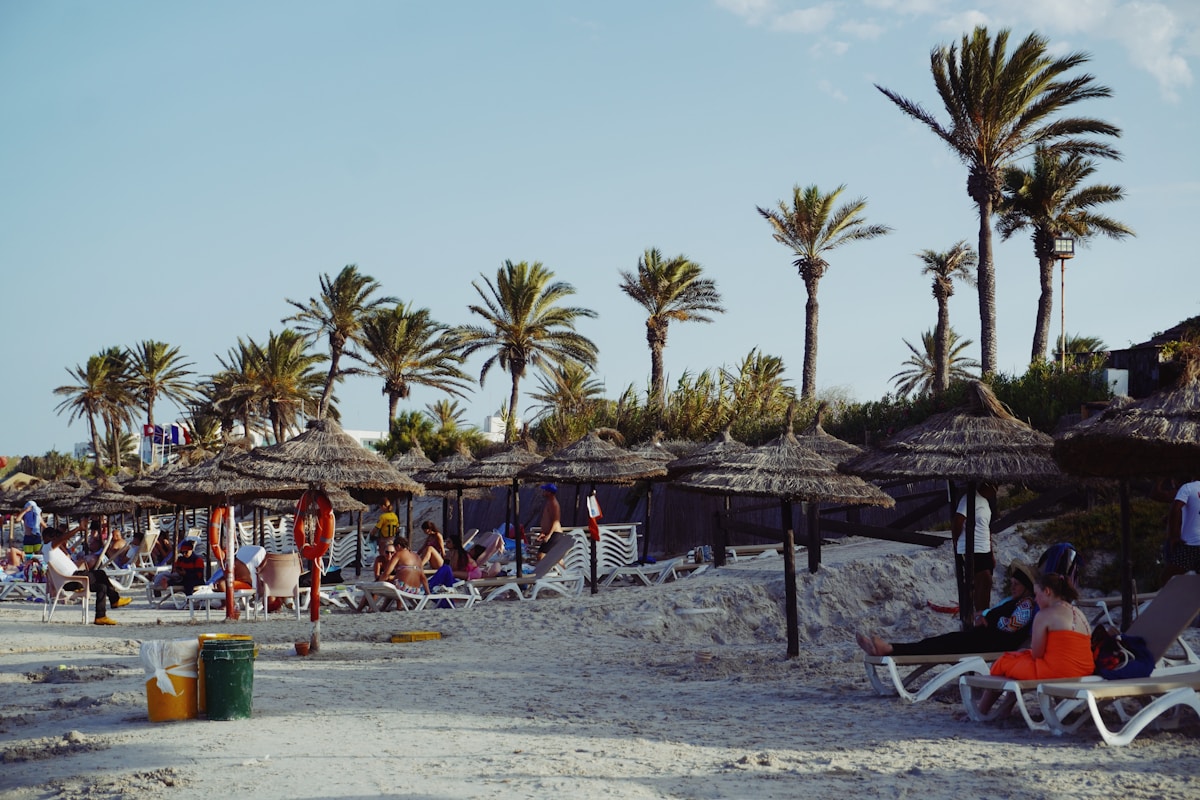
| Beach quality | Good sandy beach | Narrower, more urban | Wide, shallow, very calm |
| Medina / culture | Historic compact medina | UNESCO-listed medina | Houmt Souk + El Ghriba |
| Resort infrastructure | Strong (Yasmine zone) | Strong (Port El Kantaoui) | Very strong |
| Best for | First-time visitors, culture + beach | City life + beach combination | Island life, best beach, families |
Hammamet
What it is
Hammamet occupies a position on the Gulf of Tunis that has attracted European visitors since the 1920s. The original town has a compact, well-preserved medina on a small headland, surrounded by jasmine gardens and cap-stone walls. The tourist zone - which expanded enormously from the 1970s onward - stretches north and then further north to the purpose-built resort district of Yasmine Hammamet.
The beach
The main Hammamet beach runs north from the medina headland - sandy, reasonably wide, with the deep blue of the Gulf of Tunis. The water here is warmer than Atlantic equivalents but can get waves in windy conditions. Yasmine Hammamet has its own beach with a purpose-built marina and a more polished resort atmosphere.
Culture and medina
Hammamet’s medina is one of the few in Tunisia that sits directly on the waterfront. It is small enough to cover in two hours - the kasbah, the Great Mosque, and the souk - but the setting, with the sea visible from the walls, is unique on the Tunisian coast. The Villa Sebastian gardens (now an open-air theatre) give a sense of the early 20th-century aesthetic that drew European artists and writers here.
For guided medina walks, boat trips, and day excursions from the resort zone, see our Hammamet tours guide.
Who it suits
Hammamet suits first-time visitors to Tunisia who want a combination of genuine historic atmosphere and accessible beach infrastructure. It is the closest major resort to Tunis, making it easy to combine a day or two in the capital with beach time. The resort zone appeals to package holiday travellers who want a polished base.
Typical hotel prices (as of 2026)
- Budget guesthouses in old Hammamet: 80–130 TND per night
- Mid-range 4-star resort hotels: 200–400 TND per night
- 5-star resort (Yasmine zone): 400–700 TND per night
Sousse
What it is
Sousse is a city first and a beach destination second. It has a population of around 270,000, a university, working port and industrial zone, and a city centre with all the amenities of a functioning Tunisian metropolis. It also has one of the most important medinas in the country - UNESCO-listed in 1988 - and a beach strip that runs north from the medina to the polished marina resort at Port El Kantaoui.
The beach
The main Sousse beach is narrow and urban by the standards of Djerba or even Hammamet - it runs alongside the road and the resort hotel strip, and in summer gets crowded with both tourists and domestic visitors. Port El Kantaoui, about 10 kilometres north of the city, has a more pleasant beach environment and the organised marina gives it a resort character that the city beach lacks.
Culture and medina
The Sousse medina is larger and more historically significant than Hammamet’s. The Ribat - a fortified Islamic monastery on the seafront - is the most striking monument, open to visitors for approximately 8 TND as of 2026. The Great Mosque, the kasbah, and the catacombs (one of the largest early Christian burial complexes in North Africa) round out a full cultural day. The archaeological museum in the kasbah houses one of the best collections of Roman mosaics in Tunisia.
Who it suits
Sousse suits travellers who want city energy alongside beach access - visitors who don’t want to choose between culture and coast, and who are happy using a living city rather than a purpose-built resort zone as their base. It works well for travellers who have already seen Hammamet and want something with more depth.
Typical hotel prices (as of 2026)
- Central city hotels: 100–180 TND per night
- Beachfront 4-star: 200–350 TND per night
- Port El Kantaoui resort hotels: 250–500 TND per night
Djerba
What it is
Djerba is an island of approximately 514 square kilometres in the Gulf of Gabès, connected to the mainland by a Roman-era causeway (still in use) and served by its own airport. It is the largest island in North Africa and has been a tourist destination since the 1960s. The northern coast - particularly the Midoun and Sidi Mahres zones - is where the hotel strip runs, with some of the widest and shallowest beaches in the country.
The beach
The beaches on Djerba’s north coast are the widest, calmest, and shallowest of the three destinations. The Gulf of Gabès is exceptionally shallow - in places you can walk 300 metres from shore in waist-deep water - and the sandy seafloor shelves very gently. This makes the water extremely safe for children and non-swimmers. The sand is fine and pale; the sea colour is the light turquoise associated with shallow water over sand.
Culture
Djerba’s cultural assets are different from Hammamet and Sousse. Houmt Souk, the main town, has a functioning market and the old port, but no medina in the classic sense. The most significant cultural site is the El Ghriba synagogue - one of the oldest in the world and still a functioning pilgrimage destination - on the island’s interior. The Gurgi mosque in Houmt Souk and the Borj el Kebir fort (entry approximately 5 TND as of 2026) are the other main monuments.
The island also has a distinctive craft tradition in textiles, with weavers producing the mergoum rug style specific to the Djerba and southern Tunisia region. A Djerba island half-day tour covers El Ghriba, Houmt Souk, and the pottery village at Guellala in around four hours. For the full range of Djerba excursions and activities, see our Djerba tours guide.
Who it suits
Djerba suits families who prioritise calm water and resort facilities, travellers who want a true island atmosphere, and beach purists who care more about sand quality than cultural depth. Direct flights from European cities make it the easiest Tunisia destination to reach without transiting Tunis. It also suits travellers who want to combine beach time with a day trip to Tozeur and the Sahara south — Sahara desert tours from Tunis can be booked in advance if you plan to head inland.
Typical hotel prices (as of 2026)
- Small guesthouses in Houmt Souk: 80–140 TND per night
- Beachfront 4-star: 250–450 TND per night
- Large 5-star all-inclusive resorts: 450–800 TND per night
Head-to-Head: Key Decisions
If you care most about beach quality
Djerba wins. The water is calmer, the sand is wider, and the shallow Gulf conditions make it exceptional for families or anyone who wants maximum time in the sea. Hammamet comes second; Sousse third.
If you care most about culture
Sousse wins. The UNESCO medina is more substantial than Hammamet’s, and the city’s working character gives it a depth that resort towns lack. Hammamet comes second for the medina setting if not the scale.
If you want to combine with a Tunis visit
Hammamet is the most practical. One hour from the capital on a good road, it works as a few days of beach time before or after exploring Tunis, Carthage, and Sidi Bou Said. Sousse also works but is further. Djerba is too far south to combine efficiently with Tunis.
If you’re travelling with young children
Djerba is the strongest choice for the water conditions and the concentration of family resort infrastructure. Yasmine Hammamet comes close.
If you want the most authentic feel
Sousse has the most city life. Its medina is a working space for locals, not primarily a tourist route. Hammamet’s old town retains genuine character. Djerba’s resort zone is the most heavily developed.
Combining Destinations
Tunisia is compact enough that combining two of these destinations in a single trip is straightforward:
- Tunis + Hammamet: The natural first trip to Tunisia - capital and coast in one week.
- Sousse + El Jem: The train south from Sousse to El Jem takes 45 minutes; one of the best amphitheatres in the world, then back to the coast.
- Djerba + Tozeur + Sahara: A southern Tunisia combination - island beach, then a drive or flight to the Sahara edge.
For transport between any of these, see our guide to getting around Tunisia. For accommodation once you’ve chosen, see our guides: where to stay in Hammamet, where to stay in Djerba, and where to stay in Sousse. Make sure you have travel insurance for Tunisia in place before you travel.
Plan Your Trip
✈️ Book your flights to Tunisia 🛡️ Get travel insurance 📱 Stay connected with an eSIM 🚗 Rent a car