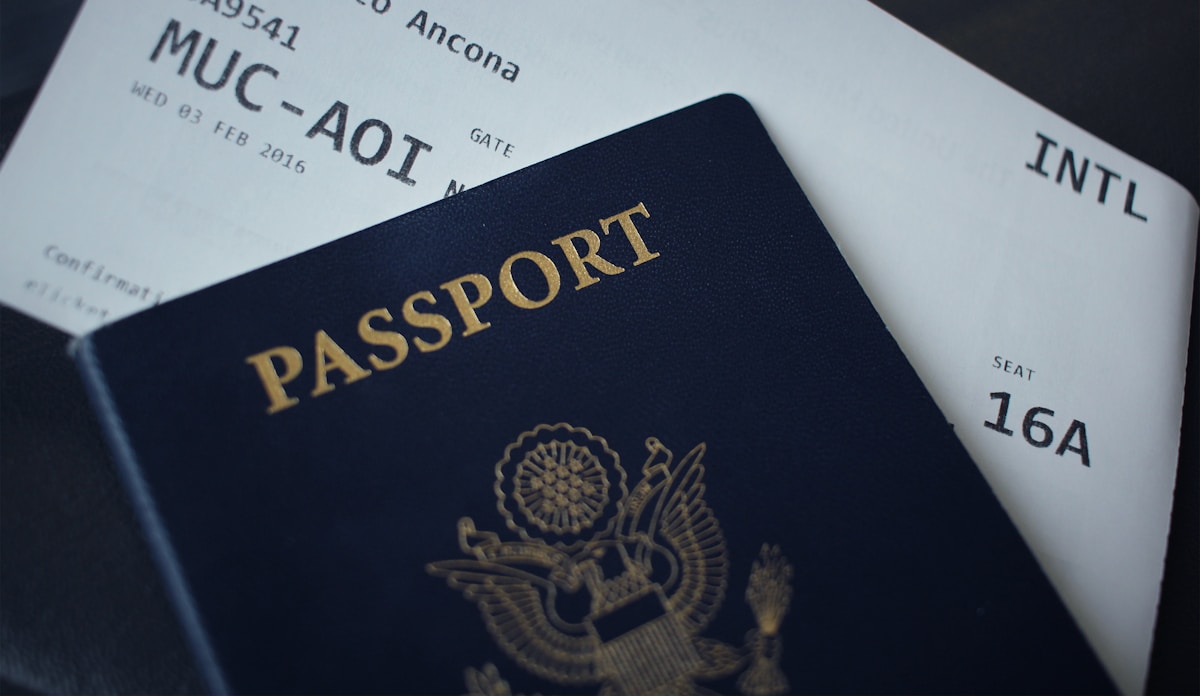
Visiting Tunisia is straightforward for the majority of nationalities — most European, North American, and Gulf travellers can enter without a visa for short stays. That said, entry rules differ by passport, and requirements change. All information below is as of 2026; verify current requirements with the Tunisian embassy or consulate in your country before travelling.
Before You Travel — Checklist
- Valid passport — minimum six months’ validity beyond your return date
- Visa or entry authorisation — check your nationality in the table below; if required, apply before booking non-refundable travel
- Travel insurance — EKTA covers medical emergencies, trip cancellation, and lost luggage from around €25 for a one-week trip — sort this before you book
- Proof of accommodation — hotel booking confirmation or host address in Tunisia
- Onward travel ticket — return flight or confirmed exit from Tunisia
Entry Requirements by Nationality — 2026 Table
The table below summarises the entry rules for the most commonly travelling nationalities. “Visa-free” means no advance visa is needed; you receive an entry stamp on arrival. “Visa on arrival” means you can obtain a short-stay visa at the airport. “Visa required” means you must apply in advance through a Tunisian embassy or the e-visa portal.
| Nationality | Entry Type | Max Stay (approx.) |
|---|---|---|
| France | Visa-free | 90 days |
| Germany | Visa-free | 90 days |
| Italy | Visa-free | 90 days |
| Spain | Visa-free | 90 days |
| Netherlands | Visa-free | 90 days |
| Belgium | Visa-free | 90 days |
| Sweden | Visa-free | 90 days |
| Poland | Visa-free | 90 days |
| Other EU member states | Visa-free | 90 days |
| United Kingdom | Visa-free | 90 days |
| Switzerland | Visa-free | 90 days |
| Norway | Visa-free | 90 days |
| United States | Visa-free | 90 days |
| Canada | Visa-free | 90 days |
| Australia | Visa-free | 90 days |
| New Zealand | Visa-free | 90 days |
| UAE | Visa-free | 90 days |
| Saudi Arabia | Visa-free | 90 days |
| Kuwait | Visa-free | 90 days |
| Qatar | Visa-free | 90 days |
| Bahrain | Visa-free | 90 days |
| Oman | Visa-free | 90 days |
| Egypt | Visa-free | 90 days |
| Morocco | Visa-free | 90 days |
| Jordan | Visa-free | 90 days |
| Algeria | National ID card accepted | 90 days |
| Libya | National ID card accepted | 90 days |
| Japan | Visa-free | 90 days |
| South Korea | Visa-free | 90 days |
| Brazil | Visa-free | 30 days |
| Mexico | Visa-free | 30 days |
| China | Visa required (e-visa available) | Per visa |
| India | Visa required (e-visa available) | Per visa |
| Russia | Visa required (e-visa available) | Per visa |
| South Africa | Visa required (e-visa available) | Per visa |
This table is for general guidance only, accurate as of September 2026. Always verify with the Tunisian embassy or official government sources before booking.
Visa-Free Entry — Full Details
Europe
Citizens of all European Union member states enter Tunisia visa-free for up to 90 days. This includes France, Germany, Italy, Spain, the Netherlands, Belgium, Sweden, Poland, and all other EU member states. UK citizens retain visa-free access post-Brexit, also for up to 90 days. Swiss and Norwegian citizens are also included under visa-free arrangements.
North America
US and Canadian citizens do not need a visa for Tunisia and can stay for up to 90 days. A visa stamp or entry permit is typically issued on arrival at no charge for eligible nationals.
Australia and New Zealand
Australian and New Zealand passport holders enter visa-free for up to 90 days. Your passport must be valid for at least six months beyond your planned departure date from Tunisia.
Arab League Countries
Citizens of Arab League member states benefit from simplified entry arrangements. Many can enter visa-free, including nationals of Jordan, the UAE, Saudi Arabia, Kuwait, Bahrain, Qatar, Oman, Egypt, and Morocco. Libyan and Algerian citizens can cross with a valid national identity card. Specific stay durations under bilateral agreements vary; check the exact allowance with your country’s Tunisian embassy.
Other Nationalities with Visa-Free Access
Japan, South Korea, and several Latin American nations also have visa-free or simplified-access arrangements with Tunisia. If your country is not listed in the table above, check the Tunisian Ministry of Foreign Affairs or the nearest Tunisian consulate for the most current list.
Visa on Arrival
Tunisia offers visa-on-arrival facilities at Tunis-Carthage International Airport and certain other ports of entry for some nationalities not covered by full visa-free access. The visa on arrival is typically issued for a short stay (often 30 days). You will need:
- A passport valid for at least six months
- A completed arrival card (provided on the aircraft or at the border)
- Proof of sufficient funds for your stay
- Proof of accommodation booking
- A return or onward travel ticket
- The applicable visa fee (paid in local currency or sometimes in euros — confirm the current fee before travel)
Search hotels in Tunisia on Booking.com
Not all nationalities are eligible for visa on arrival; some must obtain a visa in advance from a Tunisian embassy. Verify your specific eligibility before departing.
Tunisia E-Visa
Tunisia’s e-visa system allows eligible nationalities to apply for entry authorisation online before travel. The e-visa is suitable for tourism, short business visits, and transit.
How to Apply
- Visit the official Tunisian e-visa portal (search “Tunisia e-visa official” to locate the current government portal; URLs change with ministerial updates).
- Complete the online application form with your personal and travel details.
- Upload supporting documents: passport scan, recent photograph, accommodation confirmation, and return flight details.
- Pay the application fee online. Fees and processing times vary by nationality.
- Receive your e-visa approval by email. Print a copy to present at the border.
Processing time: Allow a minimum of five business days; ten days is safer during peak travel periods. Do not book non-refundable travel until you have received your e-visa.
Travel Insurance for Your Tunisia Entry
Tunisia does not formally require proof of travel insurance as a condition of entry. However, we strongly recommend purchasing comprehensive cover before you travel — for reasons that go beyond the border formality.
Why insurance matters for Tunisia specifically:
- Healthcare costs for visitors: Tunisia’s public hospitals are designed for Tunisian nationals. As a visitor, you will typically be directed to private clinics where consultation fees run from approximately TND 200–500 (€60–150) and overnight stays can reach TND 1,500–3,000 (€450–900) per night.
- Medical evacuation: If you require repatriation — for example following a road accident or a serious illness in a southern region far from Tunis — evacuation costs can exceed €20,000. Most standard health insurance policies from home do not cover international medevac.
- Trip cancellation: Flight cancellations and last-minute travel disruptions to Tunisia are more common than on major hub routes; a cancellation clause protects your non-refundable bookings.
- Baggage and documentation loss: Losing your passport or baggage at Tunis-Carthage or Djerba airport is the kind of event that turns a holiday into an expensive ordeal without insurance backup.
We recommend EKTA travel insurance via /go/insurance-tunisia/ for Tunisia trips. EKTA offers policies covering medical expenses, cancellation, personal liability, and baggage — from around €25 for a one-week trip. Cover is available for EU, UK, and many other nationalities. Apply online before departure; the policy is issued instantly by email.
Tip: If you are visiting Tunisia on a package tour, check whether your tour operator’s liability insurance covers you as an individual — it usually does not. A standalone policy is the safest approach.
Required Documents at Entry
Whether entering visa-free or with a visa, you will typically be asked to provide:
- Passport — valid for at least six months beyond your intended stay
- Completed arrival card — provided on your aircraft or at the immigration hall
- Proof of accommodation — a hotel booking confirmation or host’s address in Tunisia
- Proof of onward travel — a return flight or confirmation of departure
- Proof of sufficient funds — a bank statement or cash; there is no fixed official minimum, but immigration officers have discretion to query travellers who appear unprepared for their trip
- Yellow fever certificate — only if you are arriving from an endemic country (see FAQ below)
Passport Validity Requirements
Your passport must be valid for a minimum of six months beyond your intended departure date from Tunisia. An expired or near-expiry passport will result in denial of boarding at departure airports and refusal of entry at Tunisian immigration. Check your passport expiry well before booking — renewing a passport takes time, and peak periods can extend processing.
Maximum Stay Duration
Most visa-free nationals are permitted 90 days within a 180-day period. Some bilateral agreements limit stays to 30 days; the exact allowance depends on your nationality. Entry for a second consecutive 90-day stay immediately after the first is at the discretion of the immigration officer and is not guaranteed. Do not plan itineraries that rely on automatic re-entry.
Extending Your Stay
If you need to remain in Tunisia beyond your initial permitted period, contact the Direction Générale de l’Immigration in Tunis before your permitted stay expires. Extensions are not guaranteed, take several days to process, and require documentation including accommodation confirmation, proof of funds, and a valid reason for the extension. Overstaying without authorisation results in fines calculated per day and may affect future visa applications for Tunisia and other countries.
Yellow Fever Certificate
A valid yellow fever vaccination certificate is mandatory if you are arriving directly from a yellow fever-endemic country as listed by the World Health Organisation. Travellers arriving from Europe, North America, Australia, or most Middle Eastern or Asian countries are not affected by this requirement. If you have recently transited through or visited an endemic country, check whether Tunisia considers that transit to trigger the requirement.
Customs Allowances
As of 2026, the standard Tunisian customs allowances for arriving passengers include approximately:
- Tobacco: up to 200 cigarettes, or 100 cigarillos, or 50 cigars, or 250g of tobacco (adults only)
- Alcohol: up to 2 litres of wine and 1 litre of spirits (adults only; alcohol must be for personal use)
- Perfume: up to 50ml of perfume and 250ml of eau de toilette
- Gifts and personal effects: goods up to a value of approximately TND 1,000 per person
- Currency: there is no limit on importing foreign currency, but amounts above approximately EUR 10,000 (or equivalent) must be declared at customs. Tunisian dinars (TND) cannot legally be imported or exported — exchange only inside Tunisia
Drone equipment, satellite phones, and certain electronic items may require advance authorisation or declaration. Check with Tunisian customs if you are travelling with specialist equipment.
Land Border Crossings from Algeria and Libya
Algeria
Tunisia shares a long western border with Algeria. The main crossings used by travellers are:
- Bab el-Khadra / Hazoua (south) — commonly used for Sahara route travel
- Ghardimaou (north) — used for transit between northern Tunisia and north-eastern Algeria
- Ain Draham area (north-west) — popular with hikers in the Kroumirie region
Border crossing hours vary and can change without notice. Crossing times at busy periods can be long. Check the current status of your intended crossing with local sources before travel, particularly if travelling to or from southern Algeria where security conditions require monitoring.
Libya
The main crossing point is Ras Jdir in the south-east, connecting Tunisia to the Libyan town of Zuwara. This crossing has seen repeated closures due to security conditions in Libya; check current travel advisories from your government (UK FCDO, US State Department, or equivalent) before planning a land border crossing from or into Libya. Most Western governments currently advise against all but essential travel to Libya.
Airport Arrival at Tunis-Carthage (TUN)
Tunis-Carthage International Airport is the main entry point for international arrivals. The process on landing is typically:
- Fill in your arrival card on the aircraft or at stands inside the arrivals hall (some airlines distribute them mid-flight)
- Join the immigration queue — lanes are separated for Tunisian nationals, Arab nationals, and all other passports
- Present your passport and documents to the border officer — you may be asked about accommodation, duration of stay, and purpose of visit
- Customs hall — collect baggage before proceeding through the green channel (nothing to declare) or red channel (goods to declare). Customs officers carry out random checks
- Arrivals hall — a currency exchange counter, SIM card vendors, and pre-arranged transfer desk are all in the main arrivals area. Agree taxi prices before leaving the terminal, or use a pre-booked airport transfer. An eSIM for Tunisia activated before landing removes the need to find a vendor in the arrivals hall.
Frequently Asked Questions
See the FAQ section below for the most commonly asked entry questions. For anything not covered here, contact the Tunisian embassy in your country or the Tunisian Ministry of Foreign Affairs directly before travel. Requirements can change, and this guide should not be used as a substitute for official advice.
All visa rules, fees, and entry conditions listed here are approximate as of September 2026. Verify current requirements with the Tunisian embassy or official government sources before booking travel.
Plan Your Trip
✈️ Book your flights to Tunisia 🛡️ Get travel insurance for Tunisia 📱 Stay connected with an eSIM 🚗 Rent a car in Tunisia