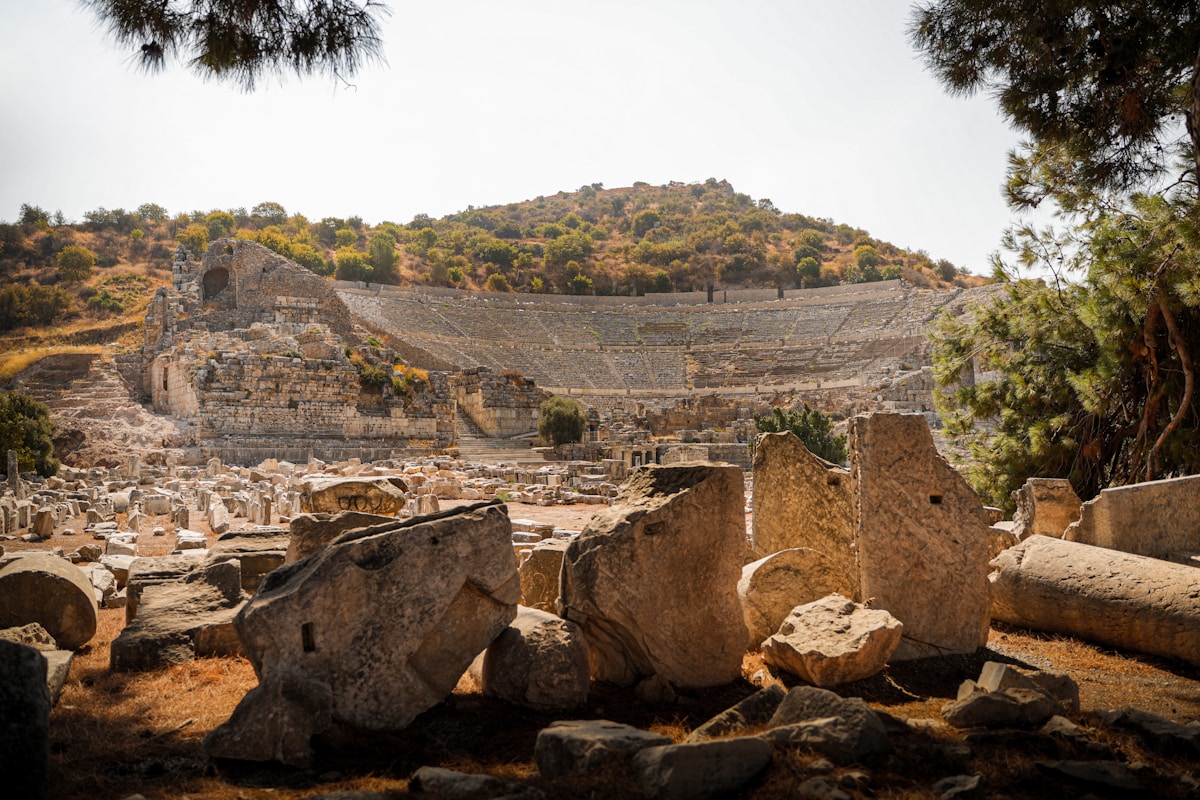
El Jem is home to one of the best-preserved Roman amphitheatres in the world, and for many visitors it is the single most striking monument in Tunisia. The scale of the structure, rising above the surrounding town, makes an immediate impression - and unlike some archaeological sites, the amphitheatre is easy to understand and impressive even without deep historical knowledge.
It is also one of the easiest major sites in Tunisia to visit as a stop on a coastal or inland route, which makes it a practical addition to a wide range of itineraries. Hiring a car in Tunisia gives the most flexibility for combining El Jem with Kairouan and Mahdia in the same day.
Why visit El Jem?
The amphitheatre is genuinely impressive by any measure. It was built in the 3rd century AD and could hold around 35,000 spectators - comparable in scale to the Colosseum in Rome. The fact that it has survived so well, still standing in a small modern town, adds to the impact of seeing it in person.
For travellers who are not deeply interested in archaeology, El Jem is often still one of the most memorable stops on a Tunisia trip precisely because its scale makes an immediate visual statement.
What to see at El Jem
The amphitheatre
The main structure is the highlight and deserves proper time. Visitors can explore the arena floor, the seating areas, and the underground passages that once held animals and gladiators. The underground section gives a strong sense of how the amphitheatre operated and is one of the better-preserved examples of this type of arena infrastructure anywhere in the Mediterranean world.
El Jem Archaeological Museum
A small but worthwhile museum near the amphitheatre containing Roman mosaics and artefacts excavated from the surrounding area. It adds useful context to what you see in the main structure and is worth an hour if you are spending a full morning at the site.
Practical information
Entry fees: As of 2026, the combined ticket for the amphitheatre and the Archaeological Museum costs approximately 12 TND for adults. Children under 12 enter at a reduced rate. The combined ticket is sold at the amphitheatre entrance.
Opening hours: The site opens at 07:00 in summer (approximately April to October) and 08:00 in winter (November to March). It closes around 19:00 in summer and 17:00 in winter. These hours are approximate and can shift seasonally — confirm locally or with your accommodation on arrival.
Photography: Photography is permitted throughout the amphitheatre and museum. The underground passages are poorly lit so a phone torch helps.
Best time to visit: Early morning or after 16:00 in summer is strongly recommended. Temperatures in July and August can exceed 40 degrees Celsius at the site. Spring (March to May) and autumn (September to November) are the most comfortable seasons for visiting central Tunisia.
Getting to El Jem
By train from Tunis: The train from Tunis Ville station takes approximately 2.5 to 3 hours and costs approximately 15 to 20 TND for a second-class seat as of 2026. El Jem is served by trains on the main Tunis-Sfax line, with several daily departures. The amphitheatre is a 5-minute walk from El Jem station.
By train from Sousse: From Sousse the train takes approximately 1 hour and costs around 4 to 8 TND. This makes El Jem a natural half-day excursion from the coast.
By louage: Shared taxis (louages) run from Sousse, Sfax, and Mahdia. From Sfax the journey is around 45 minutes. Louages drop passengers near the main road rather than directly at the site, but the walk into town is short.
By car: El Jem sits on the GP1 coastal highway and is a natural stop on a drive between Sousse and Sfax. A hire car is particularly useful for combining El Jem with Kairouan in a single day — the two sites are around 90 km apart and not well connected by public transport.
Where to stay near El Jem
El Jem itself is a small market town with limited accommodation. Most visitors use a nearby city as a base:
Search hotels in El Jem on Booking.com
Mahdia (35 km east) is the closest and most characterful option — a coastal town with a historic medina, fishing port, and small hotels. Guesthouses and mid-range properties start from approximately 80 to 150 TND per night. A quieter alternative to the bigger resort towns.
Sfax (65 km south) is a large working city with a functional medina and a wider range of hotels at all price points, from budget options around 60 TND to business hotels in the 120 to 180 TND range. Practical for travellers heading further south after El Jem.
Sousse (100 km north) is the main resort city and has the largest hotel selection in the region. Useful if you are building a trip that combines El Jem with beach time and the coastal sites around Sousse and Hammamet.
If you prefer to stay in El Jem itself, there are a small number of basic guesthouses in the town centre from approximately 50 to 80 TND per night, which suits an early-morning visit before the heat builds.
El Jem International Symphonic Music Festival
Each July, the amphitheatre hosts the El Jem International Symphonic Music Festival - classical concerts performed inside the ancient arena under the open sky. The stone walls provide natural acoustics that no purpose-built venue can replicate. Tickets are released annually and performances sell out, so book well in advance if visiting during the festival.
How much time do you need?
Two to three hours is enough for the amphitheatre and museum. A half day allows a more relaxed visit with time for lunch in the town.
Who El Jem suits best
El Jem works well for:
- Travellers who want a visually striking heritage stop on a coastal route.
- People combining it with Kairouan for an inland day trip.
- Visitors who are not deeply history-focused but want the experience of a major Roman monument.
- Anyone passing through by train who wants an easy stop rather than a full day excursion.
For full practical details - tickets, opening hours, and what to see inside the structure - see our El Jem amphitheatre visitor guide. El Jem is a common stop on guided day trips from Tunis that combine it with Kairouan in a single inland circuit. If you want a fully guided tour from Tunis, the Kairouan, El Jem and Sousse day trip with lunch covers all three sites in one day. Browse all El Jem tours and activities on GetYourGuide for current operator options.
Plan Your Trip
✈️ Book your flights to Tunisia 🛡️ Get travel insurance 📱 Stay connected with an eSIM 🚗 Rent a car