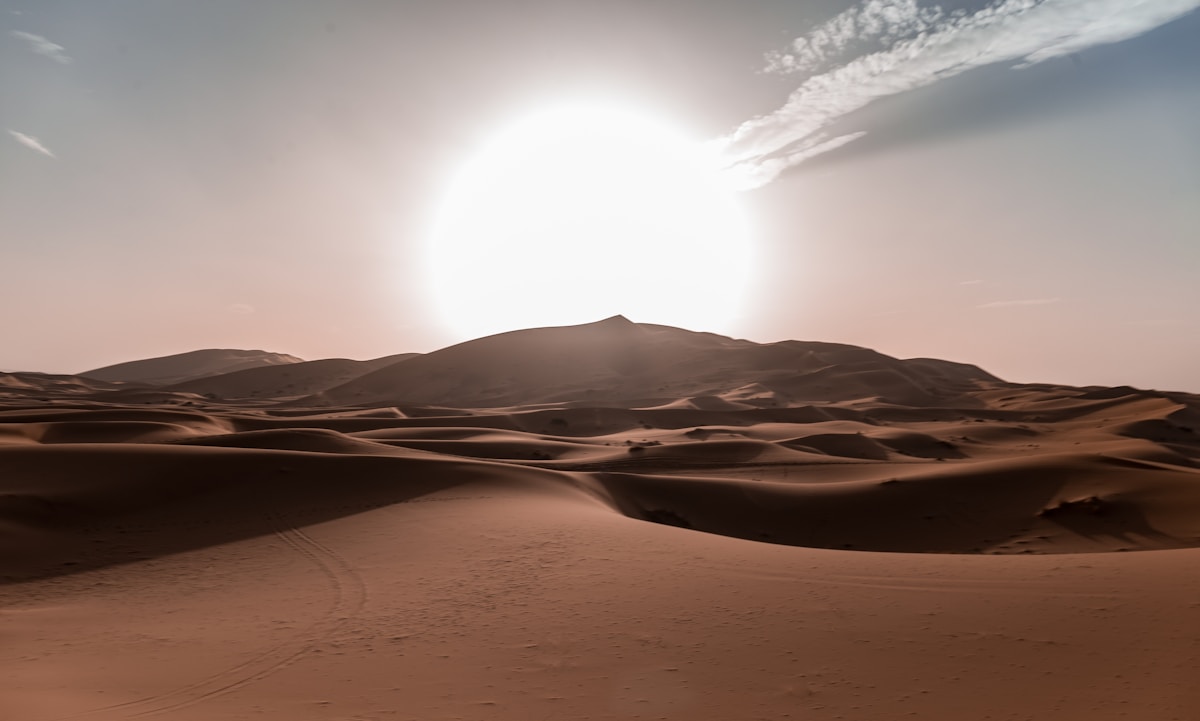
Douz sits at the northern edge of the Grand Erg Oriental - the vast sand sea that stretches south into Algeria - and serves as Tunisia’s primary gateway to the Sahara. The town itself is small and functional, with a permanent population of around 35,000, but its location makes it the most practical starting point for camel treks, 4x4 desert excursions, and overnight camps in the dunes. It is roughly 530 km south of Tunis and about 130 km (a 2-hour drive) east of Tozeur via the P16 road through Kebili.
The dunes
The appeal of Douz is immediate and literal: the dunes begin at the edge of town. The Ofra dune field, accessible on foot or by a short drive south, is where most short camel rides and sunset excursions start. These are not the tallest dunes in the Sahara, but the accessibility is the point - you can walk from your hotel to standing sand in under 30 minutes.
For bigger dune landscapes, the excursion routes head south and east into the Grand Erg Oriental. Multi-day camel treks (typically two to four days) follow traditional routes deeper into the erg, camping at fixed bivouac sites. Operators in Douz typically charge 120-200 TND per person per day for a camel trek including meals and camp, though prices vary by group size and season.
Ksar Ghilane
Ksar Ghilane is a remote desert oasis roughly 90 km east of Douz, reached by a 2-3 hour 4x4 drive across flat reg (stony desert) and sand tracks. The oasis has a natural hot spring that feeds a small pool - warm enough to swim in year-round and a genuine highlight after a dusty drive. A ruined Roman fort (a limes outpost) sits on the hillside above.
Several permanent desert camps operate at Ksar Ghilane, offering tented accommodation with meals. An overnight stay - arriving in the afternoon, swimming in the hot spring at sunset, sleeping in a Bedouin-style tent, then returning to Douz the next morning - is the most popular excursion format. Expect to pay roughly 200-350 TND per person for the round trip including one night, meals, and 4x4 transport.
The Tuesday market
Douz holds a large weekly market every Tuesday morning. The livestock section is the most distinctive part - camels, sheep, and goats are traded in an open yard on the town’s outskirts, and the atmosphere is more working agricultural market than tourist attraction. The adjacent general market sells dates (the region produces some of Tunisia’s best deglet nour), spices, woven goods, and everyday supplies. It runs from early morning until around midday and is worth timing a visit around if the itinerary allows.
Festival du Sahara
The Festival International du Sahara takes place in late December (usually the last week of December or first days of January) and has been held annually since 1910, making it one of the oldest cultural festivals in North Africa. Events include camel racing, traditional Bedouin horsemanship displays, poetry recitals, and music performances. The festival draws visitors from across the region and accommodation books up well in advance. If travelling in this period, book hotels at least a month ahead.
Where to stay
Douz has a Zone Touristique on its southern edge, where most of the larger hotels are located - this puts you closest to the desert. Hotel Sahara Douz is the best-known option in the 3-star range. There are also simpler guesthouses in the town centre. Rates are modest: expect 80-150 TND per night for a decent double room in shoulder season. In peak season (October to March, and during the Sahara Festival), prices rise and availability tightens.
Search hotels in Douz on Booking.com
For a more memorable stay, the desert camps at Ksar Ghilane or the semi-permanent bivouac sites south of Douz offer a night under the stars that no hotel can match.
Best time to visit
October to March is the best period for Douz and the Sahara. Daytime temperatures sit between 18-28°C and nights are cool (sometimes dropping to 5°C in December–January, so bring layers). April is still manageable. From May through September, temperatures regularly exceed 40°C and can reach 50°C in July and August - desert excursions become genuinely unpleasant and some operators suspend treks entirely during the hottest weeks.
For a dedicated rundown of desert camps, guesthouses, and hotels near the dunes, see our where to stay in Douz guide.
Getting to Douz
From Tunis, the drive takes roughly 7 hours via the A1 motorway south to Sfax, then the P15/P16 through Gafsa and Kebili. Louages (shared minivans) run from Tunis to Kebili, with a change there for Douz - the full journey takes 7-8 hours and costs around 25-30 TND. From Tozeur, it is a straightforward 2-hour drive east through Kebili.
Most travellers visit Douz as part of a southern circuit: Tozeur for the mountain oases and Chott el Jerid salt lake, then Douz for the desert, then north to Matmata for the troglodyte homes, and optionally east to Djerba. This loop takes two to three days at a comfortable pace and is the strongest way to see southern Tunisia. See our Sahara desert tours guide for organised options. A hire car gives you the flexibility to cover this circuit at your own pace and access the dune tracks that public transport can’t reach.
How long to spend
One night in Douz is enough if the plan is a sunset camel ride and early departure. Two nights allows a full Ksar Ghilane excursion plus the Tuesday market. Three nights suits travellers who want a longer camel trek deeper into the erg. Douz is not a destination to linger in for its own sake - the town is a launching pad, and the desert is the real attraction.
Not sure whether to base yourself in Douz or Tozeur? Our Tozeur vs Douz comparison breaks down the differences in dune access, culture, hotels, and transport. For a detailed guide to camel trekking from Douz, see our Sahara camel trek guide. If you prefer a pre-arranged trip, the Douz sunset camel ride is a straightforward entry point, while the 3-day camel trek with Bedouin nomads suits travellers who want a more immersive desert experience. Whatever you book in the desert, having travel insurance in place before heading south is worth doing - medical coverage in remote areas matters more here than in the resort towns.
Plan Your Trip
✈️ Book your flights to Tunisia 🛡️ Get travel insurance 📱 Stay connected with an eSIM 🚗 Rent a car