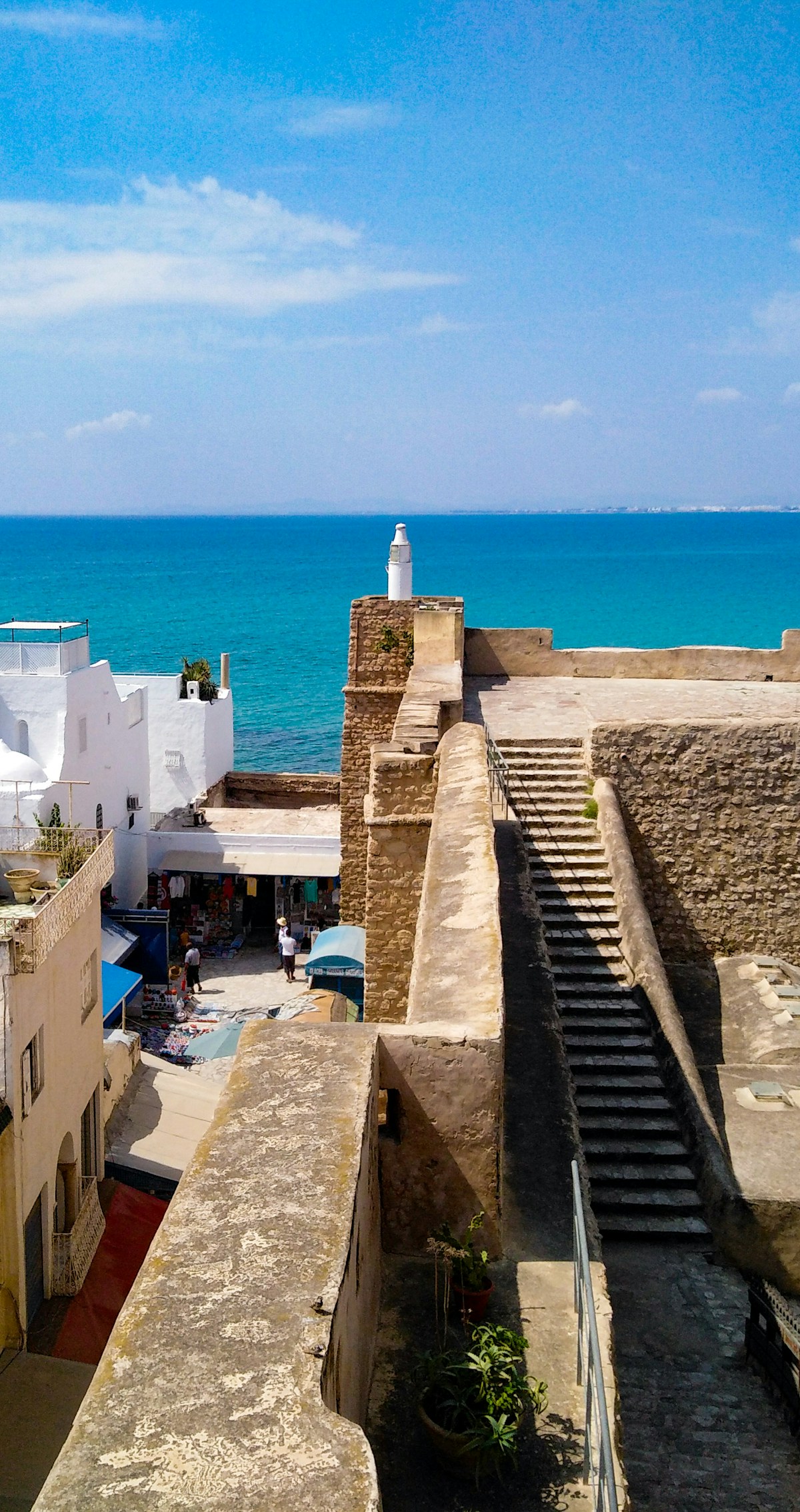
Cap Bon juts northeast from mainland Tunisia into the Mediterranean like a bent finger reaching toward Sicily. The peninsula is just over 100 kilometres long and contains a compressed version of what makes Tunisia interesting: a Roman and Carthaginian past, a working fishing culture, productive farmland that feeds much of the country, beach resorts with serious history behind them, and small towns that have barely changed since independence.
Search hotels in Nabeul on Booking.com
Most visitors who base themselves in Hammamet or Nabeul only scratch the surface. A proper Cap Bon circuit, or even a two-day drive up the eastern coast and back down the western side, reveals a different pace and a different Tunisia.
Getting to Cap Bon
From Tunis, Cap Bon is accessible by louage, bus, or car. Louages depart Tunis Moncef Bey station and run to Nabeul (approximately 5–7 TND, 1 hour), Kelibia (around 10–12 TND, 1.5–2 hours), and El Haouaria (around 13–16 TND, 2.5 hours). Services run throughout the day, with frequency dropping in the afternoon. There is no single fixed timetable - louages leave when the vehicle is full.
Driving from Tunis gives you much more flexibility, particularly for reaching Korbous, Korba lagoon, and the smaller villages along the cape. The A1 motorway reaches Nabeul in about 70 minutes, with a toll of approximately 2 TND. From Hammamet, the drive north to Nabeul is 30 minutes; Kelibia adds another 45 minutes.
If you are planning a loop of the whole peninsula, budget a full day by car - the roads are good but the distances add up, and the stops are worth lingering at. Consider renting a car in Tunis for this trip via car hire Tunisia.
Nabeul: Pottery Capital and Friday Market
Nabeul is the commercial capital of the Cap Bon region and the first major stop heading northeast from Hammamet. The town has been producing ceramics since at least the Aghlabid period, and today its workshops and showrooms line the main road through town.
The Friday souk is the main event. Held every Friday morning in a large covered market complex at the edge of town, it draws traders from across the peninsula selling everything from live animals and agricultural produce to ceramics, textiles, spices, and second-hand goods. The scale surprises visitors who are used to the more tourist-focused souks of Tunis or Sousse. This is a functional market, not a performance - most of the buyers and sellers are local.
Outside Friday mornings, Nabeul’s ceramic workshops are worth visiting for the craft alone. Prices are generally lower here than in Tunis medina shops, and you can watch pieces being thrown, dried, and painted on site. The town also has a small archaeological museum with Roman-era finds from the region.
Kelibia: Fortress, Fishing Port, and Clean Beaches
Kelibia sits about 50 kilometres north of Nabeul on the eastern coast and is one of the most undervisited towns on the peninsula. The Byzantine and later Ottoman fortress that stands above the town is the visual anchor - visible from the coast road long before you reach the town, it sits on a promontory with unobstructed views across the sea toward Sicily on clear days.
The fort itself (Forteresse de Kélibia) is open to visitors, with a small entrance fee of approximately 7–10 TND as of 2026 - worth checking locally as prices can vary. The interior is partly ruined and partly restored, and the ramparts offer a panorama that covers both the eastern and western shorelines. Allow 45 minutes to an hour.
Below the fortress, the fishing port is active and photogenic. Brightly painted blue-and-white boats line up against the quay in the afternoon when the fleet returns, and the small restaurants nearby serve grilled fish cooked the same day. Prices are honest by Tunisian standards - a plate of grilled fish with bread and salata mechouia typically runs 15–25 TND per person.
The beach south of the port is one of the cleanest on Cap Bon, with fine pale sand and clear water. It becomes popular with Tunisian families in July and August but remains quiet outside high season.
Korba Lagoon and the Flamingo Shore
The lagoon (Sebkhet Korba) runs inland behind the fishing village of Korba on the eastern coast and forms part of a protected wetland system. Between October and March, large flocks of greater flamingos use the shallow, brackish water as feeding and resting grounds. Numbers vary but a few hundred birds are typical; peak concentrations can reach into the thousands during migration.
Access is straightforward - park at the northern end of Korba and walk along the embankment. No entry fee, no facilities. A pair of binoculars is useful. Cormorants, spoonbills, and herons are also present year-round, making it a worthwhile stop even outside flamingo season.
Korbous: Hot Springs on the Cliff
On the western coast of the peninsula, roughly 50 kilometres north of Nabeul, Korbous is a thermal spa town wedged between a cliff face and the sea. The setting is striking - the village essentially occupies a narrow shelf of rock, with the Gulf of Tunis directly below and the hills of Cap Bon rising sharply above.
Hot spring water emerges at several points along the shoreline and through pipes into the formal hammam and spa facilities in the village. The public baths are inexpensive, typically 5–12 TND per session as of 2026 depending on the type of treatment. The natural hot springs on the rocks below the village are free to use - look for the orange-stained limestone where the water flows into the sea.
Korbous has a small selection of guesthouses and a handful of cafes, but the main draw is the thermal baths. It works well as a half-day stop on a western coast route or as an overnight stay for visitors who want to use the facilities at leisure.
El Haouaria: Caves and Falconry
El Haouaria sits at the very tip of Cap Bon, about 100 kilometres from Nabeul. The town is known for two things that do not obviously belong together: Roman quarry caves and an international falconry festival.
The caves (Les Grottes Romaines) are cut into the sandstone cliffs above the sea. Stone quarried here was shipped across the Mediterranean to Carthage and Rome for construction during the Punic and Roman periods. The cave system is extensive and atmospheric - chambers of different sizes connected by passages, with sea light entering through some openings. Local guides based near the entrance lead 30-to-45-minute tours for a small fee, typically 5–8 TND per person as of 2026. There is also a small beach below the cliffs.
The International Falconry Festival (Festival de l’Épervier d’El Haouaria) takes place each May and June and has been running since 1967. Trained sparrowhawks are used to hunt local wildlife - the festival has traditional roots in the spring hunting season. Demonstrations, competitions, and cultural performances run over several days, drawing visitors from Tunisia and internationally. Outside festival season, El Haouaria is a quiet village with basic amenities and an untouched quality that is increasingly rare on the Tunisian coast.
Best Time to Visit
April through June is ideal across the peninsula. Temperatures sit in the mid-twenties, wildflowers cover the hillsides, the falcon festival runs in late May and early June, and the beaches are uncrowded. September and October are also excellent - the sea stays warm, accommodation is easier to find, and the tourist footprint is lighter.
July and August are hot (often 35°C and above) and the eastern coast beaches fill with Tunisian holidaymakers. Winter is viable for Korbous thermal baths and town exploration, though some beach-facing restaurants and guesthouses close from November to March.
Planning a Cap Bon Trip
The peninsula rewards a self-drive circuit of one to three days. A single day is enough for Nabeul and Kelibia if you start early from Tunis or Hammamet. Two days allows you to add El Haouaria and Korbous. Three days lets you move at a comfortable pace with time for beaches, markets, and the thermal baths.
For guided day trips from Tunis that include Cap Bon highlights, see day trips from Tunis. For general touring across Tunisia, organised Tunisia tours that include the peninsula are available in various lengths. If you are combining Cap Bon with a beach base, Hammamet is the most convenient hub and offers a wide range of accommodation for every budget.
Carry cash - many sites and restaurants on the peninsula do not take cards. ATMs are available in Nabeul and Kelibia. Mobile coverage is generally good on main roads but can drop in the hills around Korbous and on remote tracks near El Haouaria.
Plan Your Trip
✈️ Book your flights to Tunisia 🛡️ Get travel insurance 📱 Stay connected with an eSIM 🚗 Rent a car