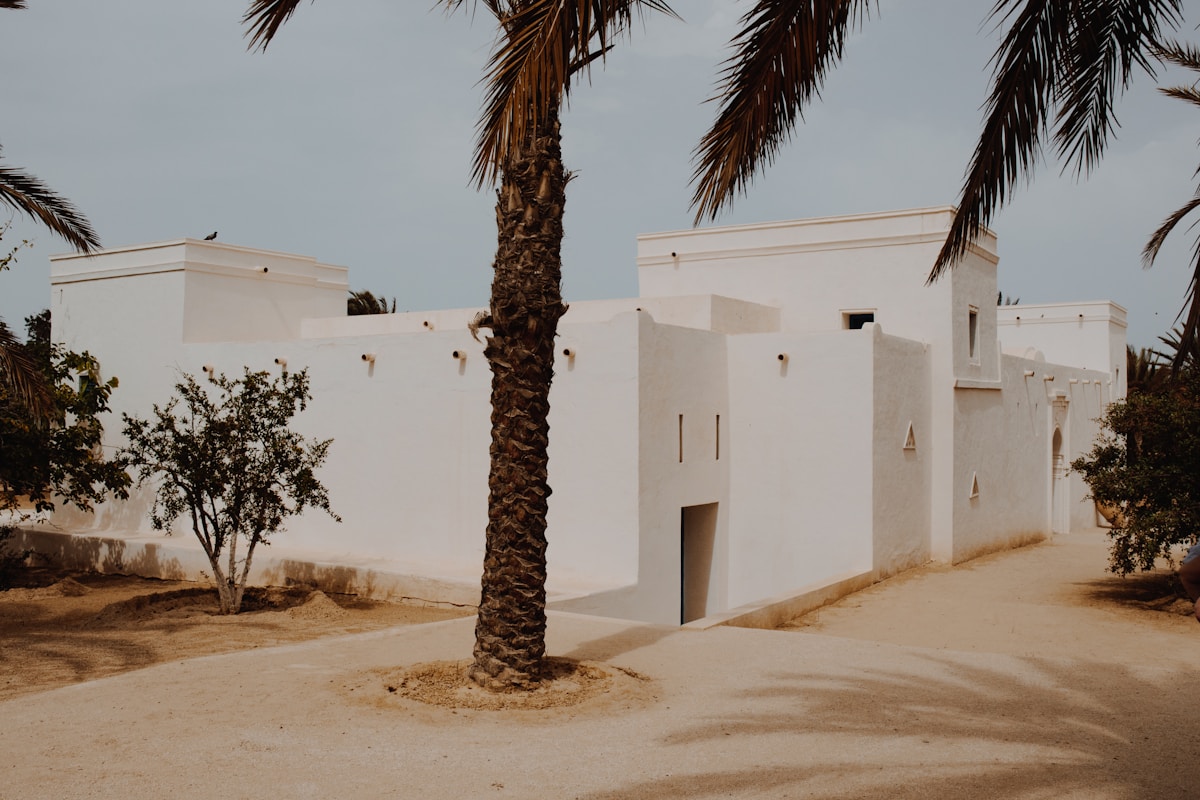
Nabeul is the commercial and administrative centre of the Cap Bon peninsula, a wedge of fertile land jutting northeast from mainland Tunisia toward Sicily. It is best known in the tourist context for two things: pottery and the Friday market. Beyond those, it is a working town of around 75,000 people, a useful base for exploring the Cap Bon peninsula, and a natural pairing with Hammamet for anyone spending time on the northern coast.
The town lacks Hammamet’s medina drama or beach resort infrastructure, but it compensates with a more authentic commercial atmosphere and the concentration of craft production - ceramics in particular - that has defined the local economy for generations.
Pottery and Ceramics
Nabeul’s position as Tunisia’s pottery capital goes back to at least the Andalusian influx of the 17th century, when craftsmen expelled from Spain brought refined tile-making and faience techniques. The tradition developed through the French protectorate period, when Nabeul tiles became fashionable across North Africa, and it continues today.
The characteristic Nabeul style uses geometric patterns and floral motifs in blue, yellow, green, and white on a white tin-glazed background. This is distinct from the simpler earthenware produced elsewhere in Tunisia. High-quality pieces - hand-thrown and hand-painted by skilled craftsmen - are the local speciality; tourist-grade production exists alongside it but is easy to distinguish.
The main pottery district is along Avenue Habib Thameur and the roads leading off it toward the beach. Dozens of workshops operate here, ranging from small family ateliers to larger showrooms with significant stock.
Prices (approximately, as of 2026):
- Small decorative tiles: 3–8 TND each
- Medium bowls or plates: 15–40 TND
- Large decorative plates: 40–120 TND
- Complete tile panel (30x30cm, 4 tiles): 60–150 TND
Bargaining is expected in the souk-style shops; prices in established gallery workshops are more fixed.
The Friday Market
Nabeul’s weekly market is held every Friday morning and extends across several streets near the town centre. It is one of the largest in the Cap Bon region and draws buyers from across the peninsula.
The market divides into several sections: a produce section with vegetables, fruit, olives, and spices; a livestock area on the periphery; a clothing and textile section selling both new and second-hand goods; a household goods section; and a craft and souvenir section. The souvenir section has pottery, baskets, metalwork, and the distinctive Nabeul embroidery (broderie de Nabeul) sold by the metre and in completed pieces.
The market runs from approximately 7am to 2pm. Arrive early for the best produce and to see the market at its most active. The livestock section (goats, sheep, donkeys in the surrounding streets) is busiest in the morning.
The Town and Nearby Sites
Nabeul Museum (Musée Archéologique de Nabeul) is located near the town centre and houses a collection of Roman mosaics and artefacts from the ancient city of Neapolis, which underlies parts of modern Nabeul. Entry costs approximately 6 TND as of 2026; open Tuesday to Sunday 9am–4pm.
Neapolis ruins: The ancient Phoenician city of Neapolis, a predecessor to Roman and then Arab settlement, has partially excavated ruins visible at a site near the coast. Some of the ruins are underwater, visible on calm days from the shore.
Orange and jasmine groves: Cap Bon is the major source of citrus fruit and jasmine for Tunisian perfumery. The groves are most impressive in spring (March–May) when jasmine blooms and the smell is noticeable across much of the town. The regional jasmine crop feeds distilleries that produce oils used internationally.
Kélibia and the Rest of Cap Bon
Nabeul is the most accessible point on Cap Bon, but the peninsula repays further exploration if you have transport.
Kélibia (about 60 kilometres northeast): A coastal town with a Byzantine fort on the headland and some of the best beach swimming on Cap Bon - clear water, sandy beaches north and south of the fort, and far fewer visitors than Hammamet. The small fish market here sells fresh tuna, sea bream, and swordfish. A meal of grilled tuna at one of the harbour-side restaurants costs approximately 20–30 TND per person.
El Haouaria (at the northern tip): A small village at the top of the peninsula, known for falconry (the annual spring falconry festival is held here in May) and for the Roman-era quarries (grottes romaines) carved into the cliff, from which stone was extracted to build Carthage. Entry to the quarries costs approximately 4 TND.
Getting to Nabeul
By car from Tunis: The P1 via Grombalia takes approximately 1 hour (65 kilometres).
By train: The Tunis–Grombalia–Bir Bou Rekba line connects to a local line south to Hammamet. For Nabeul, alight at Bir Bou Rekba and take a louage (5 TND) or taxi into Nabeul town. Total journey approximately 1.5 hours.
By bus: Direct SNTRI buses from Tunis Bab Alioua to Nabeul take approximately 1.5 hours, costing around 5–7 TND as of 2026.
By louage: From Tunis Bab Alioua, louages run regularly to Nabeul; approximately 6 TND and 1 hour.
Where to Stay in Nabeul
Nabeul has a smaller hotel selection than nearby Hammamet; most beach resort visitors base themselves in Hammamet and visit Nabeul for the day.
Search hotels in Nabeul on Booking.com
Les Jasmins (Avenue Habib Bourguiba): A mid-range hotel with a pool and garden, rooms from approximately 120–180 TND per night as of 2026.
Hôtel Pyramide: A functional hotel near the central market area, rooms from approximately 80–120 TND per night - useful for an early start at the Friday market. Hôtel Pyramide
Where to Eat in Nabeul
Restaurant Erramah: Traditional Tunisian food in a tiled courtyard - couscous with vegetables, lamb tagine, brik. A full meal costs approximately 15–25 TND per person.
Restaurant Les Oliviers: Near the beach, good for fish - grilled sea bream and mullet, with salad starters. Around 20–35 TND per person.
For ceramics shopping, Friday market browsing, and easy access to the underrated beaches of Cap Bon, Nabeul is a worthwhile stop on any northern Tunisia route. It pairs well with a night or two in Hammamet and makes the most sense for visitors with a hire car or louage access. If you’d rather join a guided circuit, the Hammamet and Nabeul full-day tour covers both towns from Tunis, and the Hammamet Medina and Nabeul Spice Market tour focuses on the craft and culinary highlights of both places. If you are weighing up the coastal options further north, see our Tabarka vs Hammamet comparison. Before you travel, have travel insurance for Tunisia in place.
Plan Your Trip
✈️ Book your flights to Tunisia 🛡️ Get travel insurance 📱 Stay connected with an eSIM 🚗 Rent a car