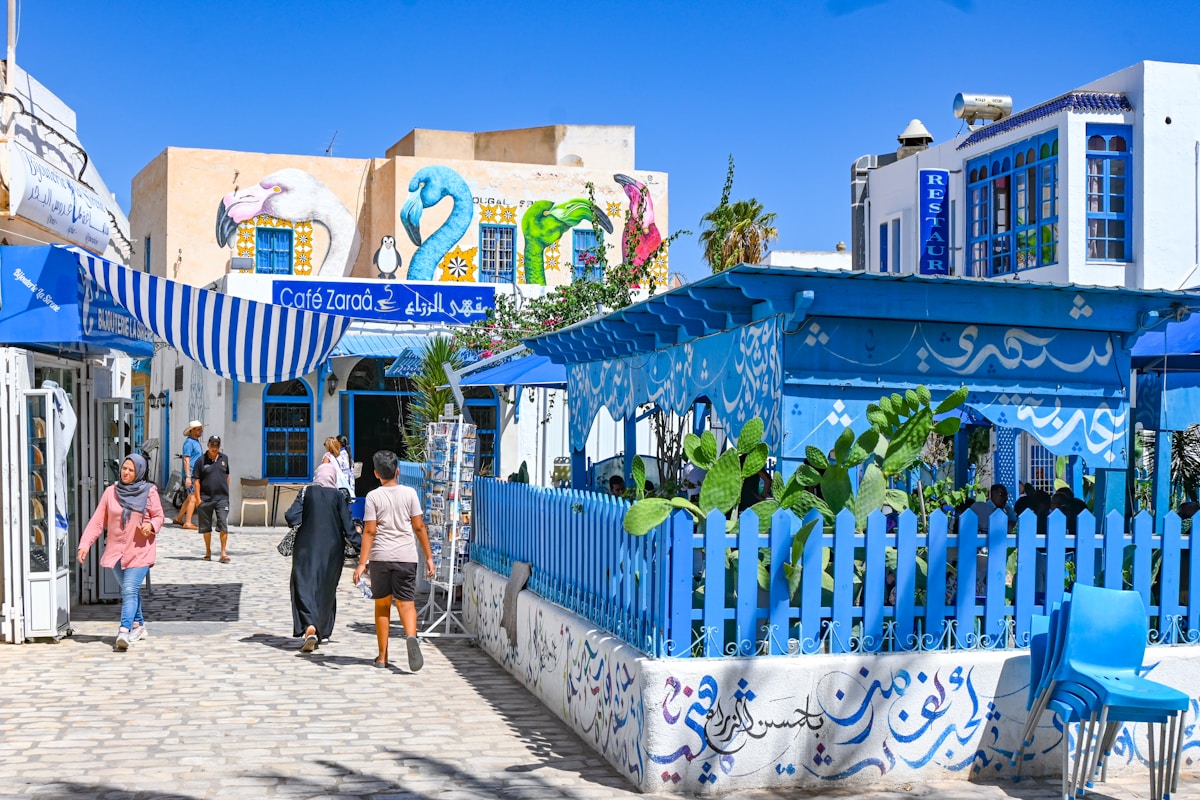
Tunisian food is arguably the most interesting in North Africa - influenced by Berber, Arab, Ottoman, and Mediterranean traditions, and defined by harissa, olive oil, preserved lemons, and slow-cooked meats. The country’s cuisine is underappreciated abroad and best experienced in local restaurants rather than hotel dining rooms.
Essential Tunisian Dishes
Brik
Tunisia’s most distinctive starter - a thin, crispy pastry filled with egg, tuna or minced meat, and harissa, deep-fried and served immediately. The challenge is eating it without spilling the runny egg. Found everywhere from street stalls to sit-down restaurants.
Mechouia Salad
Grilled and chopped tomatoes, peppers, and onions dressed with olive oil and often topped with hard-boiled egg and tuna. Eaten cold as a starter with bread. The North African equivalent of a base salad.
Couscous
The national dish, served at family celebrations and in restaurants. Fine semolina steamed over a slow-cooked broth with lamb, chicken, or fish, and a variety of vegetables. The version from Sfax (with fish) is the most distinctive regional variant.
Lablabi
A working man’s breakfast and hangover cure - chickpea broth poured over stale bread, flavoured with harissa, cumin, olive oil, and capers. Found at dedicated lablabi stalls in the early morning. Tunis’s medina has several long-running establishments.
Lamb Tagine
Not the Moroccan version - Tunisian tagine is closer to a baked egg dish, with lamb, eggs, and cheese cooked together in a clay dish. Hearty and rich.
Makloub
Rice layered with fried vegetables and meat, turned upside-down onto the serving plate. A weekend family dish, occasionally found in restaurants that offer home cooking.
Grilled Fish
On the coast (Tunis, Sousse, Sfax, Djerba), fresh grilled fish - sea bream, grouper, sea bass - is the best choice. Often sold by weight at quayside restaurants. Seared simply with olive oil and served with mechouia.
Harissa
Harissa is to Tunisia what soy sauce is to Japan - ubiquitous, defining, and highly variable in quality. The best harissa is homemade: dried red chillies, caraway, coriander, and garlic pounded together with olive oil. Commercial jars are fine but flatter. On the table in every restaurant, added to everything.
Street Food
Fricassee: A small fried sandwich filled with preserved lemon, harissa, tuna, and black olives. Found at street stalls throughout the country. Cost: 1–2 TND.
Bambalouni: Deep-fried ring doughnuts dusted with sugar - the Tunisian street snack, particularly around Djerba.
Sandwiches: Tunisian sandwiches are substantial - baguettes filled with harissa, tuna, olives, hard-boiled eggs, and grilled vegetables. Excellent value at 3–5 TND.
Drinks
Mint tea: Served with pine nuts floating on top, drunk very sweet, in small glasses. The social lubricant of Tunisian café culture - never rushed.
Boga: Tunisia’s national soft drink - a slightly bitter lemon-flavoured soda. Ubiquitous and cheap.
Boukha: Fig brandy produced by the Tunisian Jewish community. Unusual and worth trying; available in tourist shops and some restaurants.
Wine: Tunisia produces wine - Magon red and Muscat de Kelibia are the most widely available. Quality is passable, prices are low.
Where to Eat Well
- Tunis medina: Dar El Jeld (upscale traditional), Fondouk El Attarine (street food adjacent), several hole-in-the-wall couscous restaurants off the main souk - see our Tunis restaurants guide for detailed picks
- Sidi Bou Saïd: Café des Nattes for mint tea; several restaurants with terraces overlooking the coast
- Sousse medina: Local restaurants away from the main tourist strip are good value
- Djerba: Houmt Souk’s fish restaurants are the best eating on the island - choose by looking at what other tables are eating. Djerba tours that include a food market visit are a good way to get oriented on the island’s distinctive cuisine. A Tunisia eSIM is useful for looking up restaurant names in Arabic and using translation apps at local markets.
Book a Culinary Tour of Tunisia
The fastest way to eat beyond the tourist-facing menu is to go with someone who already knows where to look. Food tours in Tunis focus on the medina market, lablabi stalls, and the street food lanes around Bab El Fellah; Djerba tours frequently include a morning at Houmt Souk’s fish market and a Berber cooking demonstration. Search Tunisia culinary tours to compare current operators across Tunis, Djerba, and Sousse, with prices and group sizes listed.
Plan Your Trip
✈️ Book your flights to Tunisia 🛡️ Get travel insurance 📱 Stay connected with an eSIM 🚗 Rent a car