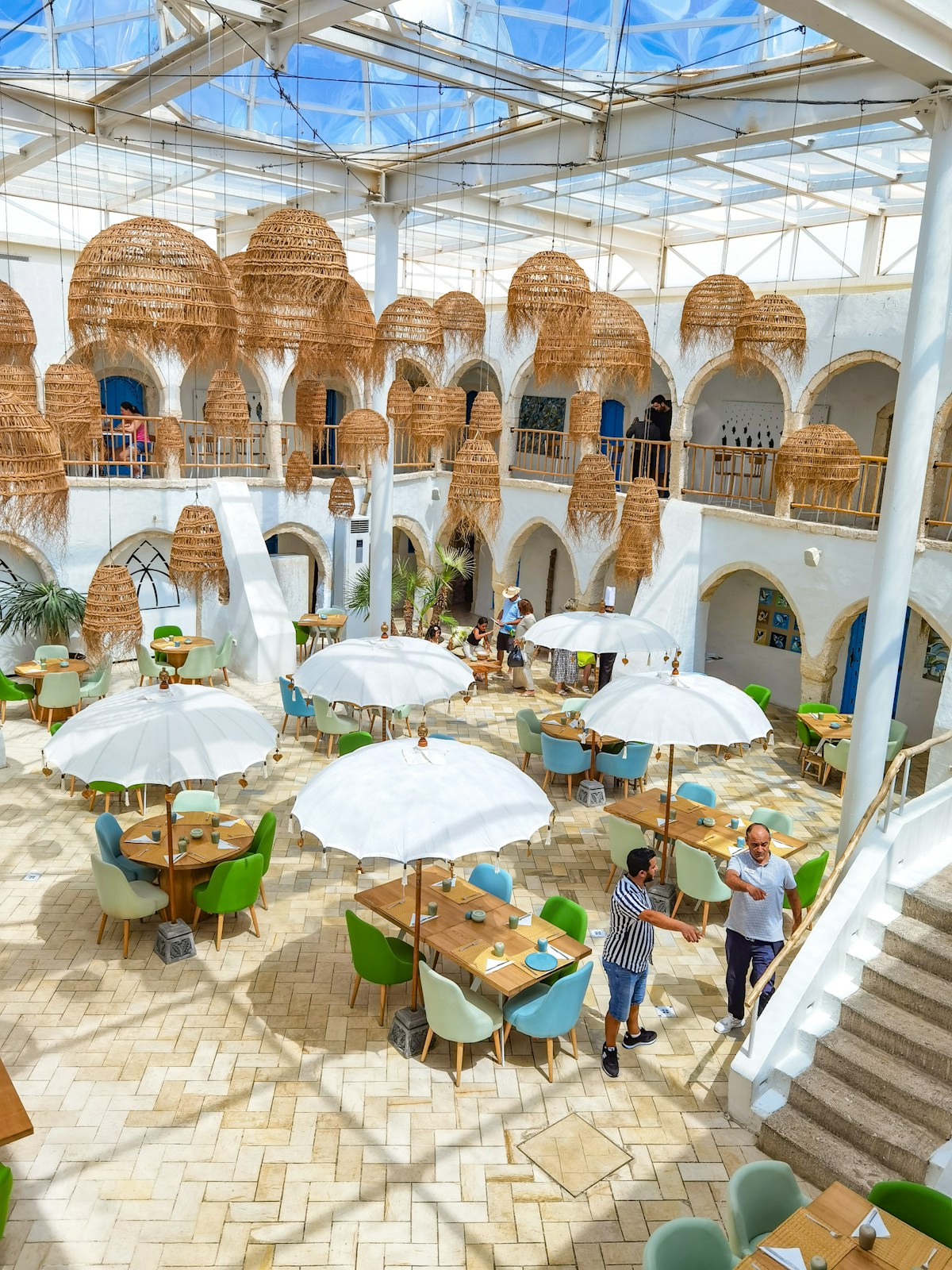
Tunis has a dining scene that extends from cramped medina counters serving lablabi for 3 TND to formal palace restaurants where a meal unfolds across several hours in a 17th-century courtyard. The city’s food divides naturally by neighbourhood, and each has a different character.
This guide covers the medina’s established dining institutions, the Ville Nouvelle’s more international options, the suburb of La Marsa for upscale waterside eating, and the local dishes worth ordering wherever you end up.
The Medina - Palace Restaurants and Market Counters
The medina of Tunis is a UNESCO World Heritage Site and the oldest continuously inhabited part of the city. Its food ranges from the most formal and theatrical dining in the country to extremely cheap stalls serving the same dishes they have offered for decades.
Dar El Jeld
Dar El Jeld (meaning “house of leather”) is the most frequently cited dining experience in the Tunis medina. Housed in an 18th-century palace on Rue Dar El Jeld, it occupies a sequence of interconnecting rooms around a central courtyard: painted cedarwood ceilings, zellige tilework to shoulder height, carved plaster cornicing, and iron lanterns. The food is traditional Tunisian - brik to start, couscous with lamb or fish for main, makroudh with mint tea to finish.
The menu is in French and Arabic. Prices are high by Tunisian standards: expect approximately 120–180 TND per person for a full meal with wine as of 2026. Reservations are strongly recommended for dinner; walk-ins often work at lunch.
- Address: 5–10 Rue Dar El Jeld, Medina de Tunis (near the Great Mosque of Zitouna)
- Hours: Lunch 12pm–3pm; Dinner 7:30pm–10:30pm. Closed Sundays.
Fondouk El Attarine
Fondouk El Attarine (“the caravanserai of the perfume merchants”) is a 14th-century trading inn converted into a restaurant. The central courtyard, originally used to stable camels and store goods, is now a dining room open to the sky, with tables arranged around a central fountain. It is less polished than Dar El Jeld but has more atmosphere and is quieter.
The food leans toward fish - grilled sea bass, fried calamari, red mullet with chermoula - along with the standard Tunisian starters (salata mechouia, brick, merguez). Approximately 70–120 TND per person as of 2026.
- Address: Rue Sidi Ben Arous, Medina, near the perfumers’ souk
M’rabet Café
Café M’rabet in the covered souk of the medina is one of Tunis’s oldest working cafés, dating to the Ottoman period. It occupies a series of low vaulted rooms and serves mint tea, strong Arabic coffee, and traditional pastries - not full meals. The upper gallery is a calm place to sit for an hour with a glass of tea and watch the souk traffic below. Tea runs approximately 3–5 TND as of 2026.
Street Food in the Medina
For budget eating in the medina, the lanes around Bab El Fellah and the covered souk of Souk El Trouk have counters serving:
- Lablabi: a thick chickpea soup with cumin, harissa, capers, olive oil, and stale bread. One of Tunisia’s most sustaining cheap dishes, typically 4–6 TND a bowl
- Brik à l’oeuf: the fried egg-filled pastry triangle, 3–4 TND each
- Fricassée: a small fried dough ring stuffed with tuna, harissa, olive, and egg - 2–3 TND
- Merguez sandwiches: freshly grilled lamb and beef sausage in a baguette, 5–8 TND
The morning trade in these stalls runs from around 7am. By 2pm most are closing.
Ville Nouvelle - Bistros and Seafood on the Boulevards
The French-built Ville Nouvelle (new town) centres on Avenue Habib Bourguiba, Tunis’s main boulevard. The café terraces here are more European in style, the menus more varied, and the atmosphere more mixed between Tunisian professionals, expats, and tourists.
Le Golfe
Le Golfe is a well-established seafood restaurant a short walk from Avenue Habib Bourguiba toward the port area, known for fresh fish and shellfish brought in from the Gulf of Tunis. The house speciality is the poisson entier - whole grilled fish (sea bream, sea bass, or red mullet depending on the day’s market) with chermoula sauce, chips, and salad. Approximately 60–100 TND per person as of 2026 including wine.
- Lunch and dinner; closed Mondays
Café de Paris
Café de Paris on the corner of Avenue Habib Bourguiba is the city’s most prominent terrace café - a landmark rather than a destination for food, but a useful reference point. It serves pastries, sandwiches, juice, and coffee throughout the day. Good for watching the avenue at any time of day. Coffee approximately 4–6 TND.
L’Astragale
A modern bistro in the Ville Nouvelle popular with the local professional crowd for lunch. The menu mixes Tunisian standards with French bistro dishes - steak with frites, salade niçoise, fresh pasta. Approximately 45–70 TND per person as of 2026.
La Marsa - Upscale Suburb and Beach Dining
La Marsa is the most affluent coastal suburb of greater Tunis, about 20 km north of the city centre and accessible by the TGM light rail (approximately 30 minutes from Place de Barcelone, fare around 2.5 TND as of 2026). It has the highest concentration of upscale restaurants, beach clubs, and international cuisine in the Tunis area.
Saf Saf
Saf Saf is a beach restaurant and bar in La Marsa with tables on a terrace directly above the sea. The menu focuses on grilled fish and mezze, with one of the better wine lists in the Tunis area (Tunisian labels including Domaine Neferis and Selian). The sunset hour is peak time - arrive by 7pm to get a terrace table in high season. Approximately 80–130 TND per person as of 2026.
La Marsa seafront cafés
The corniche at La Marsa has a string of café-restaurants running along the beachfront from the main square. These range from simple juice bars and shawarma stands at around 10–20 TND per person to sit-down fish restaurants at 60–90 TND. The cluster around Place Saf Saf is the most active. Good for an afternoon of eating progressively lighter things while looking out at the Mediterranean.
Sidi Bou Said (just north of La Marsa)
The clifftop village of Sidi Bou Said is a 10-minute drive or short TGM ride north of La Marsa. Café des Nattes on the main square is the most photographed café in Tunisia - low-slung terrace seating, blue and white geometry, views across the gulf. It serves mint tea (with pine nuts, approximately 8–12 TND) and light pastries rather than full meals, but the setting is the reason to go.
Local Dishes Worth Ordering Anywhere
Wherever you eat in Tunis, these are the distinctly Tunisian items to prioritise:
Salata mechouia - roasted pepper, tomato, garlic, and onion salad with olive oil and canned tuna; served cold with bread, almost always on the table before the main
Brik à l’oeuf - crisp triangular pastry parcel with a whole egg inside, usually with tuna and capers; eaten with your hands before it cools and the egg solidifies
Ojja - eggs poached in a spiced tomato sauce with merguez, or with seafood; served in the pan, scooped up with bread
Couscous - the ceremonial dish; in Tunis restaurants it typically comes with lamb or chicken, merguez, roasted vegetables, and a separate bowl of marqa (broth). The Tunisian version is wetter than the Moroccan and usually spicier.
Kefteji - chopped and fried vegetables (pumpkin, pepper, potato, tomato) with eggs, served as a side dish or a cheap standalone plate; underrated
Assiette de fruits de mer - the seafood platter available at most Tunis coastal restaurants; quality depends heavily on proximity to the port
Makroudh - for dessert, the date and semolina pastry diamond from Kairouan that has become a national staple; good bakeries in the medina sell them for approximately 2–4 TND each
Practical Notes
Reservations: Dar El Jeld and the better La Marsa restaurants require booking for Friday dinner and weekend evenings. Weekday lunches are usually walk-in.
Payment: Many medina restaurants are cash-only. Visa is accepted at larger Ville Nouvelle and La Marsa restaurants. Carry TND.
Dress: Smart casual is appropriate at palace restaurants and upscale La Marsa venues. No strict dress code elsewhere.
Tipping: Not mandatory, but rounding up or leaving 10% is appreciated. In cafés, leaving the small change is standard.
Our full Tunis destination guide covers neighbourhoods, attractions, and transport in detail. A Tunisia eSIM is useful when arriving in Tunis - data access from the airport means you can look up restaurant addresses and make reservations without relying on hotel Wi-Fi.