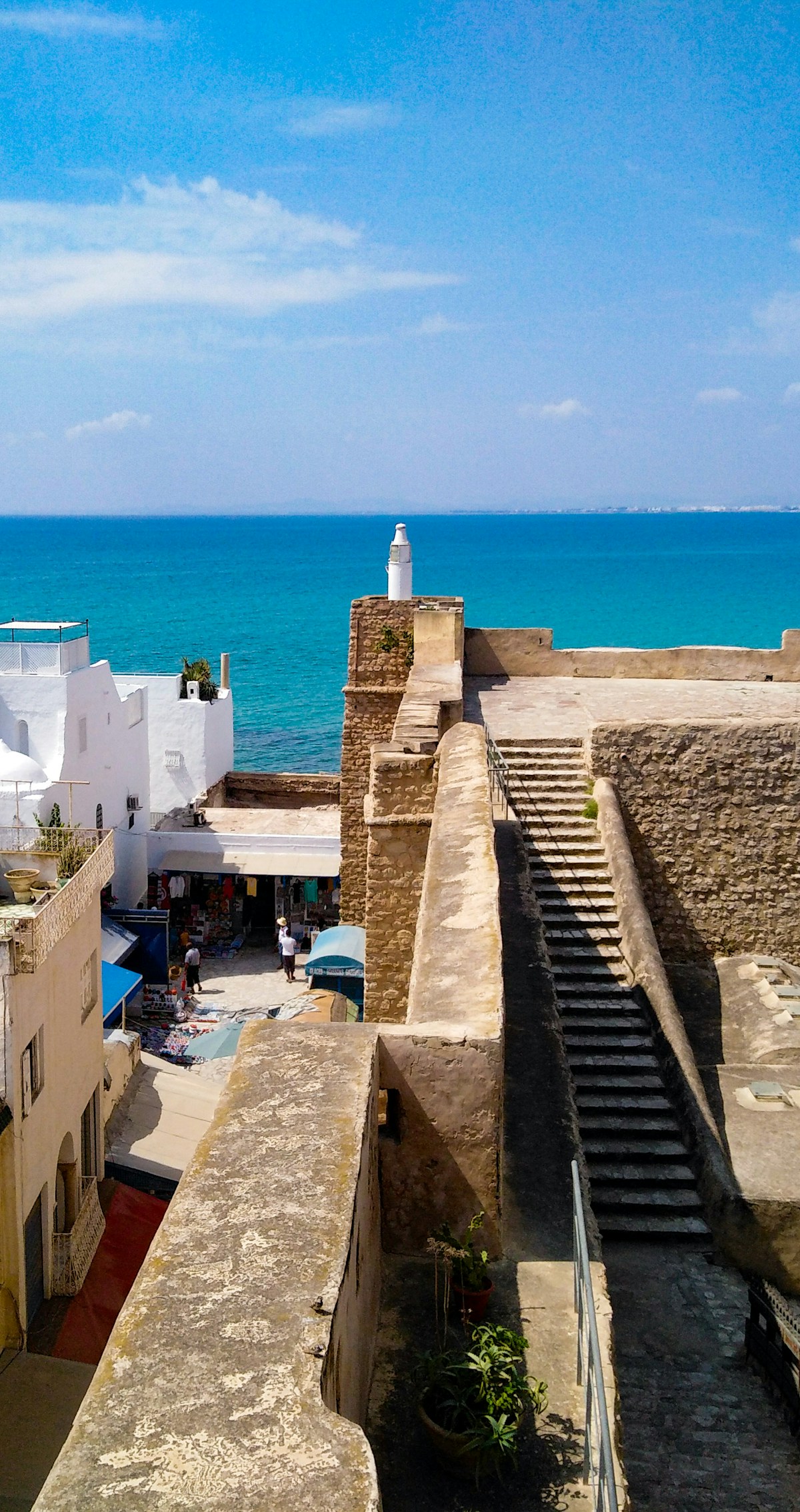
Of all Tunisia’s UNESCO World Heritage Sites, Kerkuane stands apart for one reason: Rome never rebuilt it. When the Romans destroyed Carthage in 146 BC, they levelled the city and built their own colony on top. When they absorbed other Punic and Phoenician cities, they Romanised the architecture, street plans, and religious sites. But Kerkuane was abandoned around 250 BC — caught in the chaos of the First Punic War — and never reoccupied. The result is the only Punic town in the entire Mediterranean that survives in its pre-Roman form.
UNESCO inscribed the Punic Town of Kerkuane and its Necropolis in 1985. The site sits on a rocky cape on the Cape Bon peninsula, roughly 100 km east of Tunis, where the land juts into the sea between the Gulf of Tunis and the Gulf of Hammamet.
Why Kerkuane matters
The Phoenicians were the greatest maritime traders of the ancient Mediterranean world, founders of Carthage and city-states across the North African coast, Sicily, Sardinia, and Spain. But almost nothing of their urban architecture survives. The cities were either built over or torn down. Ancient writers described Punic houses, streets, and temples at length — and archaeologists spent over a century finding almost nothing to confirm them.
Kerkuane changed that. When excavations began in the 1950s, archaeologists uncovered a complete Punic town: a planned street grid, residential houses, workshops, a sanctuary, and a necropolis. The city had been occupied from roughly the 6th to 3rd centuries BC, reaching a population estimated at around 3,000–5,000 people before its sudden abandonment.
The Romans had nothing to do with Kerkuane’s end. The leading theory holds that the city was abandoned during the First Punic War (264–241 BC), possibly after a Roman naval attack around 255 BC. Whatever the cause, the inhabitants left and did not return, leaving the archaeological record almost undisturbed.
What to see at the site
The residential quarter
The most extensive part of the site is the residential area, covering roughly 8 hectares within a defensive wall. The houses follow a recognisably Punic plan: rooms arranged around a central courtyard, with a distinctive bath installation in many dwellings — a terracotta tub with a sitz-bath design that appears uniquely Punic.
The floors are the most-photographed feature: many houses retain mosaics made from white tesserae set in a black bitumen mortar, often featuring a trident or dolphin motif. These are among the oldest floor mosaics found anywhere in the Mediterranean world. Walking the cleared pathways between house foundations, you are moving through a street plan that has not changed since the 3rd century BC.
The sanctuary and workshops
Evidence of religious activity survives in a small sanctuary near the centre of the site, with votive deposits that include terracotta figurines. Workshops around the town edges show evidence of purple dye production — the famous Phoenician purple (Tyrian purple) derived from murex shellfish — confirming the town’s role in the wider Punic trade network.
The on-site museum
A small museum at the entrance holds the most significant portable finds from excavations: ceramic vessels, jewellery, amulets, terracotta figurines, and carved ivory objects. The collection is well-labelled and contextualises the ruins clearly. Allow 30–45 minutes for the museum before or after walking the site.
The Necropolis
The necropolis lies a short distance from the main settlement. Tomb forms vary — simple pit graves, chamber tombs, and shaft graves — with grave goods including pottery, glass, and jewellery. Some tombs showed signs of cremation alongside inhumation burials, reflecting the mixed Phoenician and North African population. The necropolis is partially accessible as part of the site visit.
Getting to Kerkuane
By car: The most practical approach. From Tunis, follow the P8 highway south toward Nabeul, then north along the Cape Bon coast toward Kelibia. The site is signposted off the C27 road, approximately 14 km north of Kelibia town. Journey time from Tunis is approximately 2.5 hours; from Sousse, allow 3 hours.
By public transport: No direct service reaches the site entrance. From Tunis, take a bus or louage to Nabeul (regular departures, roughly 1.5 hours), then a connecting bus toward Kelibia (roughly hourly, 1–1.5 hours). Either ask to be dropped at the C27 turning for Kerkuane (and walk 2 km to the entrance) or continue to Kelibia and take a taxi (~12 km, approximately 10–15 TND each way).
Guided tours: Day tours from Tunis, Hammamet, or Sousse typically combine Kerkuane with Kelibia fortress and a Cape Bon coastal stop. These eliminate transport logistics entirely and usually include a guide at the site.
Entry fee and opening hours
- Entry fee: approximately 8 TND per person (as of 2025); includes the on-site museum
- Summer hours (1 June – 15 September): 09:00–18:00
- Winter hours (16 September – 31 May): 09:00–16:00
- Ramadan hours: 09:30–17:00
- Closed: Mondays
There is a small cafeteria, a souvenir shop, and toilets at the entrance. The site has no shade beyond the museum building — a hat and water are essential in summer.
Practical tips
Spend at least 1.5–2 hours at the site to cover the residential quarter and museum properly. The ruins are low-lying — most standing walls reach no higher than knee or waist height — so contextualising them requires some imagination or the help of site information boards, which are present in French, Arabic, and basic English.
Combining Kerkuane with Kelibia makes a solid full-day trip. Kelibia’s Byzantine-Ottoman fortress (free entry) overlooks the sea from a hill above the town; the adjacent beach at Mansourah is one of the better stretches on the Cape Bon coast. Nabeul, the region’s main town, adds pottery markets if you want a third stop on the return to Tunis.
The Cape Bon drive itself is worthwhile: the C27 coastal road north of Kelibia passes through farmland, vineyards, and fishing villages with few other tourists. This is one of the least-visited corners of Tunisia that sits within easy striking distance of the capital.