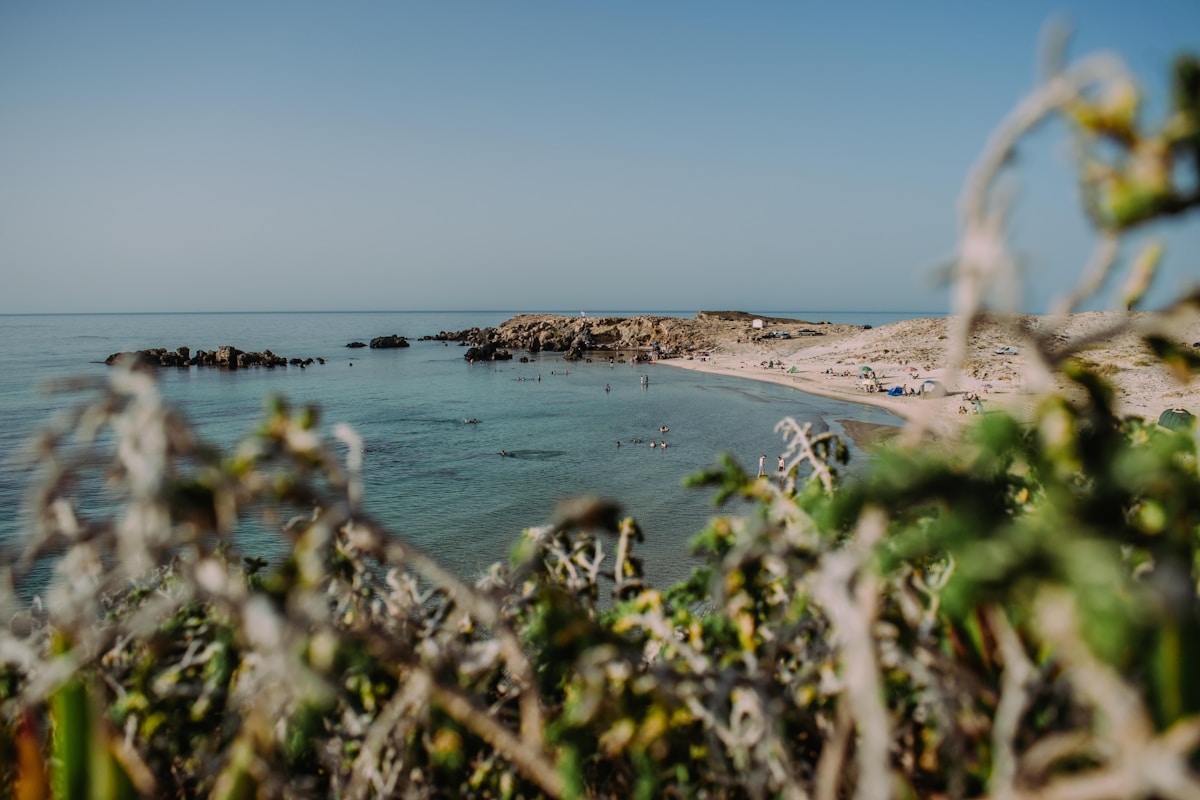
Tabarka is the main town on Tunisia’s northwest coast, sitting where the Kroumirie mountains come down to the Mediterranean. It is unlike anywhere else in the country: the landscape is green, the forests of cork oak and pine extend up into the hills behind town, and the sea here has a different character from the flatter waters of the east coast - more exposed, deeper, better for diving.
The town itself is small and functional. The main visual signature is the Genoese fort on its offshore rock, connected to the harbour by a causeway. Around this, a working port town has developed, with a growing tourist infrastructure that remains modest by the standards of Hammamet or Sousse.
The Genoese Fort
The fort that defines Tabarka’s skyline was built in the 16th century by the Lomellini family, Genoese merchants who had acquired the right to coral fishing in these waters from the Spanish crown. The island provided a defensible base for their operations - coral harvested from the seabed around Tabarka was a significant luxury export in the early modern Mediterranean.
The fort changed hands several times before coming to Ottoman control in the 18th century. It is now open to visitors; access is via the causeway and a steep path up the rock. Entry costs approximately 5 TND as of 2026. The views from the walls - along the coastline in both directions and back toward the Kroumirie mountains - are the best vantage point the town offers.
Diving and Marine Life
The waters around Tabarka and the offshore Galite Islands (a protected archipelago about 60 kilometres north) contain some of the richest marine environments in Tunisian waters. The seabed near Tabarka has coral formations, sea fans, grouper, moray eels, and in the Galite area, documented monk seal sightings.
Several dive centres operate in Tabarka, including:
Tabarka Diving Center (in the port area): Offers introductory dives from approximately 45 TND and guided dives for certified divers from approximately 40–55 TND per dive as of 2026. PADI courses available.
Aquatica Diving: Similar pricing, with guided dive packages and equipment rental. The centre offers day trips to the better sites offshore.
The best diving is in spring and autumn when visibility is highest; summer can see some stirring from boat traffic and summer winds (the sirocco from the south, locally called the chili).
The Beaches
Tabarka’s main town beach is adequate rather than exceptional - rocky in parts, with cleaner sand further along the bay. The better beaches are to the east:
Plage de Tabarka: The main organized beach area, with some beach clubs. Umbrella and sunbed hire costs approximately 6–10 TND per day.
Plage de la Reine: A quieter stretch about 3 kilometres east of town, accessible by car. Cleaner sand and calmer water in most conditions.
The resort zone east of Tabarka, built in the 1990s, has several international hotels with private beach access and pool facilities.
The Kroumirie Mountains and Ain Draham
The hinterland behind Tabarka is one of the few genuinely forested areas in Tunisia. The Kroumirie mountains receive the highest rainfall in the country, supporting cork oak forests, wild boar, jackals, and several raptor species. This is a very different landscape from the rest of Tunisia.
Ain Draham is a hill town about 25 kilometres inland from Tabarka, at around 800 metres altitude. It was developed as a summer retreat during the French protectorate period, and the architecture reflects that - stone houses, pitched roofs, and a cooler microclimate in summer. It functions as a starting point for forest walks and wildlife spotting.
The drive between Tabarka and Ain Draham on the mountain road is scenic in a way that no other part of Tunisia quite replicates - cork oak forests, switchbacks, and occasional views south across the Tell Atlas range.
The Tabarka Jazz Festival
Every July, Tabarka hosts an international jazz festival that has been running for over 30 years. The venues include the Roman theatre at Bulla Regia (about 70 kilometres south) and stages in Tabarka itself. International and Tunisian artists perform; past festivals have featured artists from across North Africa, Europe, and North America.
Festival dates and tickets change each year; check the official festival communications for current programming. The festival week sees hotel prices in Tabarka increase significantly and accommodation books out quickly - plan well in advance if visiting during this period.
Getting to Tabarka
By car from Tunis: The GP7 route via Jendouba takes approximately 3 hours (175 kilometres). The road through the Kroumirie mountains is good quality and scenic.
By bus: Buses from Tunis Bab Alioua terminal to Tabarka take approximately 3.5 hours. Fares are approximately 12–15 TND as of 2026.
From Ain Draham: Louages connect Ain Draham to Tabarka (25 kilometres, around 30 minutes) several times daily.
Where to Stay in Tabarka
Hôtel Abou Nawas Tabarka is the main international-standard hotel near the beach, with pool access and rooms from approximately 200–350 TND per night as of 2026.
Search hotels in Tabarka on Booking.com
Les Mimosas is a smaller option in the town centre with a garden, from approximately 100–160 TND per night. Les Mimosas
Les Aiguilles is a well-reviewed guesthouse with comfortable rooms from approximately 90–140 TND per night - a practical base for divers and walkers.
Where to Eat in Tabarka
Restaurant Les Aiguilles serves reliably good fish and pasta dishes near the port, with meals from approximately 20–35 TND per person.
Restaurant Novelty in the town centre does a straightforward Tunisian menu - brik, grilled fish, couscous - at local prices around 12–20 TND per person.
For a combination of dramatic scenery, coral diving, and a distinctly different landscape from the Tunisian mainstream, Tabarka stands apart. It is particularly rewarding as part of a northern Tunisia loop taking in Bizerte on the north coast and Tunis as the starting point. If you’re choosing between the north coast and the established resort scene, our Tabarka vs Hammamet comparison covers the key differences. For a broader Tunisia trip including the south, our 10 days in Tunisia itinerary includes Tabarka in a full northern loop. Have travel insurance for Tunisia in place before any diving or adventure activities.
Plan Your Trip
✈️ Book your flights to Tunisia 🛡️ Get travel insurance 📱 Stay connected with an eSIM 🚗 Rent a car