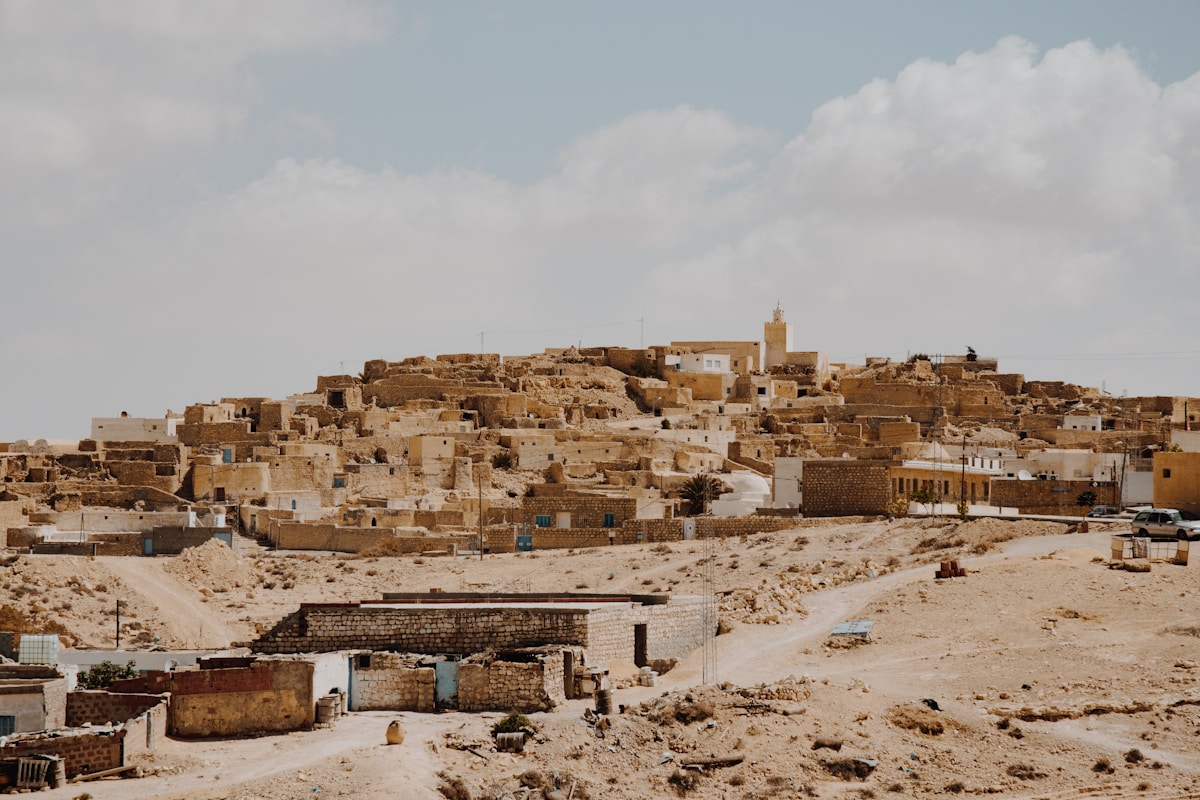
Matmata sits in an area of eroded rock about 45 km south of Gabès, in a landscape that looks almost lunar - rounded knolls of soft tuff (volcanic rock), dry wadis, and sparse vegetation. The Berber inhabitants of this region solved the problem of extreme desert heat and cold by building not on top of the ground, but into it.
The Troglodyte Architecture
The traditional home at Matmata is built around a central pit, typically 10–12 m across and 6–8 m deep, dug directly into the soft rock. From the pit, horizontal tunnels lead off to living rooms, sleeping chambers, storerooms, and stables. The pit serves as an outdoor courtyard and as the primary source of light and ventilation.
Above ground, the only visible sign of a troglodyte home is a low mound and the entrance door - the rest is underground. Interior temperatures in the living chambers stay at approximately 18–20°C year-round, regardless of outside conditions that can swing from freezing winter nights to 45°C summer afternoons.
The technique is ancient - estimated at more than 2,000 years old - and while the majority of Matmata’s residents now live in the modern village built above ground in the 1960s and 70s, several families have maintained and opened their traditional pit homes to visitors.
What to See and Do
The Open Pit Homes
Several troglodyte homes are open to visitors for small entry fees, typically 5–8 TND per person as of 2026. The most visited is the Maison Traditionnelle in the centre of the village, where a resident family demonstrates traditional weaving, olive pressing (a small olive press is visible in the storage tunnel), and Berber decoration techniques.
Photography inside is usually permitted; a tip to the family is appropriate, typically 3–5 TND.
Hotel Sidi Driss (Star Wars Site)
The most famous building in Matmata is the Hotel Sidi Driss - a working hotel and guesthouse that served as the set for Luke Skywalker’s home in Star Wars (1977). The courtyard at Sidi Driss is one of the few remaining original sets from George Lucas’s desert sequence; the larger “Lars Homestead” exterior shots were actually filmed at Chott el Jerid and near Tataouine.
The hotel still operates as a guesthouse. Rooms (in the original pit courtyard) are basic but atmospheric, with bunk beds and shared facilities. Rates are approximately 30–50 TND per person per night including breakfast, as of 2026 - aimed squarely at Star Wars fans wanting to sleep on set.
Even if you’re not staying, you can usually visit the courtyard and see the exhibition of film stills, props, and production photographs for a small fee (approximately 5 TND). The staff are accustomed to visitors and will point out the exact camera angles used in the film.
The Surrounding Landscape
The eroded hills around Matmata are worth an hour’s walk even independently of the pit homes. The view from the ridge above the modern village across the valley of mounds and wadis is unusual. Several guesthouses and tour operators offer guided walks into the surrounding landscape, including to a smaller, less-visited troglodyte cluster at Haddege about 3 km away.
Where to Stay
Hotel Sidi Driss: The most atmospheric option. Basic rooms in the original pit complex. Approximately 30–50 TND per person B&B. Book ahead in July–August and during Star Wars fan events.
Search hotels in Matmata on Booking.com
Hôtel Les Berbères: A mid-range option built as a modern interpretation of the troglodyte style, with rooms arranged around a central courtyard. Better facilities than Sidi Driss. Approximately 80–120 TND per double room including breakfast, as of 2026.
Day visits are perfectly manageable - most visitors arrive for 1.5–2 hours and move on.
Getting There
From Gabès: Louages (shared taxis) run from Gabès to Matmata regularly during daylight hours from the main louage station. Journey approximately 45 minutes, approximately 5–7 TND. Returning, the last louage typically leaves Matmata in the late afternoon (approximately 16:00–17:00 in winter).
From Djerba: Approximately 100 km by road. By rental car, about 1.5 hours via the coast road through Zarzis - hire a car in Tunisia before you arrive in the south to avoid last-minute availability issues. Many Djerba-based operators offer day excursions to Matmata (combined with Ksar Ouled Soltane, a ksar fortress further south). Expect to pay approximately 80–150 TND per person for a guided day tour from Djerba.
From Tunis: 400 km, approximately 5 hours by car. Most practical as part of a multi-day southern Tunisia circuit combining Tozeur, Douz, Matmata, and Djerba.
Combining with Nearby Sights
- Gabès (45 km north): A coastal town with the unusual combination of a sea-view medina and palm oasis running through the city centre. Worth a brief stop.
- Ksar Ouled Soltane (70 km south): A superbly preserved 15th-century multi-storey ksar (fortified Berber granary) near Tataouine. One of the finest examples in Tunisia and less visited than more famous ksour further south.
- Tataouine (80 km south): The town that gave its name to Luke Skywalker’s home planet. The central square and surrounding ksar country are authentic southern Tunisian and well worth a night’s stay if you are road-tripping south.
For a fuller picture of the south, see our Matmata destination guide and the Star Wars filming locations guide that covers all Tunisian sites from the films. For a guided circuit from Tunis that includes Matmata, Douz, and the Sahara, see our Sahara desert tours guide. Browse tours and activities in Matmata on GetYourGuide for Star Wars excursions, troglodyte home visits, and Sahara day trips.
Practical Tips
- Timing: Most day-trippers arrive between 10:00 and 14:00. Arriving at 08:30 or after 15:00 significantly reduces the tourist density.
- Local produce: Matmata’s surrounding area produces high-quality olive oil and dates. Ask at guesthouses for locally pressed olive oil - approximately 10–15 TND per litre, considerably better value than supermarket oil.
- Photography ethics: The pit homes that remain privately occupied are not tourist attractions. Don’t photograph private residences or people without permission.
- Roads: The road from Gabès to Matmata is winding and sometimes in poor condition. Rental cars are fine; check road surface with your operator if coming after recent rainfall.
Plan Your Trip
✈️ Book your flights to Tunisia 🛡️ Get travel insurance 📱 Stay connected with an eSIM 🚗 Rent a car