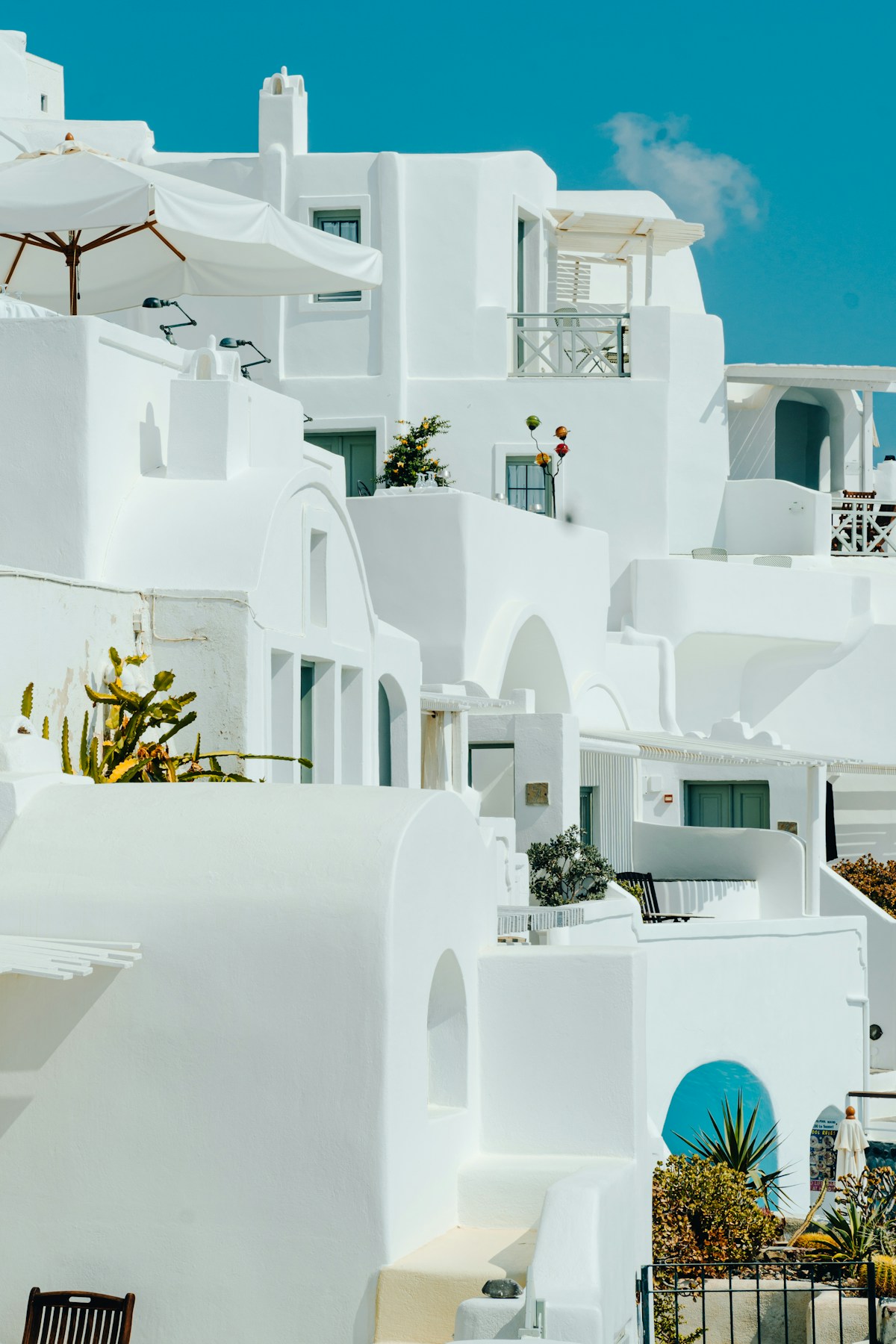
Sidi Bou Said is one of Tunisia’s most photogenic destinations, but it is best enjoyed as more than a quick stop for pictures. The village is at its best when visitors slow down, walk the lanes, sit down for coffee or tea, and take in the sea views.
Because it sits close to Tunis and Carthage, it also works naturally as part of a wider day out. That gives it a very easy place in a first-time Tunisia itinerary. The TGM light rail from Tunis-Marine station takes approximately 35 minutes and costs just 1.5 TND as of 2026 - making Sidi Bou Said one of the most accessible day trips in the country.
Walk the blue-and-white streets
This is the main reason many travellers come. The streets, steps, courtyards, and terraces create the village’s distinct character and make wandering the core experience. Every door is painted in the same shade of Tunisian blue (known as “bleu de Sidi Bou Said”), with white-washed walls and black wrought-iron window grilles creating a remarkably uniform and photogenic streetscape. The village is compact - the main walking circuit takes approximately 30–45 minutes without stops, but most visitors spend considerably longer photographing doorways, staircases, and courtyard glimpses. The best streets for photography are Rue Habib Thameur and the narrow lanes leading up from the main entrance towards the clifftop viewpoint.
Visit Cafe des Nattes
Cafe des Nattes is the most famous cafe in Tunisia and one of the most photographed spots in the country. It sits at the top of a short flight of steps near the village entrance, with a traditional interior of woven mats (nattes), low benches, and arched ceilings. The signature drink is mint tea with pine nuts (the au pignon), which costs approximately 3–5 TND as of 2026. The cafe has been operating since the early 20th century and was frequented by artists including Paul Klee, August Macke, and the French painter André Gide. Sitting here with a tea and watching the passing foot traffic is one of the simplest and most enjoyable things to do in the village.
Take in the sea views
The clifftop position of Sidi Bou Said provides panoramic views over the Gulf of Tunis, with the coastline stretching towards La Marsa to the north and the port of La Goulette to the south. The best viewpoint is from the terrace area near the Ennejma Ezzahra palace. On clear days, you can see the full sweep of the bay and the mountains of Cap Bon in the distance. The light is particularly good in late afternoon and during sunset - this is the time when the white buildings take on a warm golden glow and the sky over the gulf turns pink and orange.
Visit Ennejma Ezzahra (Dar El Baron d’Erlanger)
This palace-museum is one of Sidi Bou Said’s most worthwhile attractions and is often overlooked by visitors who only walk the main streets. Built in the early 20th century by Baron Rodolphe d’Erlanger, a French-British musicologist and painter, the palace blends Andalusian, Ottoman, and traditional Tunisian architectural styles. The interiors feature hand-painted ceilings, zellige tilework, carved stucco, and period furniture. The building also houses the Centre des Musiques Arabes et Mediterraneennes (CMAM), dedicated to Arab and Mediterranean music traditions. Entry costs approximately 8 TND as of 2026. The palace gardens have excellent views over the gulf. Allow approximately 45 minutes to 1 hour for a visit.
Explore the art galleries
Sidi Bou Said has a long association with artists and writers. Paul Klee visited in 1914, and the experience famously transformed his approach to colour. Today, several small galleries line the main streets, selling paintings, ceramics, and photography - mostly by Tunisian artists. Galerie Saladin and the smaller studios near the top of the village are worth browsing. Prices for original artwork range from approximately 50 TND for small prints to 500+ TND for larger original paintings.
Shop for local crafts
The souvenir shops along the main street sell a mix of typical tourist items and some genuinely attractive local crafts. Look for:
- Birdcages - Sidi Bou Said is famous for its ornate, hand-made birdcages in blue-painted ironwork. Small decorative versions cost approximately 20–50 TND; larger display pieces from 100 TND upwards
- Ceramics - hand-painted tiles and bowls in traditional Tunisian patterns, from approximately 10–30 TND
- Jasmine bouquets - street vendors sell small jasmine posies (machmoum) for approximately 1–2 TND. These are a symbol of the village and make for excellent photographs
Eat at Dar Zarrouk
For a sit-down meal with a view, Dar Zarrouk is the best restaurant in the village. It occupies a traditional house with a terrace overlooking the Gulf of Tunis. The menu features upscale Tunisian cuisine - grilled fish, couscous, and regional specialities. Main courses cost approximately 30–50 TND as of 2026, with a full meal including drinks coming to approximately 60–100 TND per person. Reservations are recommended for terrace seating, especially at sunset. For a more casual and affordable option, Au Bon Vieux Temps near the main street serves traditional dishes from approximately 15–25 TND per main.
Combine Sidi Bou Said with Carthage
This is one of the easiest and best day-trip combinations in Tunisia. Carthage is just one TGM stop from Sidi Bou Said (or a 10-minute walk). A morning exploring the Carthage archaeological sites (entry approximately 12 TND as of 2026) - including the Antonine Baths, the Byrsa Hill museum, and the Tophet - followed by an afternoon in Sidi Bou Said for lunch and wandering, creates a balanced and rewarding day. We recommend starting with Carthage in the morning when the ruins are quieter and cooler, then moving to Sidi Bou Said for lunch and a slower afternoon.
Stay later if you can
Sidi Bou Said often becomes more enjoyable once the main daytime crowds have thinned out, typically after 4 PM. If your schedule allows, lingering into late afternoon for sunset transforms the experience. The light on the white buildings and blue sea is at its best, the temperature drops to a comfortable level, and the village feels calmer and more atmospheric. The last TGM train back to Tunis departs at approximately 11:30 PM, so there is no rush to leave.
Practical tips
- When to arrive: Before 9 AM for quiet streets and the best photography light, or after 3 PM when day-trip tour buses start to leave
- How long to spend: 2–3 hours is comfortable; a half day if combining with a meal and Carthage
- Getting there: TGM from Tunis-Marine (approximately 1.5 TND, 35 minutes). By taxi from central Tunis, expect approximately 15–20 TND
- Footwear: Wear comfortable shoes with grip - the cobbled streets are steep and can be slippery
- Water: Bring a bottle; there are limited places to buy drinks along the quieter lanes
Is Sidi Bou Said worth more than a quick stop?
Yes. While many people visit briefly, it is much more enjoyable when treated as a proper half-day stop rather than a five-minute photo break. The village is small, but it rewards unhurried time - and the combination of architecture, sea views, cafe culture, and the Ennejma Ezzahra palace makes it one of the richest short experiences in Tunisia. For an organised route combining Sidi Bou Said with Tunis and Carthage, see our Tunis, Carthage and Sidi Bou Said tours guide. If you’re considering staying overnight, see our best hotels in Sidi Bou Said for the small selection of characterful properties in the village. Book a guided Carthage and Sidi Bou Said tour if you prefer the landmarks, history, and logistics handled by a guide.
Search hotels in Sidi Bou Said on Booking.com
Plan Your Trip
✈️ Book your flights to Tunisia 🛡️ Get travel insurance 📱 Stay connected with an eSIM 🚗 Rent a car