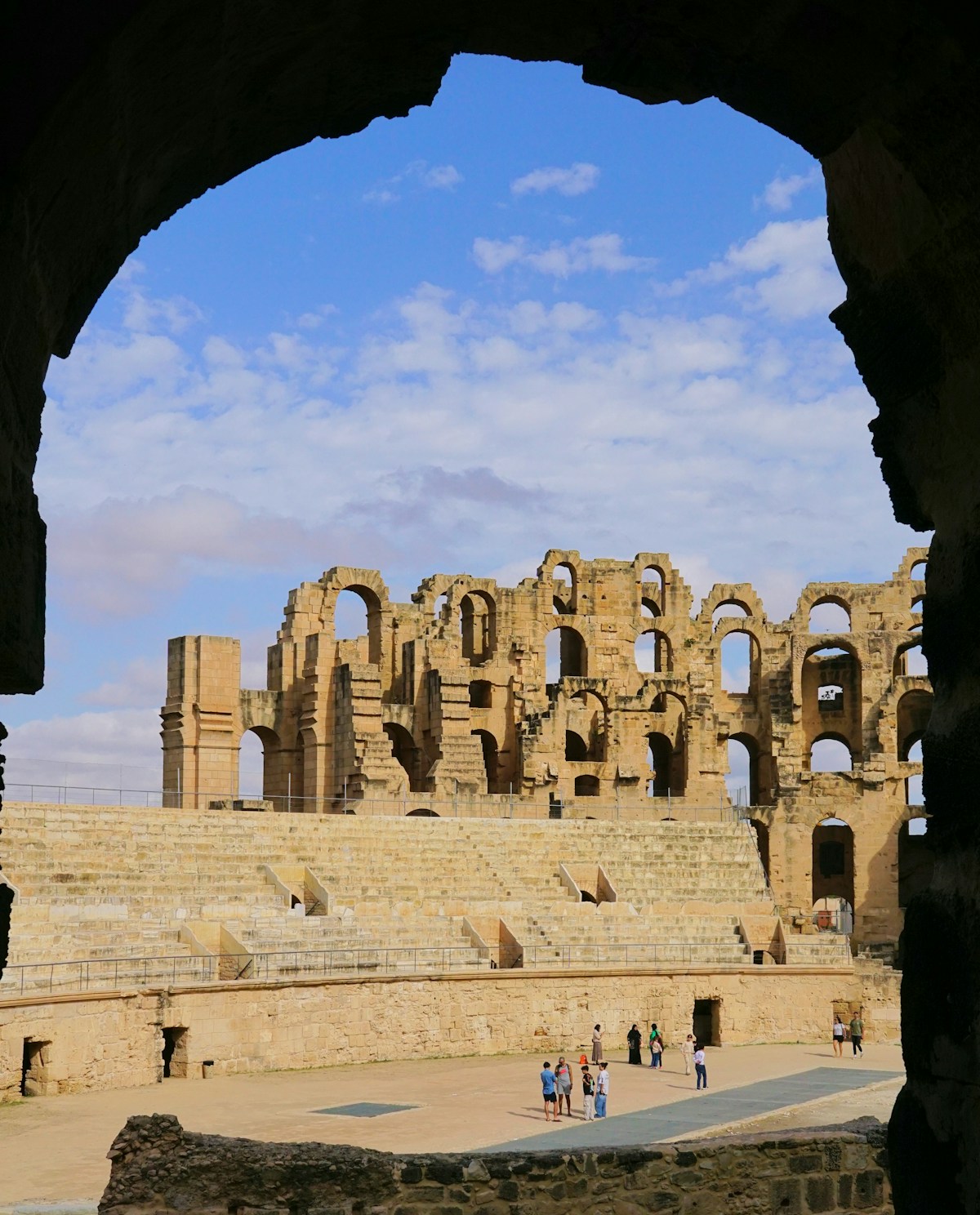
The El Jem amphitheatre is the third-largest Roman arena ever built. It seats approximately 35,000 spectators, stands to nearly its full original height on three sides, and sits in the middle of a small town in central Tunisia where most visitors arrive with complete surprise at its scale. A tour or day trip to El Jem is one of the strongest single-site experiences in North Africa.
El Jem has been a UNESCO World Heritage Site since 1979. For a full visitor guide with practical details, see our El Jem amphitheatre guide.
What Tours to El Jem Include
Most guided day trips combine the amphitheatre with the El Jem Archaeological Museum, located in the town centre about 500 metres from the arena. The museum holds an outstanding collection of Roman mosaics excavated from the surrounding Thysdrus villas, including large floor mosaics depicting hunting scenes, marine life, and mythological figures.
The entry fee of approximately 12 TND (as of 2026) covers both the amphitheatre and the museum. Photography is permitted throughout.
Longer circuit tours from Tunis or Sousse often pair El Jem with:
- Kairouan and the Great Mosque of Uqba (100 km north)
- Sfax medina (60 km south)
- Mahdia beach (75 km east)
Full-day circuits covering two or three of these sites in a private vehicle are commonly available on GetYourGuide and take 9 to 11 hours including travel.
Getting There by Train
The train is reliable and often preferable to a group tour for flexible visitors:
- From Sousse: approximately 1 hour, several trains daily, fare approximately 4 to 6 TND
- From Tunis (Gare de Tunis): approximately 2.5 to 3 hours, fare approximately 10 to 15 TND
- From Sfax: approximately 1 hour, fare approximately 4 to 6 TND
El Jem train station is a 10-minute walk from the amphitheatre. The town has cafes and a handful of restaurants near the site. Bring water in summer; the stone radiates heat from mid-morning onward.
Louage (shared taxi) is another option from Sousse or from neighbouring towns. Louages to El Jem depart from Sousse’s southern louage station.
Entry Fees and Opening Hours
Entry fee (as of 2026): approximately 12 TND per adult, including the museum
Opening hours: approximately 07:00 to 19:00 in summer; 08:00 to 17:00 in winter (hours vary seasonally, confirm on arrival)
Photography: permitted throughout, including in the museum
Time needed: 90 minutes for the amphitheatre alone; 2.5 hours including the museum
What to Expect on Site
The arena floor is accessible to visitors. You walk directly onto the oval sand floor and look up at tiered seating banks and the arched corridors running around the exterior. The northern section is the most complete; the southern third was partly dismantled in the 17th century when local rulers removed stone for other construction.
Subterranean corridors beneath the arena floor are partially open to visitors on guided access; check at the ticket office. These passageways housed animals and gladiators before events and give a strong sense of how spectacles were staged.
The site draws fewer visitors than the Colosseum in Rome despite being architecturally comparable. Morning visits in spring and autumn are the most comfortable. In late July, the El Jem International Symphonic Music Festival uses the amphitheatre as its concert venue, which means the site is particularly busy and some areas may be under preparation.
Combining El Jem with Other UNESCO Sites
El Jem sits at a convenient midpoint between several of Tunisia’s other World Heritage Sites:
- Kairouan (100 km north): the Great Mosque of Uqba and Aghlabid Basins. See our Kairouan tours guide for operators and details.
- Medina of Sfax (60 km south): the most intact medieval Arab medina in Tunisia, entry free. See our Sfax guide.
- Medina of Sousse (90 km north): 9th-century ribat and Great Mosque. See our Sousse guide.
A full day from Tunis covering El Jem and Kairouan is achievable but requires an early start. A private driver or tour makes this more practical than public transport.
Visitor Tips
- Bring cash: the ticket office does not reliably accept cards
- Visit early: summer heat at the site peaks from mid-morning; early visits are more comfortable
- Add the museum: the mosaics are world-class and often skipped by rushed tour groups
- Factor travel time: from Tunis, allow 5 to 6 hours of train travel round-trip plus site time
For guided tours from Tunis or Sousse, search GetYourGuide for licensed operators with English-speaking guides. Private day trips start from approximately 60 to 90 USD per person depending on group size and included stops.