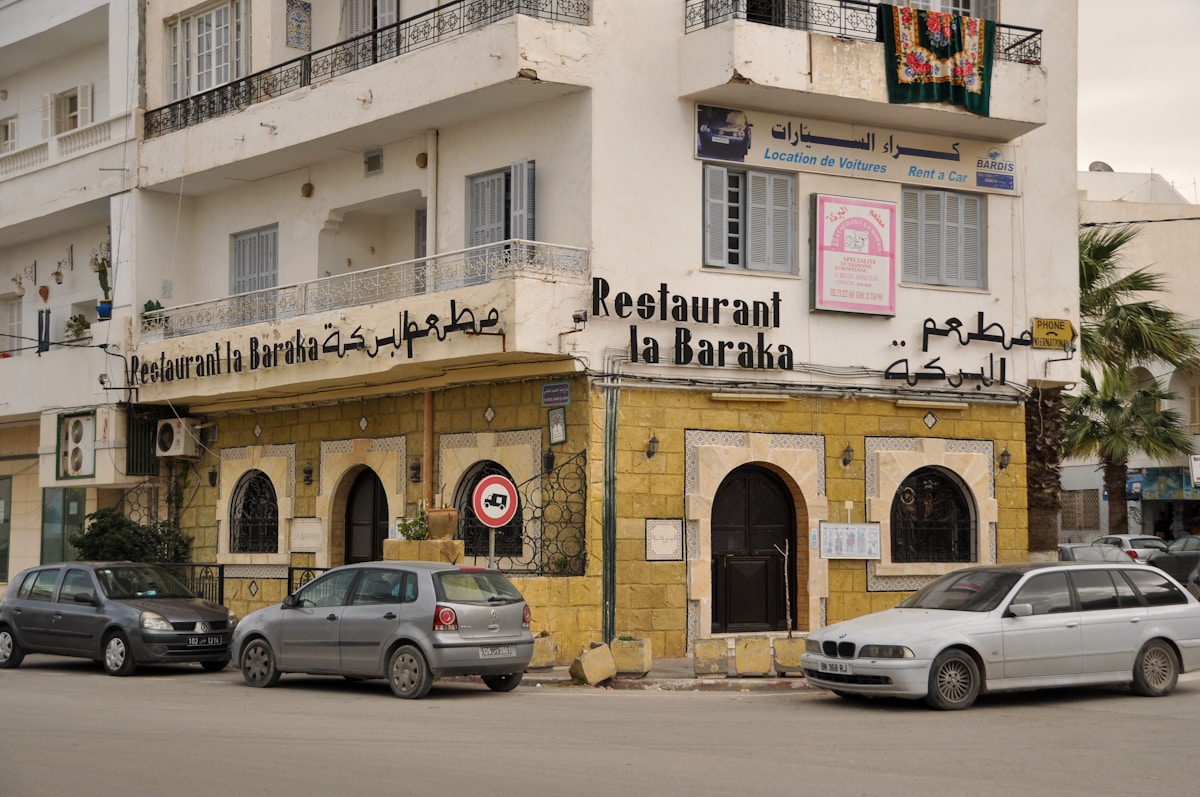
Tunisian cuisine carries layers that are harder to read than the food itself: the Berber grain traditions, Arab and Ottoman spice use, Andalusian influence in the pastry-making, Italian traces in pasta dishes from the protectorate era. Eating your way around the Tunis medina with someone who can explain what you are eating — and why this particular harissa, this particular fish preparation, this particular market stall — adds a dimension that solo wandering rarely produces.
Food tours in Tunis on GetYourGuide cover several formats, from 2.5-hour street food walks to full-day private cooking-and-market experiences. This guide covers each type, with realistic prices in TND and what each format actually delivers.
Medina Food Walking Tours
A medina food walking tour is the core format: a guide leads a small group through the old city, stopping at 4–6 points to eat and explain. The route typically covers the area around Zitouna Mosque, Rue Jemaa Zitouna, the northern souk alleys, and the streets running toward Bab El Bhar.
What you eat: The stops are structured around dishes that are native to the medina kitchen and difficult to replicate without guidance. Brik — a malsouka pastry sheet wrapped around egg, tuna, and capers and deep-fried until it shatters — is always included. Lablabi (chickpea soup with harissa, cumin, raw egg, and torn bread) typically appears as the morning anchor dish. Fricassé, the small fried bread roll filled with tuna, olives, harissa, and boiled egg, features as a mid-walk snack. The final stop is usually a sit-down course at a traditional medina restaurant, often couscous or a slow-cooked ragine.
Duration and group size: Most group tours run 3–4 hours and cap at 8–12 people. Private options are available for groups of 2–6 who want to control the pace.
Price range: Group format: approximately 100–180 TND per person as of 2026. Private format: approximately 300–500 TND for up to 4 people.
Booking: Browse current medina food walking tours on GetYourGuide. Most operators offer free cancellation up to 24 hours before departure. If you want to extend the day, a Tunis medina, Carthage and Sidi Bou Said full-day tour covers the cultural context around the areas you walk through on any food tour.
Street Food and Market Tours
The street food and market format combines a walk through Marché Central — Tunis’s main covered food market on Rue Charles de Gaulle — with a medina circuit focused on snack foods rather than a sit-down meal.
Marché Central: Built in the 19th century during the French protectorate, the market is a working commercial space, not a tourist destination. The fish section dominates the ground floor: dentex, sea bream, red mullet, octopus, cuttlefish from Tunisian ports. Around the perimeter, stalls sell dark beldi olives, green Sahel olives in brine, dried spices, harissa paste in jars, preserved lemons, and fig bars. The market is open Monday to Saturday, 06:00–14:00; best visited 07:00–09:00 when the fish is freshest.
On the street: The tour typically includes stops for brik, fricassé, and zlabia (a spiral deep-fried honey pastry sold by weight in the souks, approximately 8–12 TND per 250g). Unlike the full medina food walk, the focus is on sampling quantity and variety rather than a structured meal arc.
Duration: 2.5–3 hours. Shorter and less expensive than the full medina walk format.
Price range: Approximately 80–140 TND per person as of 2026.
Cooking Classes in Tunis
Cooking classes take the food tour format indoors: a host or restaurant chef teaches the core techniques of Tunisian cooking, and participants eat the results. Classes run across two settings — professional restaurant kitchens and private homes — and each has distinct strengths.
Dar El Jeld (12 Rue Dar El Jeld, near Zitouna Mosque) runs private cooking sessions with its kitchen team from a restored 18th-century townhouse. Cost: approximately 300–400 TND per person as of 2026 for a 3–4 hour session including lunch. Maximum 6 participants. Reservation required at least 2 days in advance.
Home kitchen classes listed on GetYourGuide (search “Tunis cooking class”) are typically more informal: a local cook, a domestic kitchen, and a more personal teaching style. Cost: approximately 180–280 TND per person as of 2026.
What you will cook: The standard curriculum covers malsouka pastry from scratch, harissa preparation, proper couscous technique (steamed three times, not just poured over boiling water), and a slow-cooked tagine. Three-course structure: starter, main, pastry. Vegetarian adaptations are available with advance notice.
Tunisia Culinary Tours runs day-length experiences combining a market visit, a home cooking session, and a shared meal. Cost: approximately 280–380 TND per person as of 2026.
Traditional Restaurants in the Medina
For a sit-down experience after a food walk, several medina restaurants operate from converted palace buildings and serve traditional multi-course Tunisian meals.
Dar El Jeld (12 Rue Dar El Jeld, near the Zitouna Mosque) is consistently regarded as the best traditional restaurant in Tunis. It operates from a restored 18th-century townhouse with tile-work, carved stucco, and painted ceilings. A three-course traditional Tunisian menu costs approximately 70–120 TND per person as of 2026, plus drinks. Reservation required; book a day or two ahead.
Restaurant Essaraya (6 Rue Ben Mahmoud) is a similar dar setting and slightly less formal. Mains cost approximately 30–50 TND as of 2026. Popular with local professionals at lunchtime.
Restaurant Mabrouk (Rue Sidi Mehrez, near Bab Souika) is one of the most genuine medina restaurants — simple tables, no tourist markup, and excellent lablabi and couscous. A full meal costs 10–18 TND as of 2026.
La Marsa and Sidi Bou Said
The northern suburbs of Tunis — particularly Sidi Bou Said and La Marsa — have a strong cafe culture and a growing restaurant scene that works from the same ingredients as the medina but in more contemporary settings.
Cafe des Nattes in Sidi Bou Said is the classic perch for mint tea and pine nut-topped pastries while watching the blue-and-white village below. Tea and pastries cost approximately 6–12 TND as of 2026.
Restaurant du Golfe (La Marsa seafront) is a reliably good fish restaurant with views of the Bay of Tunis. Grilled sea bream or dentex: approximately 40–65 TND as of 2026.
Getting there from Tunis medina: The TGM (Tunis-Goulette-Marsa) light rail connects Bab El Bhar (Tunis Marine station) to Sidi Bou Said in about 25 minutes and La Marsa in 35 minutes. Tickets cost approximately 1.5–2.5 TND each way as of 2026.
Private vs Group Food Tours
Group tours cost significantly less per person and work well when the tour follows a fixed medina circuit with pre-arranged tasting stops. Most food walking tours run predictably regardless of group composition.
Private tours are worth the extra cost when you want to control pace, have dietary restrictions that affect the tasting stops, travel with children, or want to ask more detailed questions. Private guides in the medina navigate to lesser-visited kitchens and can adjust the itinerary if a particular stop is closed.
For two people, the per-person cost difference between a private and group food tour is typically 100–150 TND. For four people, the private cost is often close to the group total.
Best Time for Food Tours in Tunis
Spring (March–June): Optimal. Temperatures in the 18–25°C range suit a 3-hour medina walk. Markets are fully stocked. This is peak booking season — reserve 2–3 days ahead.
Autumn (September–November): The second best window. Slightly quieter than spring, temperatures drop to a comfortable range after the August heat. Operators are fully active.
Summer (July–August): Tours run but the medina becomes hot by mid-morning. Choose early morning departures (08:00–09:00 start). Stay hydrated; the pace will be slower.
Ramadan: Most street food vendors and medina restaurants are closed during daylight hours. Food tours are impractical in daylight during Ramadan. Some operators run post-iftar evening food tours instead — check listings if your visit overlaps.
Practical notes before you go: Wear flat shoes for medina walking (the uneven cobblestones in the souks are genuinely difficult in heels). Carry cash in TND for any additional purchases at market stalls or street vendors — food tour tastings are covered by the tour fee, but you will want cash for extras. Food tours typically include tasting portions rather than full meals; eat a small breakfast beforehand to avoid starting on an empty stomach. A half-day food tour pairs well with an afternoon hammam and spa session in Tunis — traditional hammams in the medina are easy to find and book, and the combination makes for a complete cultural day.
Browse food and culinary tours in Tunis
Plan Your Trip
✈️ Book your flights to Tunisia 🛡️ Get travel insurance 📱 Stay connected with an eSIM 🚗 Rent a car