Choosing where to base yourself in Tunis is one of the more consequential decisions a remote worker makes on arrival. The city is long and dispersed, and the difference between a productive month and a frustrating one often comes down to proximity to reliable internet, coworking options, and the kind of neighbourhood rhythm that suits extended stays. This guide covers the main options, from the modern business district in the northeast to the atmospheric medina at the city’s historic core.
For coworking space details and prices, see our coworking spaces in Tunis guide. For visa rules and stay limits, see the Tunisia visa requirements guide. For monthly cost breakdowns, see our Tunisia cost of living for digital nomads.
Les Berges du Lac (Lac 1 and Lac 2)
Les Berges du Lac is the modern business district built northeast of the city centre along the shores of Lac de Tunis. Lac 1 (the original lakeside development) and Lac 2 (the newer, denser business park to the north) are where most of the city’s serious coworking infrastructure is concentrated, including GoWork and StartupHaus Tunis.
Rent (1-bed apartment, as of 2026): approximately 1,200–2,000 TND per month. Newer builds in Lac 2 sit at the upper end; older Lac 1 apartments are more affordable. Furnished short-term rentals run approximately 1,500–2,800 TND per month depending on quality.
Internet: Fibre (FTTH) is widely available in the newer apartment buildings here, with speeds of 50–200 Mbps where connected. Most coworking spaces in the district offer 50–100 Mbps connections.
Why nomads choose Lac: Productivity-first infrastructure. GoWork is a 5-minute walk or short Bolt ride. International supermarkets, restaurants, and banks are accessible. Quieter and more organised than the city centre. Lower street noise. Good for nomads who want to minimise friction in their working day.
Trade-off: Limited cultural texture for evenings and weekends. The area is functional rather than atmospheric. If character matters to your quality of life over a longer stay, plan regular trips to the medina or Belvédère.
Menzah
Menzah is a large residential district running north from the city centre in several sub-areas (Menzah 1 through Menzah 9). It is calm, green, and considerably more affordable than Lac. The district is popular with Tunisian middle-class families and long-stay expats who prioritise space and quiet over proximity to coworking.
Rent (1-bed apartment, as of 2026): approximately 800–1,400 TND per month for a modern furnished apartment. Larger 2-bed options are available from around 1,000 TND.
Internet: ADSL remains common in older Menzah buildings (typical speeds of 8–15 Mbps download); newer builds in upper Menzah areas have fibre connectivity. Verify before committing.
Why nomads choose Menzah: Price and space. A Menzah apartment often gives you significantly more square metres per dinar than Lac or La Marsa. The TGM and bus routes connect to central Tunis, and Bolt ride-hailing is reliable for flexible movement.
Trade-off: Less walkable for day-to-day needs. Some Menzah sub-areas require a vehicle or frequent Bolt usage to reach coworking, shops, and restaurants conveniently.
La Marsa
La Marsa is a coastal suburb on the TGM rail line, 20–25 km north of central Tunis. The TGM train runs regularly and the journey to the city centre takes approximately 25–30 minutes, costing around 1.5 TND as of 2026. The suburb has the most established expat community of any Tunis-area neighbourhood.
Rent (1-bed apartment, as of 2026): approximately 900–1,800 TND per month. Apartments near the beach and the main Marsa Plaza shopping area sit at the higher end. Properties a few streets inland are significantly more affordable.
Internet: Good fibre coverage in newer apartment buildings. Cafes in La Marsa reliably have good wi-fi, making it one of the better neighbourhoods for cafe-working without a coworking membership.
Why nomads choose La Marsa: Quality of life is genuinely high. The beach is walkable. Cafes and restaurants are excellent. The TGM makes day trips to the city centre, Carthage, and Sidi Bou Said easy. The expat community is accessible through local Facebook groups and coworking community channels.
Trade-off: The TGM to Lac or the city centre takes 25–35 minutes each way. If you are spending most weekdays at a Lac coworking space, the commute is manageable but not trivial. La Marsa works best for nomads with a home office setup or those using coworking spaces selectively.
Belvédère and Cité Jardin
The Belvédère district sits centrally, organised around the large Belvédère Park. It has an older apartment stock, a functioning arts scene (the Belvédère Contemporary Art Museum is here), and a cluster of cafes on the streets north of the park. Cité Jardin, adjacent to the south, is quieter and more residential.
Rent (1-bed apartment, as of 2026): approximately 700–1,200 TND per month. Older buildings dominate; some are well-maintained, others have dated utilities.
Internet: ADSL is the norm in older buildings (8–20 Mbps typical). Some newer buildings have fibre. Ask specifically before signing.
Why nomads choose Belvédère: A genuine Tunis neighbourhood feel without tourist infrastructure. Walking distance from cafes, local restaurants, and supermarkets. A good base for experiencing everyday Tunis life on a budget.
Trade-off: Internet in many buildings is ADSL. Not well-positioned for walking to Lac coworking. Bolt or public transport needed for most work-day commutes.
The Medina
Living inside the historic Tunis medina is possible and appealing from a cultural standpoint. Riad-style rentals exist at approximately 800–1,500 TND per month for a full apartment. The medina is a UNESCO World Heritage Site and the architecture is extraordinary.
Search hotels in Tunis on Booking.com
Internet: Almost universally ADSL in the medina, with typical speeds of 5–15 Mbps. This is adequate for video calls on good days but not reliable for bandwidth-heavy work. Mobile data (4G LTE) on Ooredoo or Orange Tunisia is a practical backup.
Why nomads choose the Medina: The atmosphere is incomparable. Waking up in a riad in the Tunis medina is a fundamentally different experience from any other neighbourhood on this list. For a week or two of intensive cultural immersion combined with lighter remote work, it works.
Trade-off: For intensive daily remote work, the ADSL infrastructure is the binding constraint. Best treated as a short-stay option rather than a permanent base for a 1–3 month nomad stay.
Sidi Bou Said and Gammarth
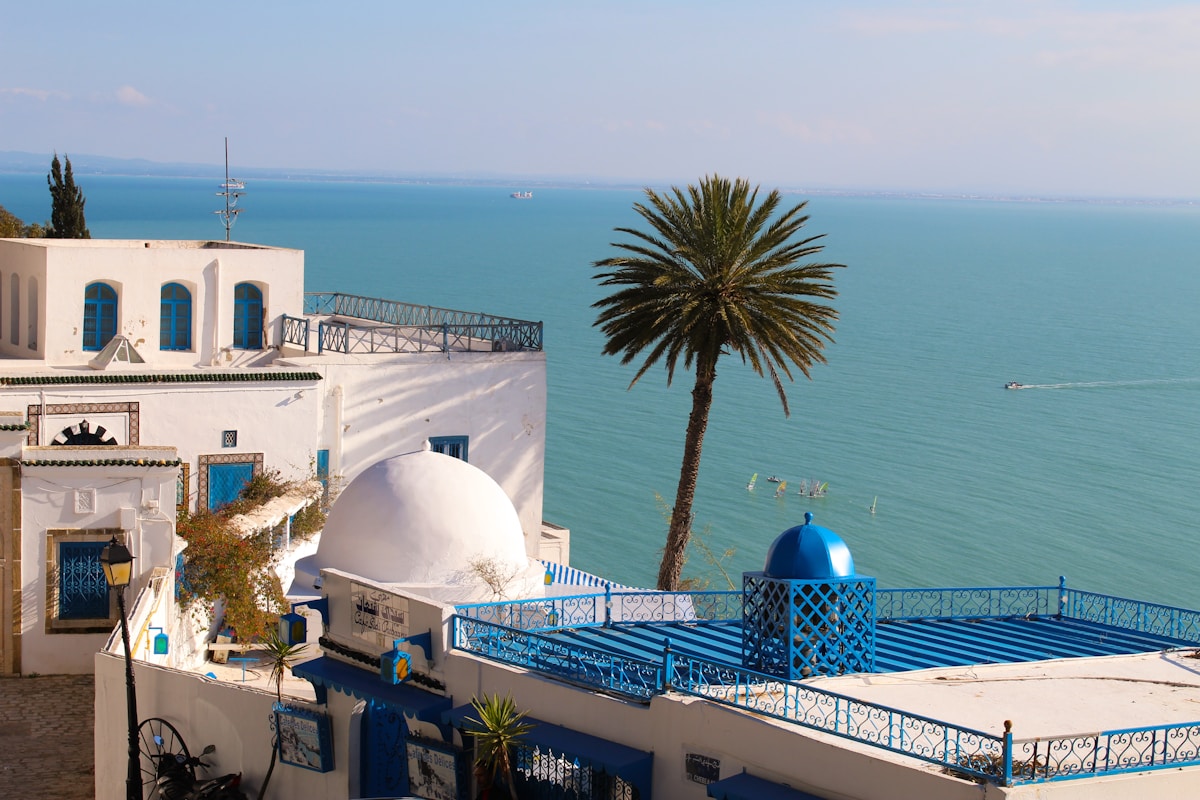
Both Sidi Bou Said and Gammarth are upmarket coastal suburbs north of La Marsa. Sidi Bou Said is one of the most beautiful villages in Tunisia, built on a cliff above the sea with signature blue-and-white architecture. Gammarth is larger, with some of Tunisia’s most expensive hotels and residential developments.
Rent: Long-term rentals in Sidi Bou Said are rare and priced at a significant premium (1,500–3,000 TND per month or more). Gammarth apartments run 1,200–2,500 TND.
Internet: Variable; both areas have a mix of ADSL and newer fibre properties. Confirm before committing.
These two suburbs are most practical as occasional day-trip or weekend destinations rather than primary nomad bases. TGM access from Sidi Bou Said is easy. Gammarth is less well-connected to central Tunis by public transport.
Practical Comparison
| District | 1-bed rent (TND/month) | Best for |
|---|---|---|
| Les Berges du Lac | 1,200–2,000 | Coworking proximity, productivity focus |
| Menzah | 800–1,400 | Space and value, quieter lifestyle |
| La Marsa | 900–1,800 | Beach lifestyle, expat community |
| Belvédère / Cité Jardin | 700–1,200 | Local neighbourhood character on a budget |
| The Medina | 800–1,500 | Short stays, cultural immersion |
| Sidi Bou Said / Gammarth | 1,500+ | Upmarket longer stays (limited supply) |
Prices as of 2026; verify current listings on Facebook expat groups, Airbnb, or local agency platforms before committing.
Getting around: Bolt ride-hailing is the most flexible option for point-to-point travel within Tunis and costs approximately 8–20 TND for typical in-city journeys. The TGM covers the northern coastal corridor from Tunis Marine to La Marsa and Carthage. The Tunis Light Rail covers several central routes. See our getting around Tunisia guide for full transport options. For staying connected, an eSIM for Tunisia lets you get a local data plan active before landing - useful when navigating a new neighbourhood on arrival.
A guided city introduction tour is one of the fastest ways to calibrate which neighbourhood suits your working style before committing to a longer rental.
See Also
- Coworking Spaces in Tunis: prices and amenities by space
- Tunisia Cost of Living for Digital Nomads: monthly budget breakdown
- Digital Nomad Guide to Tunisia: complete overview
- Getting Around Tunisia: transport options