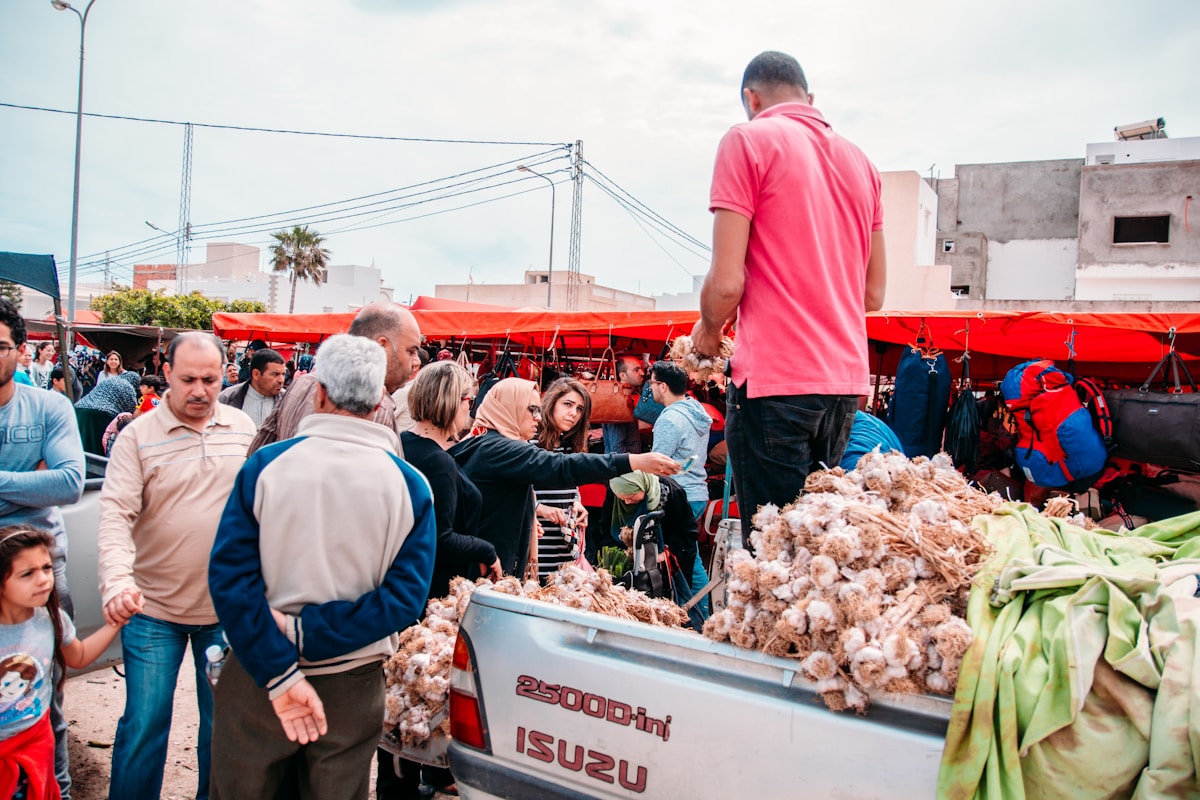
Tunisia is one of the more affordable Mediterranean destinations for remote workers. The cost of living is genuinely low by European and North American standards, and the gap between budget and comfortable living is narrower than in many competing nomad destinations. This breakdown covers monthly costs by category, with realistic figures based on conditions in 2026. Prices are in Tunisian dinars (TND) with approximate euro equivalents; the exchange rate fluctuates, so treat conversions as indicative.
For context on where to live, see our best neighbourhoods in Tunis for digital nomads guide. For visa and stay duration rules, see the Tunisia visa requirements guide.
Accommodation
Accommodation is the largest single expense and varies significantly by neighbourhood and apartment quality.
Search hotels in Tunis on Booking.com
Budget tier (medina / Belvédère / outer Menzah): A basic furnished studio or 1-bed apartment in the Bab Bhar area, older parts of Belvédère, or the more affordable Menzah sub-areas runs approximately 600–900 TND per month (as of 2026). Internet in these buildings is typically ADSL. Good for cost minimisers willing to manage slower connectivity.
Mid-range tier (central Menzah / Belvédère modern builds): Modern furnished 1-bed apartments with reliable internet access run approximately 900–1,400 TND per month. This is the most popular range for digital nomads staying one to three months.
Comfortable tier (Lac 1 and 2 / La Marsa / newer Menzah): Furnished apartments in the business district or the popular expat coastal suburb of La Marsa run approximately 1,200–2,000 TND per month. These apartments typically have fibre internet (50–200 Mbps) and are in newer builds. Good for nomads who prioritise a smooth working environment over cost minimisation.
Short-stay premium: Airbnb and furnished rental platforms add approximately 30–50% to the above monthly figures. Negotiating directly with a landlord via local Facebook expat groups or through the coworking community typically brings prices closer to the rates above.
Coworking
The main coworking spaces in Tunis charge:
- Day pass: approximately 30–50 TND as of 2026
- Monthly hot-desk membership: approximately 300–500 TND as of 2026
- Dedicated desk (monthly): approximately 500–700 TND at the more established spaces
GoWork (Les Berges du Lac 2) and Cogite (Centre-Ville) are the two main options for reliable fibre connections and meeting room access. See our coworking spaces in Tunis guide for the full breakdown.
Working from cafes is a cost-effective complement. Most nomads in Tunis use a mix of a monthly coworking membership (for days requiring reliable video calls or focused work) and cafe working (for lighter days). Budget approximately 100–150 TND per month for cafe coffees during working sessions.
Food and Groceries
Groceries: A weekly shop at a Carrefour Market or Monoprix (the main supermarket chains available in Tunis) runs approximately 50–80 TND per week, or 200–320 TND per month, for a solo remote worker. Local markets and corner shops are cheaper for fresh produce, bread, and basics.
Eating out: This is where Tunisia’s affordability is most visible. A sit-down lunch at a local Tunisian restaurant (brik, couscous, grilled fish) costs approximately 8–15 TND as of 2026. A mid-range restaurant dinner runs 25–50 TND per person including a soft drink. International-style restaurants in Lac 2 or La Marsa charge 50–100 TND per person.
Coffee and cafe culture: A coffee in a central Tunis cafe costs approximately 2–4 TND. Expect to spend 5–8 TND at a sitting to keep a table for a working session. This is normal practice and not frowned upon.
Indicative monthly food budget:
- Budget (mostly cooking, occasional local restaurant): 300–450 TND
- Mid-range (mix of cooking and eating out 3–4 times per week): 500–700 TND
- Comfortable (eating out frequently, quality restaurants): 800–1,200 TND
Transport
City transport: The Tunis Light Rail (metro) covers several urban routes and is cheap. Journeys cost approximately 0.7–1.5 TND as of 2026. Buses are similarly affordable but slower.
TGM suburban train: Connects Tunis city centre to La Marsa, Sidi Bou Said, and Carthage along the northern coastal corridor. A single journey costs approximately 1.5 TND as of 2026.
Bolt ride-hailing: The most practical option for flexible point-to-point travel within Tunis. Typical in-city journeys run 8–20 TND. An airport transfer costs approximately 30–50 TND depending on traffic and destination.
Monthly transport budget:
- Metro and TGM only: 30–60 TND
- Metro plus 10–15 Bolt rides: 100–180 TND
- Infrequent metro user relying mainly on Bolt: 200–350 TND
Utilities and Connectivity
Electricity and water: Included in some furnished apartment rentals; excluded in others. When billed separately, a 1-bed apartment in Tunis typically incurs approximately 60–120 TND per month in electricity during mild months, rising to 150–200 TND in summer with air conditioning in frequent use.
Mobile data: A 30-day SIM plan with 20–50 GB of data costs approximately 10–20 TND from Ooredoo, Orange Tunisia, or Tunisie Telecom as of 2026. See our Tunisia SIM card guide for purchase and setup details.
International eSIM (as a backup or on arrival): An eSIM for Tunisia is a practical option for connectivity before buying a local SIM. Useful for the first day or two.
Healthcare
Private clinic consultations in Tunis run approximately 60–100 TND as of 2026. Prescription medicines are widely available at pharmacies and substantially cheaper than European equivalents. Dental care is similarly affordable.
Travel insurance with medical cover is essential for Tunisia stays. European EHIC/GHIC coverage does not apply here, and private health insurance for the duration of your stay is the practical solution. Policies covering Tunisia typically run 20–60 TND per month depending on coverage level and the insurer.
Monthly Budget Summary
These figures are for a solo remote worker living in Tunis. Sfax, Hammamet, and smaller cities are generally 20–40% cheaper for accommodation; food and transport costs are similar.
| Category | Budget tier (TND) | Mid-range (TND) | Comfortable (TND) |
|---|---|---|---|
| Accommodation | 600–900 | 900–1,400 | 1,200–2,000 |
| Coworking / cafe working | 100–200 | 300–450 | 500–700 |
| Groceries | 200–300 | 250–400 | 350–500 |
| Eating out | 100–200 | 300–500 | 600–1,200 |
| Transport | 50–80 | 100–180 | 200–350 |
| Utilities and mobile | 80–150 | 100–200 | 150–250 |
| Travel insurance | 30–60 | 40–80 | 50–100 |
| Total | 1,160–1,890 | 1,990–3,210 | 3,050–5,100 |
All figures as of 2026. The TND is not freely convertible internationally and exchange rates vary; at typical 2025-2026 rates, 1,000 TND is approximately EUR 290–320.
Compared to other nomad destinations: Tunisia sits below Portugal, Spain, and Greece for overall cost, and is comparable to Georgia and Albania for a mid-range nomad budget. The accommodation cost is the main variable that drives the difference between budget and comfortable tiers.
Money and Banking
The Tunisian dinar is a controlled currency. You cannot order TND before arriving or transfer it internationally after leaving. ATMs dispense TND; typical withdrawal limits are 200–400 TND per transaction. Bring a bank card with low or no foreign transaction fees (Wise or Revolut work well) and plan to withdraw regularly.
See our Tunisia money guide for full details on ATMs, exchange rates, and card acceptance.
Plan Your Trip
✈️ Book your flights to Tunisia 🛡️ Get travel insurance 📱 Stay connected with an eSIM 🚗 Rent a car