Browse Sahara desert tours from Tunis
Summer in the Sahara is brutal. Tozeur in July regularly hits 45°C; trekking, riding camels, or sleeping under the stars becomes a survival exercise rather than a travel experience. Winter reverses the equation entirely. From December through February, the same desert runs at 15–20°C by day - warm enough for shirtsleeves in the afternoon sun, cool enough to make a full day of dune walking genuinely enjoyable.
Tunisia’s Sahara is one of the most accessible deserts in the world, and winter is when it performs best.
Why Winter Is the Best Time for the Sahara
The Sahara works on the same logic as most extreme environments: the danger goes away in winter. Temperatures that would hospitalise a visitor in July become ideal trekking conditions in January. The shift matters for a few specific reasons:
Camel treks become comfortable. A two-hour camel trek through the Grand Erg Oriental is a highlight of Tunisia travel. In August, it’s a heat ordeal. In January, it’s a genuine pleasure - the dunes are silent, the light is golden for longer, and the camels move at their own pace without anyone flagging from the heat.
Overnight desert camps are viable. Sleeping in a Bedouin-style tent under the Saharan sky requires cold nights to be meaningful. Summer desert camps are hot and dusty; winter camps are cold (3–6°C after midnight) but genuinely beautiful - clear, dark skies, no humidity, and a stillness that’s harder to find in other seasons.
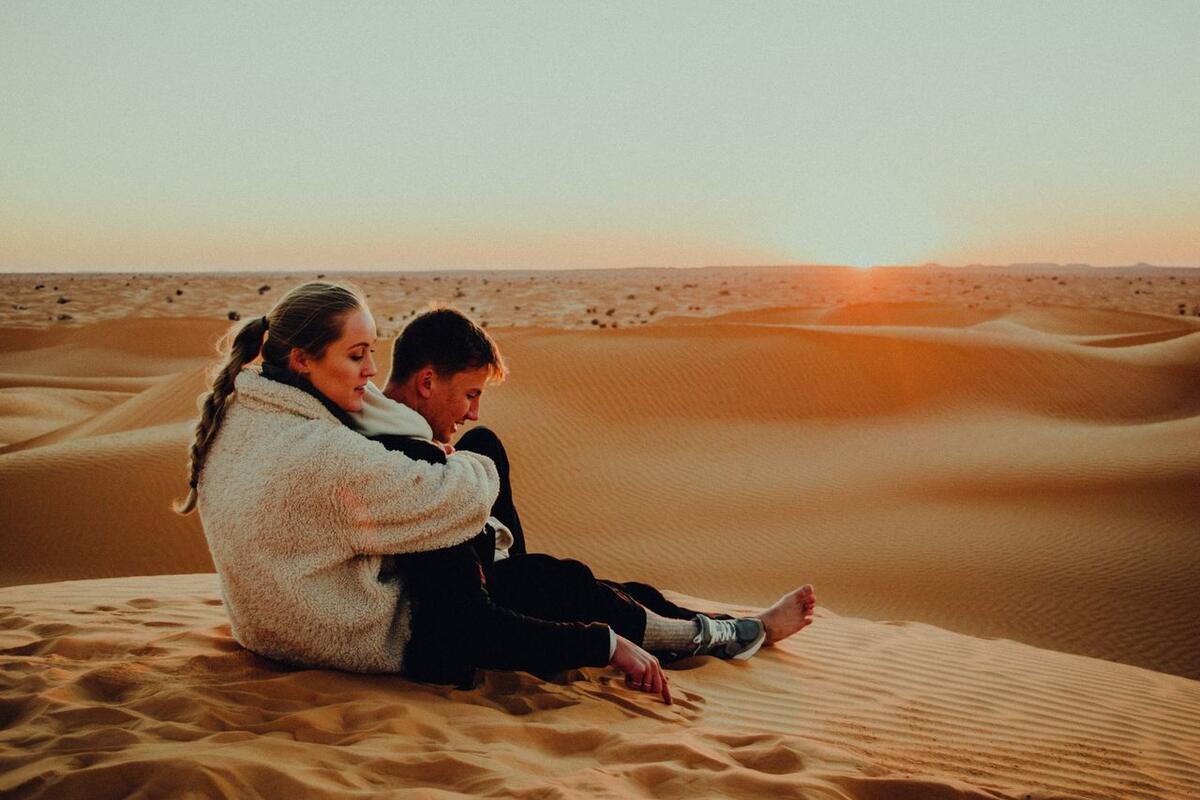
The light is better. Winter sun in the Sahara sits lower in the sky for longer each day. The dunes at Douz and the oasis palms at Tozeur catch long shadows across the afternoon. Sunrise and sunset over the Grand Erg Oriental in December are among the best light conditions in North Africa.
No crowds, lower prices. The Sahara draws European visitors in spring and autumn peaks. In December and January, tour numbers drop significantly - you will often have dune areas to yourself, operators are more flexible on itineraries, and hotel rates in Tozeur and Douz are noticeably cheaper than in March or October.
Winter Temperatures in the Sahara (Tozeur and Douz)
| Month | Daytime High | Night Low | Rain |
|---|---|---|---|
| October | 26–30°C (79–86°F) | 13–16°C (55–61°F) | Rare |
| November | 19–23°C (66–73°F) | 8–11°C (46–52°F) | Rare |
| December | 14–18°C (57–64°F) | 3–6°C (37–43°F) | Very rare |
| January | 15–20°C (59–68°F) | 3–6°C (37–43°F) | Very rare |
| February | 18–22°C (64–72°F) | 5–8°C (41–46°F) | Very rare |
| March | 22–27°C (72–81°F) | 9–12°C (48–54°F) | Rare |
Rainfall in the Sahara is negligible year-round - Tozeur averages under 10mm across all three winter months combined. The main planning variable is the night temperature. Bring a warm sleeping bag and a fleece for desert camps; the days will take care of themselves.
The Two Main Sahara Bases in Tunisia
Douz - The Gateway to the Grand Erg Oriental
Douz is Tunisia’s main desert town and the most straightforward base for Sahara experiences. It sits at the edge of the Grand Erg Oriental - the large field of rolling dunes that most visitors picture when they think of the Sahara. The town is small, low-key, and set up specifically for desert tourism: camel operators, 4x4 hire, overnight trek guides, and desert camp bookings are all centred here.
Douz is best for camel treks and multi-day dune expeditions. The overnight camp experience here is the most developed in Tunisia - several operators run fixed camps in the dunes approximately 10–15km from town. A typical two-day programme from Douz covers a camel ride into the Grand Erg, an overnight in a traditional camp, and a return by 4x4 the following morning.
- Douz: Sunset or Sunrise Camel Ride in the Sahara
- Douz: 2-Day Sahara Camel Trek
- Douz: 3-Day Camel Trek with Nomads
Tozeur - The Oasis Town with More to Do
Tozeur sits further west and offers a different character: a substantial medina of distinctive yellow-brick architecture, date palm groves, the famous mountain oases nearby, and easy access to the Chott el-Djerid salt lake. It’s the better base for a multi-day stay, particularly in winter when you want variety between desert activities.
From Tozeur, day trips reach Chebika, Mides, and Tamerza - three mountain oases set in dramatic canyons that are at their most atmospheric in winter light. The Chott el-Djerid salt lake, one of the world’s largest, produces otherworldly mirror effects in winter when shallow water sheets across its surface.
Tozeur has more accommodation options than Douz, including a small number of riad-style properties and resort hotels that reduce prices sharply in winter.
- From Tozeur: 2-Day Sahara Desert Experience with Camp
- Tozeur: 2-Day Desert Overnight with Camel Trek
- Search hotels in Tozeur on Booking.com
Getting to the Sahara from Tunis
The Sahara is roughly 450–480km south of Tunis, and the journey shapes how you plan the trip.
Organised tour (recommended for most visitors): A 2–4 day organised tour from Tunis is the simplest option. Transport, accommodation, desert camp, and guide are included. Winter is when operators run their best-value packages - from around 400 TND (approximately £100) per person for a two-day trip.
- Compare Sahara tours from Tunis
- Tunis: 3-Day Sahara Desert Tour
- Tunisia: 2-Day Mountain Oases & Sahara Desert Camp
Fly to Tozeur: Tunisair operates flights from Tunis Carthage to Tozeur-Nefta Airport (TZR). The flight takes around 1 hour and is the fastest option; winter schedules run 2–3 times per week. Book well in advance - the aircraft are small and winter demand from Europeans is picking up.
Self-drive: Renting a car in Tunis and driving south on the A1/GP3 takes 5–6 hours to Tozeur. Winter is the best season for self-drive - no heat risk, light traffic, and clear roads. The drive through the Atlas mountains and across the Chotts plain is itself one of the better road trips in North Africa.
Louage to Gabes then onward: For independent budget travellers, a louage (shared taxi) from Tunis to Gabes (around 4 hours, approximately 25 TND) followed by a second louage to Tozeur or Douz is the cheapest option. The journey is long but very cheap - around 40–50 TND total. See our Tunis to Gabes louage guide for departure points and timings.
What to Expect at a Desert Camp in Winter
Most overnight Sahara camps operate the same basic structure: camel or 4x4 transfer to a fixed camp in the dunes, sunset camel ride or dune walk, dinner in the main tent, sleeping in individual Bedouin-style tents, and sunrise over the dunes before breakfast and return.
The camps themselves are basic - mattresses on the ground, blankets, shared toilet facilities. Bring your own sleeping bag liner or travel sheet; most camps provide blankets but the quality varies and temperatures genuinely drop. A good down jacket, warm hat, and gloves make the difference between a memorable night and a miserable one.
Winter camps sell out faster than you might expect. European travellers planning a “warm winter escape” increasingly target the Sahara as a more adventurous alternative to a beach resort - book desert camp nights at least two weeks in advance in December and January, and further ahead around Christmas and New Year.
Winter Sahara vs Other Seasons: At a Glance
| Winter (Dec–Feb) | Spring (Mar–May) | Autumn (Sep–Nov) | |
|---|---|---|---|
| Daytime temp | 15–20°C ✓ | 22–32°C ✓ | 26–35°C |
| Night temp | 3–6°C (cold) | 9–15°C ✓ | 13–18°C ✓ |
| Crowds | Low ✓ | Moderate | Moderate–High |
| Tour prices | Lowest ✓ | Mid | Mid–High |
| Risk of heat | None ✓ | Low | Moderate |
| Camp comfort | Cold nights | Good | Good |
Winter wins on price, crowds, and daytime conditions. The only trade-off is cold nights - manage that with the right gear and winter is the strongest overall choice for a first Sahara visit.
For weather and crowds in each month, see our guides to Tunisia in December, January and February.
Packing List for the Sahara in Winter
Clothing:
- Base layer (thermal or merino) for nights
- Fleece or down jacket (essential after sunset)
- Windproof outer layer
- 2–3 t-shirts or light long-sleeve shirts for daytime
- Comfortable walking trousers - not shorts; the desert cools fast
- Warm hat and gloves for overnight camps
- Comfortable closed-toe walking shoes or light boots
Other essentials:
- Sunscreen SPF 30–50 (UV is strong even in winter)
- Sunglasses
- Scarf or buff (dual use: sun protection and dust cover)
- Headtorch for camp nights
- Water bottle (stay hydrated; the dry air depletes faster than you expect)
- Small day bag or daypack
Booking Your Sahara Winter Trip
The most efficient approach is a 3-day organised tour from Tunis: day one is travel south and the mountain oases, day two is desert camp and camel trek, day three is return via Chott el-Djerid. This structure gives you everything in one go without coordinating transport and accommodation independently.
For those with more time, a 5–7 day self-drive itinerary based out of Tozeur with day trips to Douz, the Chebika oases, and Chott el-Djerid produces the most complete picture of the Tunisian south.