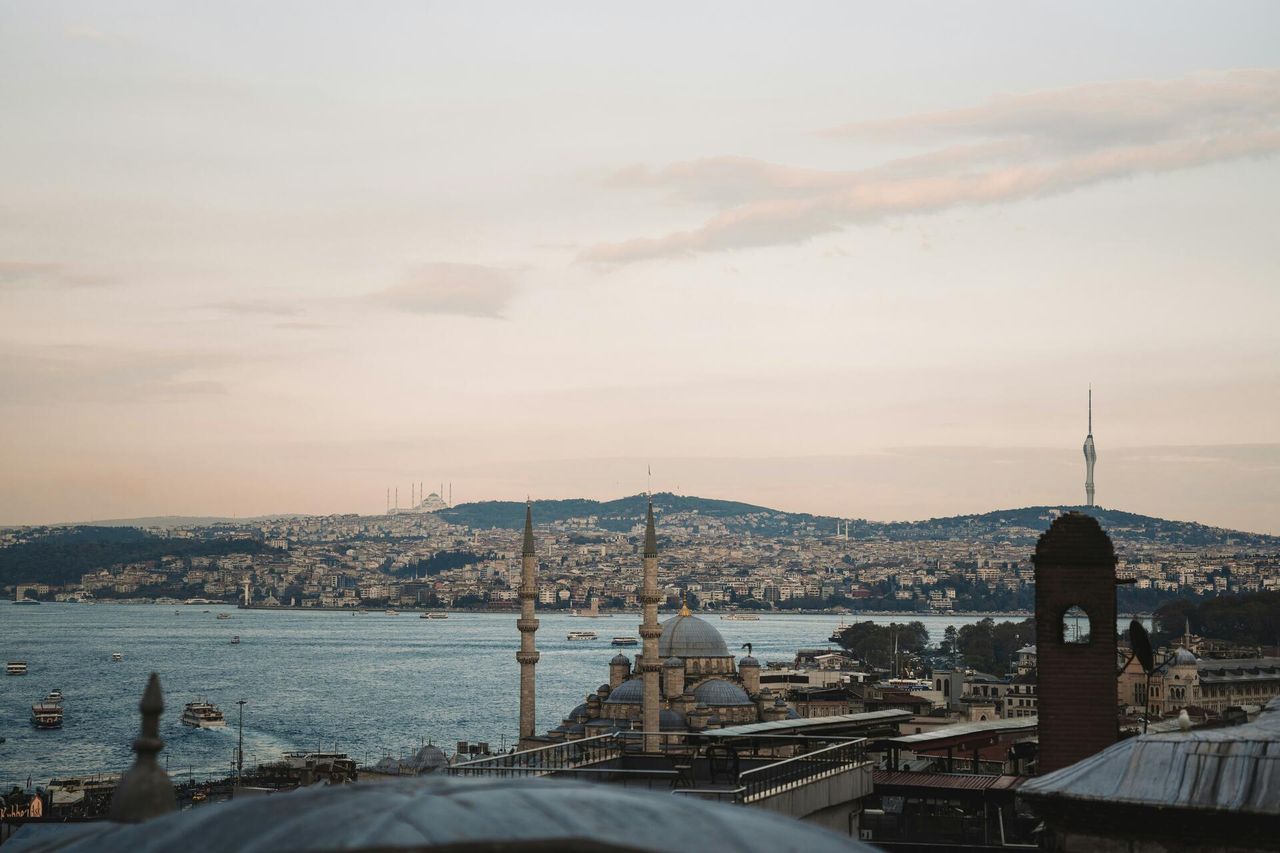
Both Mediterranean, both historically layered, both affordable by European standards - Tunisia and Turkey attract the same type of traveller and compete for the same short-haul European holiday budget. This is a direct comparison to help you choose.
Cost: Tunisia Is Cheaper
This is the clearest practical difference. Turkey has become noticeably more expensive since the lira’s inflation surge, and while it remains competitive against Western Europe, it now costs more than Tunisia at every level.
Tunisia (approximate daily budgets, 2026):
- Budget: TND 100–150/day (approximately €30–45) - guesthouse, local restaurants, louage transport
- Mid-range: TND 200–350/day (approximately €60–105) - three-star hotel, tourist restaurants, day trips
Turkey (approximate daily budgets, 2026):
- Budget: TRY 2,000–3,500/day (approximately €55–97) - budget hotel, local eateries, buses
- Mid-range: TRY 5,000–9,000/day (approximately €138–250) - three-star hotel, restaurant meals, site entry
Istanbul in particular has become a premium destination. A double room in a decent guesthouse in the Sultanahmet area starts at €80–120/night. By contrast, a good Tunis medina guesthouse runs €30–50/night. Eating out in Turkey has remained reasonable by European standards but costs 2–3x the Tunisian equivalent for the same quality of sit-down meal.
Where Tunisia is cheaper:
- Accommodation at all levels
- Site entry (Dougga: TND 10 / approximately €3; Ephesus: TRY 1,800 / approximately €50)
- Domestic transport
- Eating and drinking
Where Turkey competes:
- Domestic flights are cheap and frequent (Turkish domestic aviation is well-developed)
- Cappadocia hot air balloons (concentrated market with competitive pricing)
- Ferry travel on the Aegean
For a budget breakdown, see our Tunisia travel budget guide.
History and Culture
Both countries carry extraordinary historical layers, but from different eras and civilisations.
Tunisia is the Roman archaeology capital of Africa. Dougga - a UNESCO World Heritage Site perched on a hillside above olive groves - is one of the best-preserved Roman provincial cities anywhere. El Jem has the third-largest Roman amphitheatre ever built. Carthage adds Punic and Roman layers near Tunis. And Tunisia’s Islamic heritage centres on Kairouan - one of the holiest cities in Islam and home to the Great Mosque, founded in 670 CE - and Tunis’s medina, a functioning UNESCO-listed medieval city with Arab-Andalusian architecture.
Turkey covers a wider historical range. Istanbul alone contains Hagia Sophia (built 537 CE, later converted to a mosque, now open as a mosque with visitor access), the Blue Mosque, Topkapi Palace, and the Basilica Cistern. Ephesus - on the Aegean coast near Selçuk - is arguably the best-preserved Roman city in the entire Mediterranean world, surpassing even Dougga in scale, though crowds are considerably heavier. Cappadocia’s landscape of volcanic tufa towers contains thousands of Byzantine rock churches carved with frescoes. Pamukkale’s cascading white calcium terraces sit above ancient Hierapolis, with a well-preserved Roman theatre and necropolis. Pergamon (Bergama) and Troy add further layers.
Verdict: Turkey wins on historical breadth across multiple civilisations. Tunisia wins on Roman Africa specifically - Dougga and El Jem deliver more archaeology per visitor than any comparable site in Turkey.
Beaches and Coast
Tunisia’s coast is Mediterranean and calm. Djerba, Hammamet, and Sousse offer long shallow beaches, warm water from June to October, and extensive all-inclusive resort infrastructure. The sea is tideless and the sandy bottom gentle. Tunisia’s beaches are best for relaxed swimming and sun holidays; the resort infrastructure is functional rather than glamorous.
Turkey’s Aegean and Mediterranean coasts (the Turquoise Coast, or Türkiye Riviera) are visually more dramatic. Ölüdeniz’s blue lagoon, Kas’s rocky coves, Bodrum’s sea-facing castle, and Göcek’s gulet sailing routes are genuinely beautiful. The water is slightly clearer than Tunisia’s. The coast is also better integrated with historical sites - you can combine Ephesus with a beach town stay at Kuşadası or Selçuk. On the negative side, the major Turkish beach resorts (Antalya, Bodrum, Alanya) are heavily developed, busy, and price-tourist-market oriented in a way that Tunisia’s resorts are not.
Verdict: Turkey wins on coastal scenery and variety. Tunisia wins on value for money and crowds.
Food
Tunisian cuisine is Mediterranean and spice-forward. Harissa (chilli paste made with roasted peppers and garlic) is present at every meal. Brik (fried pastry with egg and tuna), grilled seafood on the coast, lamb couscous, and makroud (semolina pastry with dates and honey) are highlights. Eating is cheap and consistent.
Turkish cuisine is one of the great cuisines of the world and widely considered the broadest in the Mediterranean region. Döner and kebabs, mezes (small plates: hummus, cacık, ezme, stuffed grape leaves), fresh bread, baklava, simit, fresh fish on the Bosphorus, lamb dishes from the east (İskender kebab, Adana kebab), and extraordinary sweets define the food culture. Istanbul’s food scene is excellent at every price point. Street food (simit, balık ekmek fish sandwiches) remains very affordable.
Verdict: Turkey wins on culinary depth and variety. Tunisia wins on price.
Getting Around
Tunisia is compact and straightforward. Louages (shared taxis) connect major towns efficiently; the train covers Tunis–Sfax–Sousse; a rental car opens up the Roman sites and Sahara south. You can cover most highlights in 10–14 days.
Turkey requires more planning due to its size - it is roughly 10x larger than Tunisia. Domestic flights are cheap and frequent, connecting Istanbul to Izmir, Antalya, Cappadocia, and further east. Bus travel is extensive and of good quality. The classic Turkey itinerary - Istanbul, Ephesus, Pamukkale, Cappadocia - covers 2,000+ km and is best done over 2–3 weeks with a mix of budget flights and buses.
Side-by-Side Comparison
| Category | Tunisia | Turkey |
|---|---|---|
| Daily budget (from) | TND 100 (~€30) | TRY 2,000 (~€55) |
| Main coastline | Mediterranean - calm, warm | Aegean/Med - dramatic, clearer water |
| Roman archaeology | Outstanding (Dougga, El Jem, Carthage) | Good (Ephesus, Hierapolis) |
| Islamic heritage | Good (Tunis medina, Kairouan) | Outstanding (Istanbul mosques, palaces) |
| Desert/interior | Sahara - accessible | Cappadocia - dramatic, different |
| Country size | Compact (1–2 weeks) | Large (2–3 weeks) |
| Tourist crowds | Low | Moderate to high at major sites |
| Language | Arabic + French | Turkish; English at tourist sites |
| Alcohol | Widely available | Available in most tourist areas |
| Flight connections | Mainly European | Wide, inc. Middle East and North America |
Who Should Go Where
Choose Tunisia if you:
- Are on a tighter budget and want more for your money
- Want Roman archaeology in Africa without crowds
- Are after a simple Mediterranean beach holiday
- Have 7–10 days and want a compact, manageable destination
- Are interested in the Arab-Andalusian medina tradition
- Want Sahara access combined with a beach trip
Choose Turkey if you:
- Want Istanbul - one of the great cities on earth
- Are interested in the Ottoman and Byzantine periods
- Want more variety of coast, landscape, and cuisine
- Have 2–3 weeks to explore at a more relaxed pace
- Are travelling from North America or the Middle East (better flight connections)
- Want Cappadocia and hot air balloon experiences
Neither choice is wrong. Tunisia delivers more value, more Roman history, and a quieter experience. Turkey delivers more variety, a more dramatic coastline, and one of the world’s great food cultures. If the budget question is decisive, Tunisia wins outright. Start planning with flights to Tunisia and browse our tours.
Book Tours for Your Trip
If Tunisia is the choice, a 3-day Sahara desert tour from Tunis is the most popular single organised experience - covering dunes, Berber camps, and the Chott el-Jérid salt lake in a well-paced circuit from the capital. Browse all Tunisia tours on GetYourGuide for Roman site day trips, coastal excursions, and multi-day itineraries.
For Turkey, browse all Turkey tours on GetYourGuide for Istanbul, the Aegean coast, and Cappadocia options.
Comparing other destinations? See also: Tunisia vs Egypt - Roman archaeology versus pharaonic monuments - and Tunisia vs Morocco - both Maghreb neighbours compared.
Plan Your Trip
✈️ Book flights to Tunisia 🛡️ Get travel insurance 📱 Stay connected with an eSIM 🚗 Rent a car in Tunisia