Two countries, one continent, two completely different stories. Tunisia and Egypt sit at opposite ends of North Africa - Tunisia on the Mediterranean, Egypt on the Nile - and while both offer ancient history, desert landscapes, and warm weather, the similarities end fairly quickly. This is a direct comparison of what each delivers, and which makes more sense for your trip.
Cost: Tunisia Edges It
Tunisia is generally the more affordable destination, though the gap is narrower than many expect.
Tunisia (approximate daily budgets, 2026):
- Budget: TND 100–150/day (approximately €30–45) - guesthouse or hostel, local food, louage transport
- Mid-range: TND 200–350/day (approximately €60–105) - three-star hotel, restaurant meals, day trips
Egypt (approximate daily budgets, 2026):
- Budget: EGP 1,500–2,500/day (approximately €28–47) - budget guesthouses, local eateries, buses and microbuses
- Mid-range: EGP 3,500–6,000/day (approximately €65–112) - three-star hotel near sites, guided tours, Nile cruises
Egypt’s prices are distorted by the tourism premium around the main monuments: entry fees to Luxor’s sites, guided Nile cruises, and the heavily touristed Khan el-Khalili bazaar area push costs up. Tunisia’s main sites (Dougga, El Jem, Carthage) cost TND 8–12 (approximately €2.50–3.50) each. Egypt’s entry to the Giza pyramid complex runs EGP 450–600 (approximately €8–11), with additional fees for the interior chambers.
Where Tunisia is cheaper:
- Museum and site entry fees
- Domestic transport (louages are significantly cheaper than Egypt’s tourist minibuses)
- Restaurants outside resort zones
- Accommodation in cities (Tunis vs Cairo at equivalent quality)
Where Egypt competes:
- Budget street food (ful medames, koshari, falafel sandwiches are extremely cheap)
- Nile felucca trips (negotiable with local boatmen)
- Domestic budget flights between Cairo, Luxor, and Aswan
For a full budget breakdown of Tunisia, see our Tunisia travel budget guide.
History: Pharaohs vs Romans
This is where the two countries diverge most dramatically, and it is the single biggest factor in the choice.
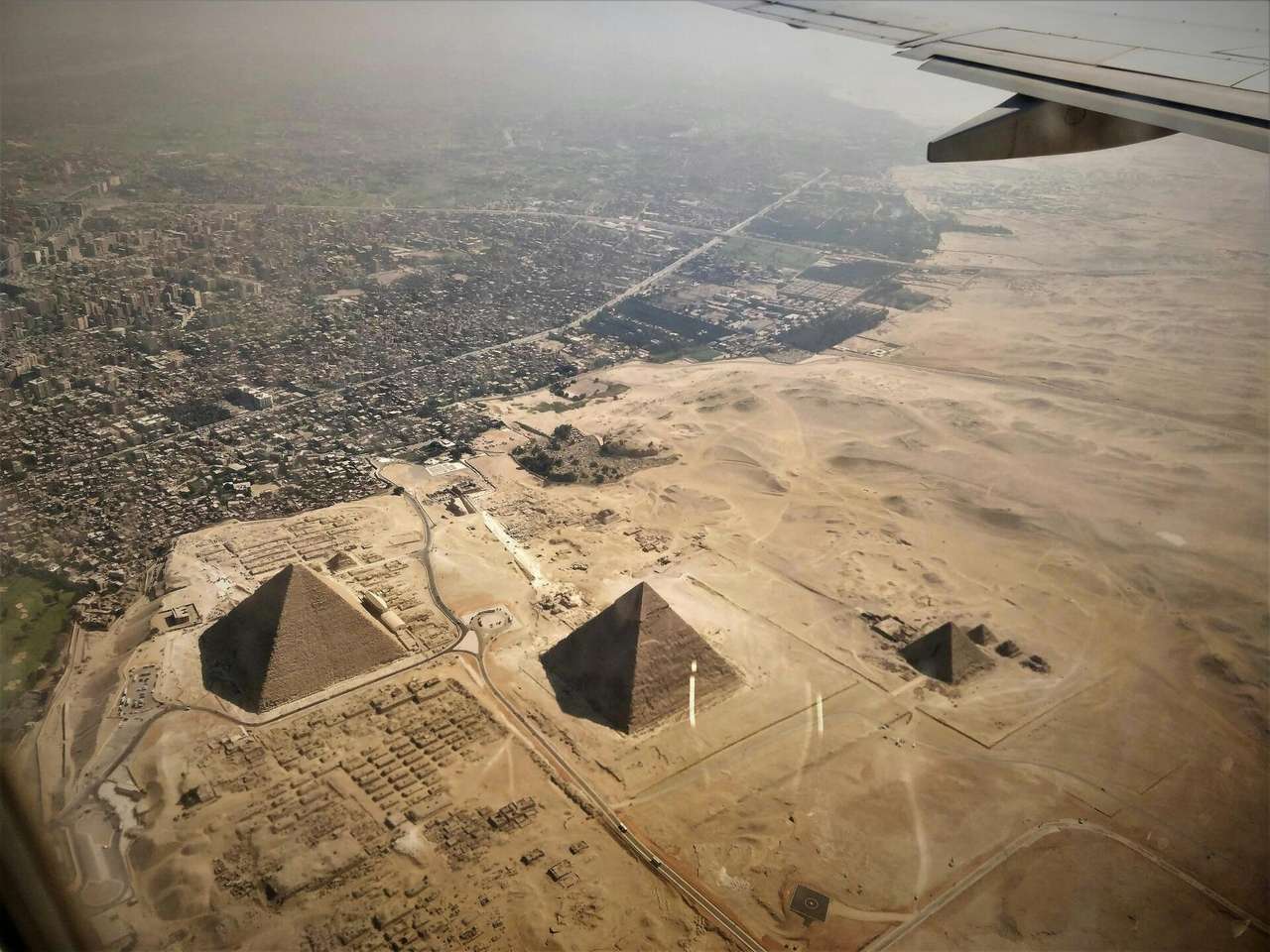
Egypt is unmatched for pharaonic monuments. The Giza Pyramids and Sphinx are the most recognisable structures on earth. Luxor’s east bank (Karnak and Luxor temples) and west bank (Valley of the Kings, Hatshepsut’s temple, the Colossi of Memnon) contain more ancient monuments per square kilometre than anywhere else in the world. Aswan adds Nubian culture and the relocated temples of Abu Simbel. A Nile cruise between Luxor and Aswan remains one of the great heritage journeys anywhere.
Tunisia offers the best-preserved Roman city in Africa. Dougga - a UNESCO World Heritage Site - sits on a hillside with its Capitol, theatre, forum, temples, and baths largely intact, with almost no crowds. El Jem has the third-largest Roman amphitheatre ever built, exceeding the Colosseum in diameter. Carthage adds Punic and Roman layers near Tunis, and Bulla Regia has partially-underground Roman villas with intact mosaic floors. Tunisia’s Islamic heritage is substantial too - Kairouan’s Great Mosque is one of the oldest in the world, and Tunis’s medina is a working UNESCO-listed historic city.
Verdict: Egypt for pharaonic ancient history - it is simply without peer. Tunisia for Roman North Africa - the best on the continent, and almost always crowd-free.
Beaches and Coast
Tunisia’s Mediterranean coast is the winner for beach holidays in the conventional sense. The sea at Djerba, Hammamet, and Sousse is calm, tideless, and warm from June to October. Djerba’s beaches are long and uncrowded outside August. The water temperature peaks at 27°C. The all-inclusive resort infrastructure along the Hammamet and Sousse coastlines is well-developed and affordable.
Egypt’s Red Sea coast (Hurghada, Sharm el-Sheikh, Marsa Alam, Dahab) is warmer year-round but primarily a diving and snorkelling destination. The coral reefs are exceptional - Ras Mohammed and the Blue Hole at Dahab are world-class - but the beaches themselves are not comparable to Tunisia’s Mediterranean stretches. Dahab, the backpacker-friendly Sinai town, offers a very different atmosphere: calm, low-key, and reef-fronted rather than sand-beached.
Egypt’s Mediterranean coast around Alexandria exists but is underdeveloped for international tourism.
Verdict: Tunisia wins for Mediterranean beach holidays. Egypt wins for Red Sea diving and year-round warmth.
Desert and Landscapes
Both countries have Sahara access, but the experiences are different in scale and character.
Tunisia’s Sahara - centred on Douz and Tozeur - is genuinely dramatic but compact. The Grand Erg Oriental dunes reach 15–20 metres. Ksar Ghilane, a remote camp near an ancient Roman fort, is one of the best desert camp experiences in North Africa. Tourist numbers are low compared to Morocco or Egypt. A 3-day Sahara desert tour from Tunis is the most popular way to visit. The south also holds the Chott el-Jerid salt lake (used as Tatooine in Star Wars), Berber troglodyte houses at Matmata, and intact ksour (fortified granaries).
Egypt’s Western Desert is on an entirely different scale. The White Desert near Farafra - with its surreal bleached limestone formations - and the Black Desert, the Siwa Oasis near the Libyan border, and the sand seas around Bahariya are extraordinary. A 4WD loop through Egypt’s Western Desert oases (Kharga → Dakhla → Farafra → Bahariya → Cairo) is a week-long expedition. The Sinai Peninsula adds a different dimension: granite mountains, Bedouin culture, and St. Catherine’s Monastery at the foot of Mount Sinai.
Verdict: Tunisia for accessible, affordable, lower-key Sahara experiences. Egypt for wider landscape variety and more dramatic scale.
Food
Tunisian cuisine is Mediterranean in character - olive oil, harissa chilli paste, fresh seafood, grilled fish, couscous with vegetable broth, and the ubiquitous brik (a fried pastry filled with egg and tuna). The food is fresh, spicy, and extremely affordable. Seafood on the coast is exceptional - grilled fish and calamari in Djerba or Tabarka is some of the best on the Mediterranean.
Egyptian cuisine has its own distinct character. Ful medames (slow-cooked fava beans) is the national breakfast dish, eaten by every social class. Koshari - a street-food bowl of rice, lentils, pasta, tomato sauce, and crispy fried onions - is uniquely Egyptian and worth seeking out. Stuffed pigeon (hamam mahshi), grilled kofta, and om ali (a bread pudding with nuts and cream) are highlights. Cairo’s food scene has also developed significantly, with neighbourhood restaurants serving excellent regional dishes at very low prices.
Verdict: Both cuisines are distinct and excellent. Tunisian food is more Mediterranean; Egyptian food is more varied and reflects the country’s scale.
Getting Around
Tunisia is compact - roughly the size of England. You can reach Tunis, the Roman sites, the Sahara gateway towns, and the coast within one or two weeks using louages (shared taxis), buses, or a rental car. The country rewards a single self-drive loop.
Egypt is substantially larger and more geographically complex. A thorough Egypt itinerary requires internal flights between Cairo and Luxor/Aswan (roughly 1 hour, widely available and not expensive). Trains connect the Nile Valley cities. The Western Desert requires 4WD and either a guide or organised tour. Crossing from Cairo to the Sinai adds a ferry or tunnel journey. Budget 2–3 weeks for Egypt to do it justice.
Side-by-Side Comparison
| Category | Tunisia | Egypt |
|---|---|---|
| Daily budget (from) | TND 100 (~€30) | EGP 1,500 (~€28) |
| Main coastline | Mediterranean - calm, warm | Red Sea - warm year-round, diving |
| Ancient history | Roman (Dougga, El Jem, Carthage) | Pharaonic (Pyramids, Luxor, Aswan) |
| Desert | Accessible Sahara, compact | Western Desert + Sinai, vast |
| Islamic heritage | Good (Tunis, Kairouan) | Good (Cairo, Fatimid mosques) |
| Country size | Compact (1–2 weeks) | Large (2–3 weeks) |
| Tourist crowds | Low | High at major monuments |
| Language | Arabic + French | Arabic; English at tourist sites |
| Alcohol | Widely available | Available in licensed venues |
| Safety (tourist areas) | Standard precautions | Standard precautions |
Who Should Go Where
Choose Tunisia if you:
- Want Roman archaeology without crowds
- Are after a Mediterranean beach holiday
- Have a week or less and want a compact, manageable destination
- Are travelling on a tight budget and want consistent low prices
- Are interested in North African Islamic architecture and medina life
- Want Sahara access without a long overland journey
Choose Egypt if you:
- Want pharaonic monuments - the pyramids, Luxor, Valley of the Kings
- Plan to dive or snorkel in the Red Sea
- Have 2–3 weeks and want more variety of landscape and culture
- Want a Nile cruise experience
- Are interested in ancient history at a scale that nowhere else matches
For when to go, see our best time to visit Tunisia guide.
Both countries are safe, historically rich, and worth visiting. Tunisia wins on price, beaches, and Roman heritage. Egypt wins on ancient monuments, landscape scale, and the sheer breadth of what it offers. If you have time for one now, Tunisia’s compact size makes it easier to get right in a short trip - browse tours and search flights to start planning.
Book Tours for Your Trip
If Tunisia is your choice, a 3-day Sahara desert tour from Tunis covers the dunes, the Chott el-Jérid salt lake, and Berber camp accommodation - the most complete single organised circuit in southern Tunisia. Browse all Tunisia tours on GetYourGuide for day trips from Tunis, Roman site excursions, and coastal activities.
For Egypt, browse all Egypt tours on GetYourGuide for Nile cruises, pyramid site access, and Red Sea diving packages.
Comparing other Mediterranean and North African destinations? See also: Tunisia vs Morocco - Maghreb neighbours compared - and Tunisia vs Turkey - Mediterranean rivals compared.
Plan Your Trip
✈️ Book flights to Tunisia 🛡️ Get travel insurance 📱 Stay connected with an eSIM 🚗 Rent a car in Tunisia