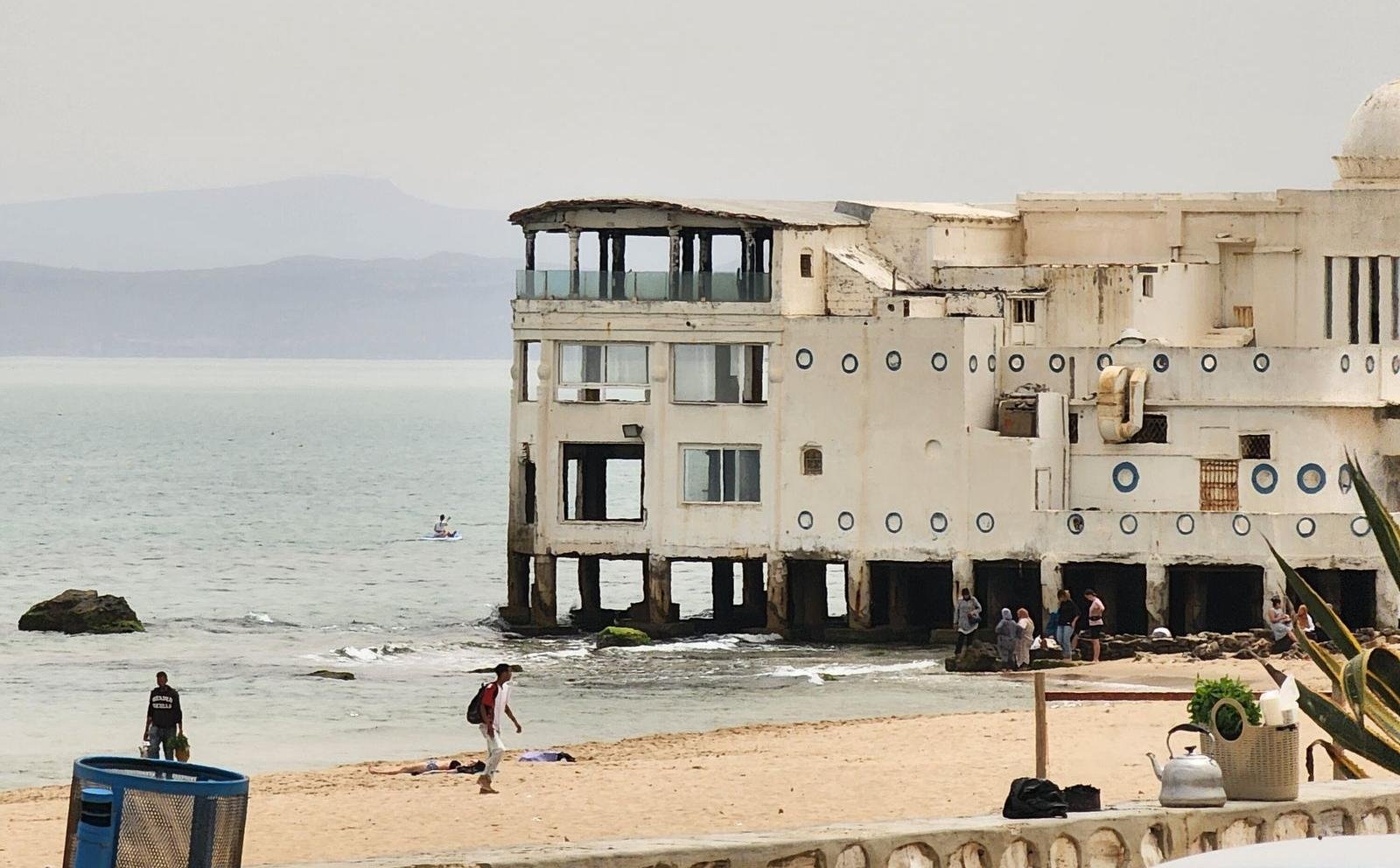
La Marsa is where Tunis goes to the sea. Twenty kilometres north-east of the city centre, the suburb began as a summer retreat for the Beys of Tunis, whose Abdellia Palace still stands here, and it has stayed a place where families, diplomats and weekend crowds come for the beach, the corniche and a long café afternoon. For visitors, it is the easiest way to get a coastal base within reach of Carthage and Sidi Bou Said without sleeping in the busy centre of the capital.
It is not a monument town. What La Marsa offers is atmosphere: a promenade, a sandy bay, a market, good fish and ice cream, and the sense of being in a place that residents actually use. We recommend it for travellers who have a few days around Tunis and want somewhere to unwind between sightseeing.
Getting to La Marsa
By TGM. The TGM (Tunis-Goulette-Marsa) light rail is the classic way to arrive. Trains leave Tunis Marine roughly every 15 to 20 minutes, stop at Carthage and Sidi Bou Said and end at La Marsa, a ride of about 35 minutes. A single ticket costs under 2 TND as of 2026, and timetables are published by the operator, Transtu. It is the cheapest and most scenic option, though carriages are crowded at peak hours and in summer.
By taxi. From Tunis-Carthage airport, La Marsa is around 15 to 20 km and 25 to 40 minutes by road. A pre-booked transfer avoids haggling; see our Tunis-Carthage airport transfer guide for fares and options.
By car. The coast road from Carthage and Sidi Bou Said is slow at weekends. Parking near the beach fills up in summer, and a car is not needed if you stay near the TGM line.
The beach and corniche
La Marsa’s town beach is a wide crescent of pale sand backed by the corniche, with the Cap Bon-side hills hazy across the Gulf of Tunis. It is public and free, with cafes and kiosks along the promenade rather than organised sun-lounger operators, so bring water, shade and a towel. It is at its best from May to early October; July and August weekends are crowded. In the evening the corniche fills with walkers, and the sea view from a café terrace is the main attraction.
Swimming conditions are generally good in summer, but the Gulf of Tunis is a working bay, so check water conditions after heavy rain. If you want clean sand and more space, move on to the beaches at Gammarth.
Gammarth
Gammarth is a forested headland a few kilometres north of La Marsa, and it is where the Tunis area keeps its larger resorts and beach clubs. The setting is greener and quieter than La Marsa, with pine-covered hills dropping to the sea, and rooms are priced accordingly. Most visitors treat it as a day-out or an upscale base rather than a sightseeing stop. It is not on the TGM, so you will need a taxi (about 10 to 15 minutes from La Marsa). Our La Marsa and Gammarth hotel guide compares both areas by budget.
Cafes, food and the Saf Saf quarter
La Marsa’s café culture is its strongest card. The Saf Saf quarter, named after the old spring that once supplied the Beylical court, is known for its traditional café and the well it grew up around, and is a pleasant place for mint tea or a coffee with pastries. Along the corniche you will find seafood restaurants where grilled fish is weighed and priced at the table (expect roughly 60 to 120 TND per kilo as of 2026, with a meal for two commonly 70 to 150 TND), plus bakeries and ice-cream stalls. The Friday market and the streets behind the TGM station are good for fruit, olives and Tunisian sweets. For wider options around the capital see our best restaurants in Tunis.
La Marsa as a base for Carthage and Sidi Bou Said
The TGM makes day trips simple. Sidi Bou Said, with its blue-and-white lanes and clifftop views, is about 10 minutes by train; the Carthage stations, serving the Antonine Baths, Punic ports and Byrsa Hill, come a few stops later. See our Carthage guide for what to see and a sensible order. The Bardo museum and the medina are on the same line via Tunis Marine, so you can combine them in a longer day. If you would like help structuring the day, a guided Carthage and Sidi Bou Said tour saves time at the sites, and tours from La Marsa and Tunis covers further options. For the bigger picture, our Tunis guide covers the capital itself.
Where to stay
La Marsa has boutique guesthouses, apartments and mid-range hotels close to the sea, while Gammarth has the larger resort-style properties. Rates for a mid-range room usually run from about 150 to 350 TND per night as of 2026, with prices rising in July and August and for events. We compare areas and properties in our best hotels in La Marsa guide, and you can check current availability through hotels in La Marsa on Booking.com.
When to go
May, June and September are the best months: warm sea, long evenings and fewer crowds than August. July and August are hot and busy, and the Festival of Carthage, held in the summer, fills the area with visitors. Winter is quiet and mild, with some seafront cafes closing early, but the TGM and sightseeing run year-round. Spring and autumn suit visitors planning to combine beach and sightseeing.
Practical tips
- Carry small change for the TGM ticket machine and taxis.
- Dress modestly away from the beach; La Marsa is a residential, mostly local suburb.
- Late-evening taxis are cheaper if booked by phone or app than hailed on the corniche.
- Weekends and summer evenings are crowded; mornings are calm.