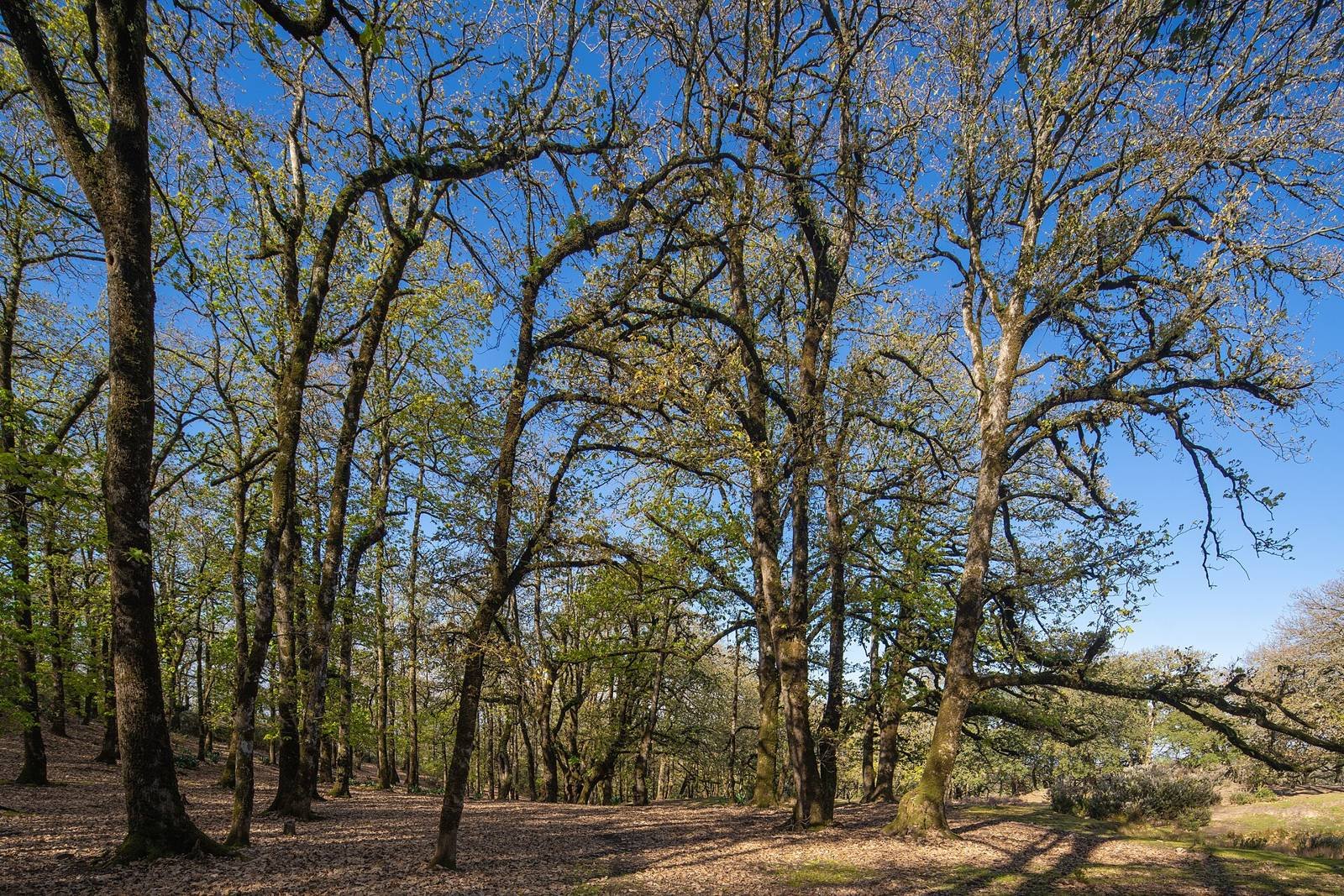
Ain Draham is the Tunisia that people rarely picture. At roughly 800 metres in the Kroumirie mountains of the far north-west, the town sits in a belt of cork oak, zeen oak and pine that receives more rain than anywhere else in the country. Houses with red tiled roofs, built during the French protectorate, line a short main street; the air is cool, the hills are green for much of the year, and in the depths of winter it sometimes snows. It is a short drive from the Mediterranean, yet it feels closer to the Pyrenees than to the beach resorts of Hammamet.
Most visitors are Tunisians looking for relief from the coastal heat, which is part of the appeal. This is a place for slow days: forest walks, long lunches, thermal baths nearby and a drive down to Tabarka for the sea.
What to see and do
Walk in the Kroumirie forest. The main reason to come. Cork oak groves, ferns, streams and viewpoints surround the town, and unmarked tracks lead off many roads. Trail signage is limited, so a local guide is useful for longer routes; our Ain Draham tours page lists guided hikes and excursions in the area. Wear proper footwear in winter and spring, since paths turn muddy and slippery.
See the cork harvest. Cork oak bark is stripped by hand in summer, and the trees with their reddish stripped trunks are a distinctive sight. The forest is also home to wild boar and Barbary stag, though you are far more likely to hear than see them.
Visit Hammam Bourguiba. This small thermal spa village lies a short drive from Ain Draham and uses hot springs on the same hillside. Facilities are modest and local, and it works as a half-day addition.
Look out for winter snow. If a cold front arrives between December and February, the town’s setting under snow-covered oaks is unforgettable. It is unpredictable, so do not plan a trip around it. Roads can be icy, and a hire car without winter tyres is a limited option.
Eat in town. Ain Draham is known for grilled meats, local honey, mushrooms in season and hearty stews rather than coastal seafood. Prices are lower than in tourist resorts, with a grill meal typically costing 15 to 30 TND per person as of 2026.
A Tabarka combination
Ain Draham and Tabarka are about 40 minutes apart and make the most natural pairing in north-west Tunisia. Tabarka has a Genoese fort, coral-reef diving, a golf course and beaches; Ain Draham has the forest and cool air. A good plan is two nights in Ain Draham for hiking, then two on the coast. The road between them is one of the country’s most scenic drives, through forest and past views over the Mediterranean. Read our Tabarka guide and the Tabarka hotels guide to plan the coastal half, and the Tabarka vs Hammamet comparison if you are weighing up where to base yourself.
Bulla Regia and Jendouba
Further inland, about 45 km away, Bulla Regia is a Roman site famous for houses built partly underground to escape the summer heat, with preserved mosaics. Combined with Jendouba, it makes a worthwhile day trip. Browse our guide to the best Roman sites in Tunisia for how it compares with Dougga and El Jem.
Getting there and around
By car. Ain Draham is about 165 km from Tunis, roughly 2.5 to 3 hours, via the A3 motorway towards Béja and then national roads through Jendouba, and about 40 minutes from Tabarka. A car is the most flexible way to reach forest trails and the surrounding villages. See our car rental guide for pick-up and insurance tips.
By public transport. There is no train to Ain Draham. The nearest railway station is at Jendouba, and from there a louage (shared taxi) runs up to the town. Louages run between Tunis and Tabarka, and from Tabarka you can find shared taxis towards Ain Draham; our Tunis to Tabarka louage guide explains how they work and what they cost.
Where to stay
Ain Draham has a few hotels with indoor pools and fireplaces, plus guesthouses and apartments, so accommodation is limited and worth booking early for summer weekends and school holidays. Prices are lower than on the coast, with a mid-range room often from around 100 to 280 TND per night as of 2026. Our Ain Draham hotels guide compares the main options, and you can check current availability through hotels in Ain Draham on Booking.com.
When to go
April to June gives mild weather, wildflowers and green hillsides, while September to early November brings golden light and fewer visitors. July and August are the best months for escaping heat but get crowded with Tunisian families. Winter is cold, damp and sometimes snowy, with a hotel fireplace as the attraction. The area receives heavy rain from November to March, so pack waterproofs. For the national tourism board’s overview of northern Tunisia, see Discover Tunisia.
Practical tips
- Bring a layer even in summer; evenings are cool.
- Download offline maps, as mobile signal drops in the forest.
- Fill the fuel tank in Tabarka or Jendouba before heading to remote tracks.
- Ask your hotel about forest conditions and any closed trails, particularly in the fire season of late summer.
Photo credit: oak forest near Ain Draham by Skander zarrad / Wikimedia Commons, CC BY-SA 4.0.
