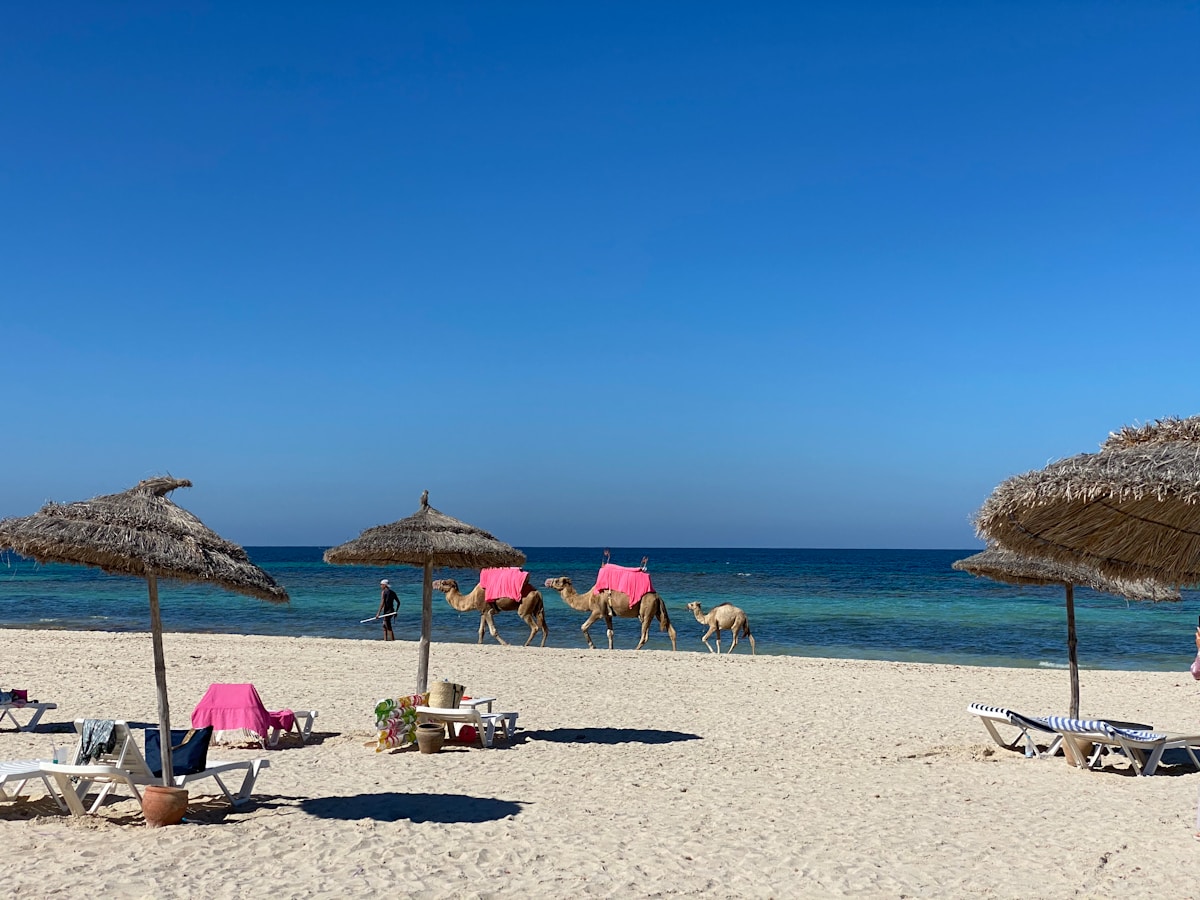
Djerba is Tunisia’s largest island and one of the country’s most popular beach destinations. Causeway-connected to the mainland, it has over 120 km of coastline - much of it fine white sand and shallow, calm Mediterranean water. The main tourist zone is on the northeastern coast; quieter beaches and more authentic villages occupy the rest of the island. For a complete guide to the island - including Houmt Souk, El-Ghriba synagogue, and where to stay - see our Djerba destination guide.
The Main Beaches
Sidi Mahrez Beach (Zone Touristique)
The longest and most developed stretch, running approximately 15 km along the northeastern coast from the Sidi Mahrez area toward the eastern tip of the island. This is the resort zone - a continuous run of 4- and 5-star hotels (Djerba Plaza, Radisson Blu, Hasdrubal Prestige, and many others), with beach clubs, watersports operators, and beach bars occupying the seafront between them.
Search hotels in Djerba on Booking.com
The beach itself is wide and well-maintained. Water is calm and shallow for the first 50–100 m from shore. Sand is pale and generally clean, with some areas raked daily by the hotels.
Access: Most of the resort zone beach is accessible without staying at a hotel if you rent a sunbed from a beach club (approximately 5–10 TND per day including umbrella). Some hotel stretches are gated to guests only.
Aghir Beach (Southeast Coast)
The quietest of the main beaches and best for families with very young children. Water is extremely shallow - you can walk 200 m and still be knee-deep. The sea bottom is sandy and free of rocks. There are no major resorts along this stretch; small cafés and a few independent sun-lounger hires are the extent of the commercial presence.
Access: By scooter or rental car from Houmt Souk (approximately 20 km). Taxis from town centre approximately 12–18 TND.
Seguia Beach
Between the resort zone and Aghir on the southeastern coast. Less visited than Sidi Mahrez and calmer than the resort zone, with a mix of local families and visitors. A few small restaurants and cafés along the beachfront road serve grilled fish and Tunisian snacks.
Ajim Area (Western Coast)
The western coast faces the mainland across the Strait of Boughrara rather than open sea. Water here is flatter and greener, and the coast is lined with fishing villages rather than resorts. Ajim itself is the departure point for ferries to the mainland. Not a swimming destination, but the octopus pots stacked on the quayside and the small working harbour make it worth a stop.
Watersports and Activities
The resort zone concentrates most of the organised water activities. Operators typically set up on the beach directly in front of larger hotels.
Standard offerings and approximate prices as of 2026:
- Pedalo hire: from 25–30 TND per hour
- Jet skiing: from 100–150 TND per 30 minutes
- Parasailing: from 80–100 TND per flight
- Windsurfing lessons: from 60–80 TND per session (equipment included)
- Kitesurfing lessons: from 200–250 TND for a full-day course
Scuba diving: Several dive centres operate on the island, including Djerba Diving Club and Aquaventure. Single dives cost from approximately 60–80 TND; PADI Open Water courses from approximately 600 TND over 3–4 days. The underwater landscape around Djerba has mixed visibility but some interesting wrecks and reef sections.
Quad biking: Inland tracks are available from operators in the resort zone. Half-day excursions start from approximately 80–100 TND per person. Several itineraries combine a beach section with a visit to Guellala village (traditional pottery) or the central palm groves.
Getting to the Beaches
From Houmt Souk (the island’s main town):
- Taxi to the resort zone: approximately 8–12 TND
- Renting a scooter or bicycle (recommended): Scooters from approximately 40–60 TND/day at rental shops near the main square. The island is flat and distances are manageable.
From the mainland:
- Djerba–Zarzis Airport is on the island itself; a taxi to the resort zone costs approximately 15–25 TND. For a hassle-free arrival, pre-book an airport transfer in Tunisia.
- Ferry from Jorf (mainland) to Ajim takes approximately 20 minutes; crossing costs approximately 5 TND for a car
For a broader comparison of Tunisia’s beach destinations, see our best beaches in Tunisia guide or our Hammamet vs Djerba vs Sousse comparison. For hotel options near the best beaches, see our where to stay in Djerba guide. Tours and activities on Djerba range from boat trips to guided island tours if you want to see more than the beach zone.
Practical Beach Tips
- Shade: Most public beaches have limited natural shade. Hotel beach clubs rent parasols. Alternatively, pack a beach umbrella - they’re available in Houmt Souk markets.
- Water quality: The resort zone beaches are monitored regularly. The European Blue Flag designation applies to several stretches.
- Beach vendors: Sellers of jewellery, scarves, and coconut segments work the resort beaches. A polite “la shukran” (no thank you) is usually sufficient.
- Toplessness: Not common or customary on Tunisian public beaches. In enclosed hotel beach areas, some international guests do - but expect to draw attention, particularly from local Tunisian families nearby.
- Jellyfish: Occasional jellyfish blooms occur in August and September. Ask at your hotel before swimming if you see them on the shoreline.
Plan Your Trip
✈️ Book your flights to Tunisia 🛡️ Get travel insurance 📱 Stay connected with an eSIM 🚗 Rent a car