Search hotels in Sfax on Booking.com
Sfax Tours & Activities
Browse guided tours and activities in Sfax on GetYourGuide — verified operator listings including medina walking tours, Kerkennah boat trips, and Sahara circuits. Sfax has fewer organised tours than Sousse or Tunis, so independent exploration with a good map is often the more practical option.
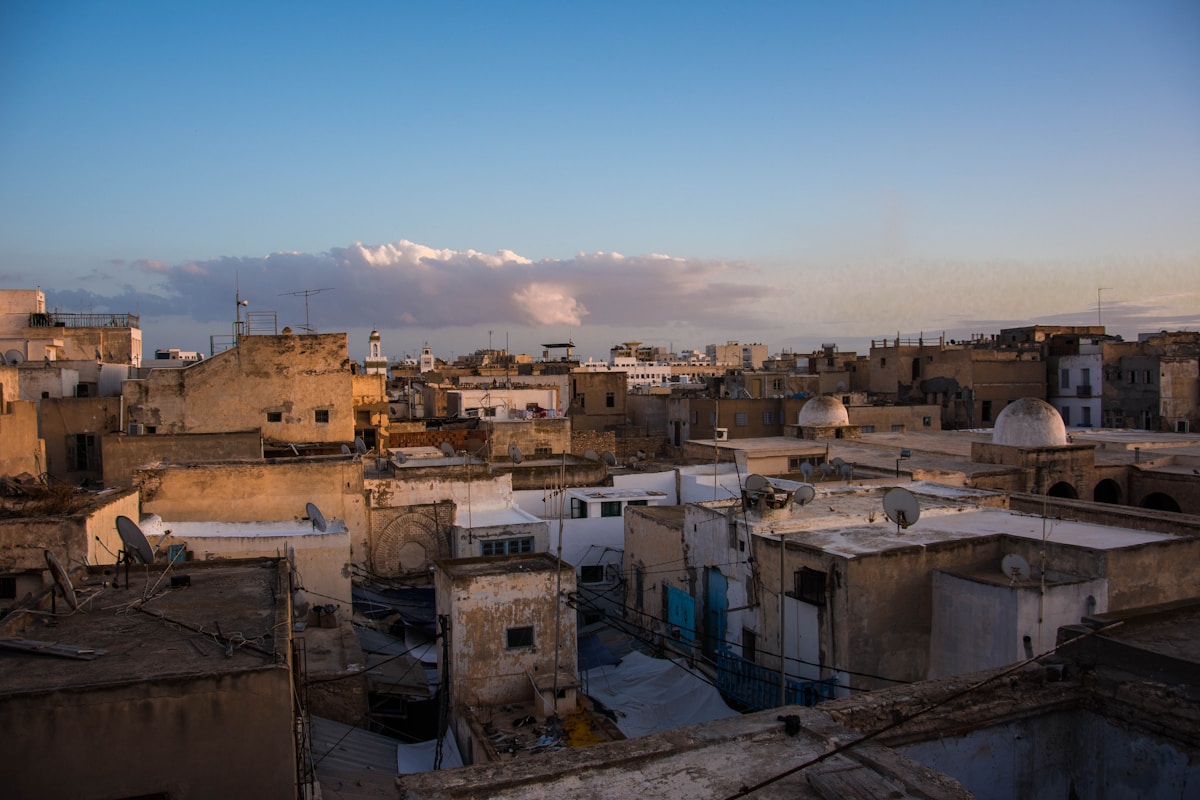
Sfax is Tunisia’s second-largest city and its most important commercial port — a working city that has never fully converted to tourism. That distinction is what makes it interesting. The medina is among the most intact in North Africa: genuine souks organised by trade (metalworkers, oil merchants, textile dealers), functioning workshops in the same alleyways they have occupied for centuries, and no carpet-and-trinket tourist quarter to navigate around.
The Kerkennah Islands, reachable by ferry in one hour, add a second dimension: a flat, low-speed archipelago known for its traditional octopus trapping, quiet beaches, and near-total absence of development. Together, the medina and the islands make Sfax one of the most underrated urban destinations in Tunisia.
This page covers guided tours, self-guided visits, the Kerkennah ferry, and day-trip circuits from Sfax, with realistic prices in TND and transport notes.
Medina of Sfax
The medina of Sfax is a UNESCO World Heritage Site and one of the best-preserved Arab-Islamic city plans in the Maghreb. The original street layout from the 9th-century Aghlabid period remains largely intact, with the same residential, commercial, and religious zoning that characterised medieval Islamic urban design. Unlike Tunis or Sousse, Sfax’s medina has not been significantly adapted for tourism — the main souks still sell hardware, olive oil, metalwork, and textiles primarily to Tunisian customers.
Bab Diwan: The principal entrance to the medina on its eastern wall, extensively restored in the late Ottoman period. One of the most photographed gates in Tunisia and a useful landmark for orientation.
Museum of Sfax — Dar Jallouli: A 17th-century merchant’s palace housing Sfax’s regional history museum. The interior courtyard and tiled reception rooms illustrate the wealth the city accumulated through olive oil and trade. Entry approximately 5 TND as of 2026.
Kasbah of Sfax: The fortified area at the northwest corner of the medina, partially open for visits. The ramparts walk gives views across the medina roofscape. Entry approximately 5 TND as of 2026.
The souks: The main commercial street runs roughly east-west through the medina from Bab Diwan. Side alleys off the main spine are organised by trade: the blacksmiths’ souk (Souk des Forgerons), the textile dealers near the Great Mosque, and the oil merchants’ quarter further west. The Great Mosque of Sfax (non-Muslims may view the courtyard only) anchors the centre.
Guided medina walks typically run 2–3 hours and cover the gates, Great Mosque, museum, and kasbah. Book through GetYourGuide (Sfax tours) or through your accommodation. Half-day guided tours cost approximately 80–160 TND per person as of 2026.
Kerkennah Islands
The Kerkennah Islands — Chergui and Gremdi — lie 25 km offshore from Sfax in the Gulf of Gabes. The archipelago is flat, low-lying, and almost entirely undeveloped: palm groves, traditional fishing villages, dirt tracks between settlements, and some of the calmest shallow water in the Mediterranean. The islands are best known for the traditional charfia octopus trap — a palm-frond weir system that channels octopus into shallow traps as the tide recedes — still used commercially by local fishermen.
Getting there: The Sfax–Kerkennah ferry departs from the port of Sfax (follow signs to ‘Port de Sfax – Kerkennah’) approximately every 2 hours. Journey time: approximately 1 hour to Sidi Youssef on Chergui. Ferry cost: approximately 4–6 TND per person each way as of 2026; cars can be loaded. Check the schedule at the port — services are more frequent in summer.
On the islands: Sidi Youssef village is the main arrival point. Most visitors hire bicycles or mopeds from the ferry terminal to explore the island’s flat roads (5–10 TND/hour as of 2026). The main beach area is at El Attaya, about 10 km from the port. Ramla village on the north shore has traditional restaurants serving fresh octopus and fish.
Accommodation: Several small hotels and guesthouses operate on Chergui, including the Grand Hotel Kerkennah (basic but well-positioned near the beach). Prices from approximately 100–200 TND per night for a double room as of 2026. Staying overnight allows an early-morning bicycle circuit of the island before the day-trippers arrive.
Organised boat trips: Local operators at Sidi Youssef offer half-day fishing or snorkelling excursions around the islands, costing approximately 80–150 TND per person. Ask at the port when you arrive — trips run most days from April to October.
Day Trip to El Jem Amphitheatre
El Jem is 64 km north of Sfax and one of the most significant Roman sites in North Africa. The amphitheatre — the third largest in the Roman world — stands in near-complete condition and can be reached in under an hour from Sfax.
Getting there: SNCFT trains run from Sfax station to El Jem in approximately 45–55 minutes; tickets cost approximately 8–12 TND as of 2026. Louages from the Sfax northern bus station also run directly to El Jem. A private taxi from Sfax costs approximately 80–110 TND return.
At the site: Entry to the amphitheatre is approximately 14 TND as of 2026. The underground corridors where gladiators and animals were held before bouts are accessible and well-preserved. The Archaeological Museum of El Jem next door (separate entry, approximately 10 TND) holds exceptional Roman mosaics from across the Sahel region. Allow 2–3 hours for both.
Combining with Kairouan: El Jem and Kairouan can be combined in a single long day from Sfax with a hire car. El Jem is 64 km north; Kairouan is a further 100 km northwest. The circuit covers two of the most significant historical sites in Tunisia and takes approximately 8 hours including stops.
Chott el-Djerid and Sahara Circuits
Sfax is the most practical starting point on the eastern corridor for southbound Sahara routes. From Sfax, the road south passes through Gabès (115 km), Matmata and the troglodyte villages (175 km), and reaches Douz and the edge of the Grand Erg Oriental (290 km). Multi-day circuits combining Sfax → Gabès → Matmata → Douz → Chott el-Djerid → Tozeur are a common framework for a 3-day southern Tunisia road trip.
Hire car is strongly recommended for this route — public transport to the Saharan fringe is slow and requires multiple connections. Car hire from approximately 120–150 TND/day as of 2026.
For those who want a guided version from Tunis, the 3-Day Sahara Explorer Guided Tour covers the main Saharan highlights with accommodation and transport included.
Getting To and Around Sfax
From Tunis: SNCFT train from Tunis-Gare to Sfax, approximately 3 hours; tickets from approximately 20–30 TND as of 2026. Hire car via the A1/P1 motorway, approximately 2.5 hours.
From Sousse: SNCFT train from Sousse to Sfax, approximately 1 hour 45 minutes. Louage from Sousse bus station (Bab Jedid) for approximately 12–18 TND per person.
From Gabès (southbound): Louage or train, approximately 1 hour 15 minutes.
Within Sfax: Taxis are cheap and widely available — 5–10 TND for most journeys within the city. The medina is best explored on foot; the port is 10 minutes’ walk from the medina gates.
Hire car: Essential for the Kerkennah return if you want flexibility, and strongly recommended for the southern Sahara circuit. Car hire agencies are available at Sfax-Thyna Airport and near the city centre.
Organised tours: Browse all Sfax tour options on GetYourGuide for current availability. Sfax has fewer GYG listings than Tunis or Sousse, but options expand from April to October.