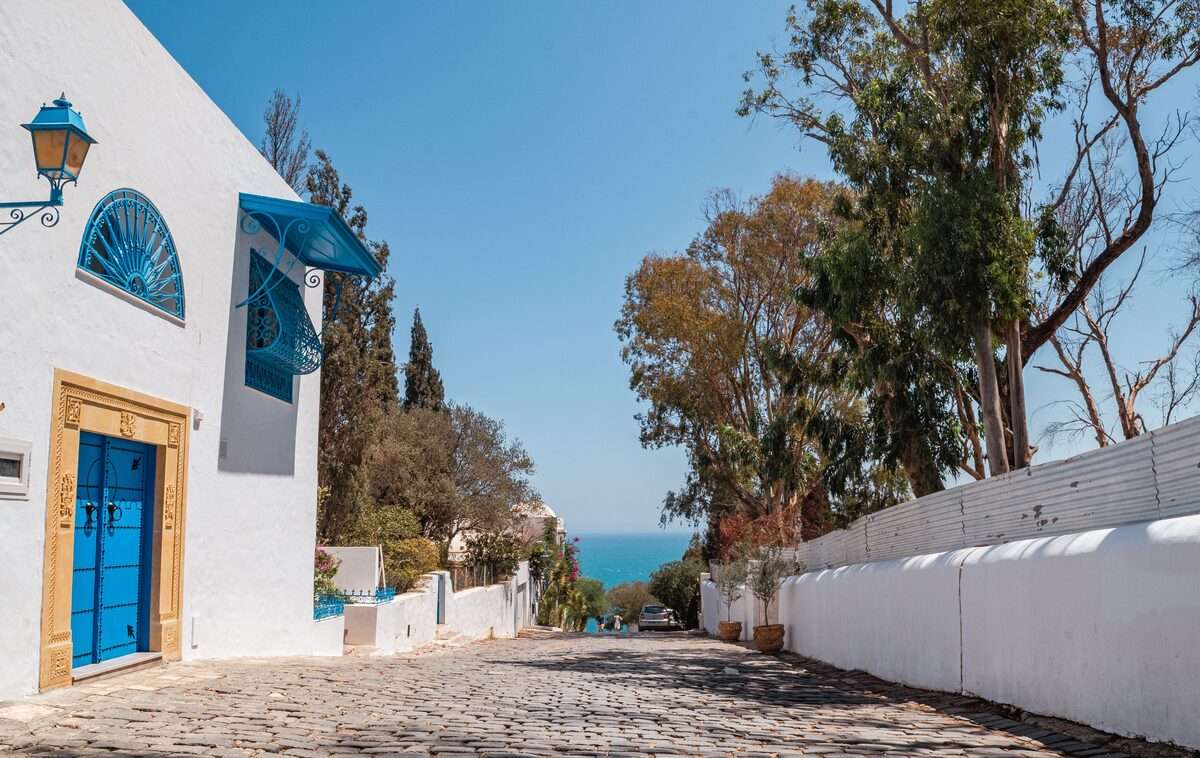
Tunis and Djerba are Tunisia’s two most visited destinations, but they serve almost opposite travel intentions. Tunis is the capital - a dense, layered city with the finest medina in North Africa, world-class archaeology, and an urban café culture built across centuries of Maghrebi and colonial history. Djerba is an island of beaches, flamingo lagoons, whitewashed villages, and a resort strip that handles the majority of the country’s package holiday traffic. Choosing between them means choosing between urban depth and beach escape - or, with ten days, choosing both.
At a Glance
| Tunis | Djerba | |
|---|---|---|
| Type | Capital city, cultural hub | Beach island, resort destination |
| Atmosphere | Urban, layered, fast-moving | Relaxed, slow-paced, island calm |
| Nearest beach | La Marsa / Gammarth (30 min by TGM) | On the island doorstep |
| Duration needed | 2–3 nights minimum | 3–5 nights |
| Getting there from Europe | Direct flights (3–3.5 hrs) | Via Tunis or seasonal charter |
| Best for | Culture, museums, archaeology | Beach, island life, Jewish heritage |
| Mid-range hotel cost | From 150–250 TND/night | From 180–350 TND/night (resort) |
| Avoid if | You mainly want beach time | You want city scale or major museums |
Quick verdict: Tunis for the most culturally rich base in the country and the only world-class museum. Djerba for beach access, Houmt Souk’s laid-back character, and the extraordinary El-Ghriba synagogue.
Tunis
The city
Tunis is one of the great medina cities of the Arab world. The UNESCO-listed old town covers several square kilometres and contains over 700 classified monuments - mosques, zaouias, merchant palaces, and covered souks that have been in continuous use for more than a thousand years. The scale and density of the medina sets Tunis apart from every other city in Tunisia, and from most cities in the region.
Beyond the medina, the colonial-era ville nouvelle along Avenue Habib Bourguiba carries a distinct European character - wide boulevard cafés, art deco facades, and a professional terrace culture that is rare further south. Tunis is comfortable for independent travellers in a way that not every North African capital manages.
Culture and sights
The Bardo National Museum is the single most important reason to base yourself here. It holds one of the world’s largest and most significant collections of Roman mosaics, many recovered from Carthage, Dougga, and Bulla Regia. Entry costs approximately 15 TND as of 2026; allow three hours minimum.
The medina itself warrants a full day: the Great Mosque of Zitouna, the souk des chéchias where traditional hatmakers still work, the Souk El Attarine, and the palace-museums of the historic neighbourhood. Dar Ben Abdallah (entry approximately 5 TND) is one of the best-preserved traditional Tunisian interiors in the country. For a structured introduction to the medina, Carthage ruins, and Sidi Bou Said in a single day, a guided full-day tour from Tunis covers all three with commentary and transport sorted.
Carthage sits 20 minutes north by TGM light rail. The ruins spread across a headland above the Gulf of Tunis - the Antonine Baths, the Tophet, the Punic ports, the Byrsa hill with its national museum above. Combined entry costs approximately 15 TND as of 2026. Continue another 10 minutes on the same rail line to Sidi Bou Said, the hilltop village of blue-and-white architecture that overlooks the bay. For a half-day Carthage and Sidi Bou Said tour, guided options pick up from central Tunis.
Hotels in Tunis
The city covers every tier from basic medina guesthouses to five-star seafront properties:
- Dar El Medina (medina): restored traditional courtyard house in the heart of the old city, from approximately 120–200 TND per night - search Tunis hotels on Booking.com
- Hotel Carlton (ville nouvelle): reliable mid-range city hotel on a central avenue, from approximately 180–250 TND per night - search Tunis hotels on Booking.com
- The Residence Tunis (La Marsa): five-star with spa, pools, and private beach access on the northern coast, from approximately 450–900 TND per night - search Tunis hotels on Booking.com
For a full guide, see our best hotels in Tunis.
What Tunis lacks
Tunis has no beach within the city. The TGM coastal rail connects the city centre to La Marsa and Gammarth in about 30 minutes, where there are public and private beach strips - but it is a journey, not a doorstep experience. Tunis is not a beach city; travellers whose priority is sea time will find the capital unsatisfying on that front.
Djerba
The island
Djerba is Tunisia’s largest island, connected to the mainland by a Roman-era causeway from Zarzis in the south, with approximately 180 km of coastline and a character that combines sun-and-sea resort infrastructure with a distinctly layered culture. Arab, Berber, Jewish, and sub-Saharan African influences have produced an island unlike anywhere else in the country.
The northeast coast holds the best beaches - Sidi Mahrez and Aghir in particular - with clear, shallow water and a hotel strip running from modest guesthouses through to five-star all-inclusives. The southwest of the island is quieter, with fishing villages, salt pans, and the flamingo habitat at the Bibane lagoon near the mainland edge.
Culture and sights
Houmt Souk is the island’s market town and the closest Djerba gets to an old city. A maze of whitewashed alleys, covered passageways, and former fondouks (merchant inns) repurposed as craft workshops and galleries, it is comfortable to explore on foot. The port-side fish market draws locals as much as visitors. The Fort Borj El-Ghazi Mustapha at the port entrance dates to the 15th century and can be entered for a small fee.
El-Ghriba Synagogue, about 7 km south of Houmt Souk in the village of Er-Riadh, is one of the oldest synagogues in Africa - tradition places its founding at around 586 BCE. It remains an active place of worship and draws international pilgrims for the annual Lag B’Omer festival in spring. Entry is free; dress modestly. The surrounding village of Er-Riadh also hosts Djerbahood, one of the largest open-air street art collections in the Arab world, with murals commissioned from over 30 international artists.
The Midoun market (Fridays) is worth the 15-minute drive from Houmt Souk for its livestock section and the scale of the local produce trade.
For guided island coverage, a Djerba island half-day tour is a practical way to reach Houmt Souk, El-Ghriba, and the main villages without a car. For more comprehensive coverage, a full-day Djerba tour adds Midoun, the crocodile farm, and coastal villages.
Hotels in Djerba
Djerba has a wider accommodation range than most Tunisian destinations, with a clear divide between the resort strip and the village character of Houmt Souk:
- Hasdrubal Thalassa & Spa (Midoun beach strip): five-star thalassotherapy resort with direct beach access, from approximately 350–650 TND per night - search Djerba hotels on Booking.com
- Radisson Blu Resort & Thalasso Djerba (north coast): four-star beachfront with large pool complex, from approximately 250–450 TND per night - search Djerba hotels on Booking.com
- Dar Dhiafa (Erriadh village): upscale guesthouse near El-Ghriba with courtyard gardens and pool, from approximately 280–450 TND per night - search Djerba hotels on Booking.com
- Guesthouses in Houmt Souk: budget to mid-range options in the medina town for travellers who want character over pool access, from approximately 90–160 TND per night - search Djerba hotels on Booking.com
What Djerba lacks
Djerba is not a city. There are no world-class museums, no great medina in the Tunis sense, no Bardo equivalent. Houmt Souk is charming but compact - half a day covers it thoroughly. Travellers who need urban scale, a wide range of evening restaurants, or transport connections to the rest of the country will find the island constraining after four or five days.
Getting from Tunis to Djerba
By air (recommended)
Tunisair and Nouvelair both operate the Tunis-Carthage to Djerba-Zarzis route daily. Journey time approximately 50 minutes. Return fares start from approximately 80–150 TND booked well in advance; last-minute prices rise sharply. Djerba-Zarzis Airport sits about 10 km from Houmt Souk (taxi approximately 20–30 TND) and about 25–40 km from the main resort strip.
By louage
The overland route starts with a louage (shared taxi) from Bab Alioua station in Tunis to Sfax (approximately 3–3.5 hours, 18–22 TND per seat), then another louage from Sfax toward the Jorf crossing, and finally across the causeway to Houmt Souk. Total journey time 6–7 hours, total cost approximately 35–45 TND. Manageable with an early start; bring cash throughout.
By car
Driving from Tunis via the A1 motorway south and P1 to the causeway is approximately 550 km and takes 5–6 hours in normal conditions. The causeway charges a small toll (approximately 1–2 TND). Car hire at Djerba-Zarzis Airport is available from approximately 120–200 TND per day; see car hire in Djerba.
For a full overview of Tunisian transport, see our getting around Tunisia guide.
Which Should You Choose?
Choose Tunis if:
- Cultural depth is your priority - medina, Bardo Museum, Carthage, Sidi Bou Said
- This is your first time in Tunisia and you want the most context and range
- You want day-trip access to Dougga, Bizerte, and Bulla Regia
- You are arriving via Tunis-Carthage Airport and have limited total days
Choose Djerba if:
- Beach and island calm is the main event
- You want a relaxed, slower-paced base with resort-level infrastructure
- El-Ghriba, Houmt Souk, and Djerbahood specifically interest you
- You are travelling with young children who need reliable sea access
- You want an all-inclusive or package holiday structure
Choose both if: You have 8–10 days - 3–4 nights in Tunis then fly to Djerba for 4–5 nights is the most complete Tunisia experience available in under two weeks and is the route we would recommend to most first-time visitors.
For more comparisons involving Djerba, see Djerba vs Monastir for how the island compares with its closest coastal rival. For full tour guides from the capital, see our Tunis tours page and Djerba tours page. For complete transport details, see our louage Tunis to Djerba route guide.
Plan Your Trip
✈️ Book flights to Tunisia 🛡️ Get travel insurance 📱 Stay connected with an eSIM 🚗 Hire a car in Djerba