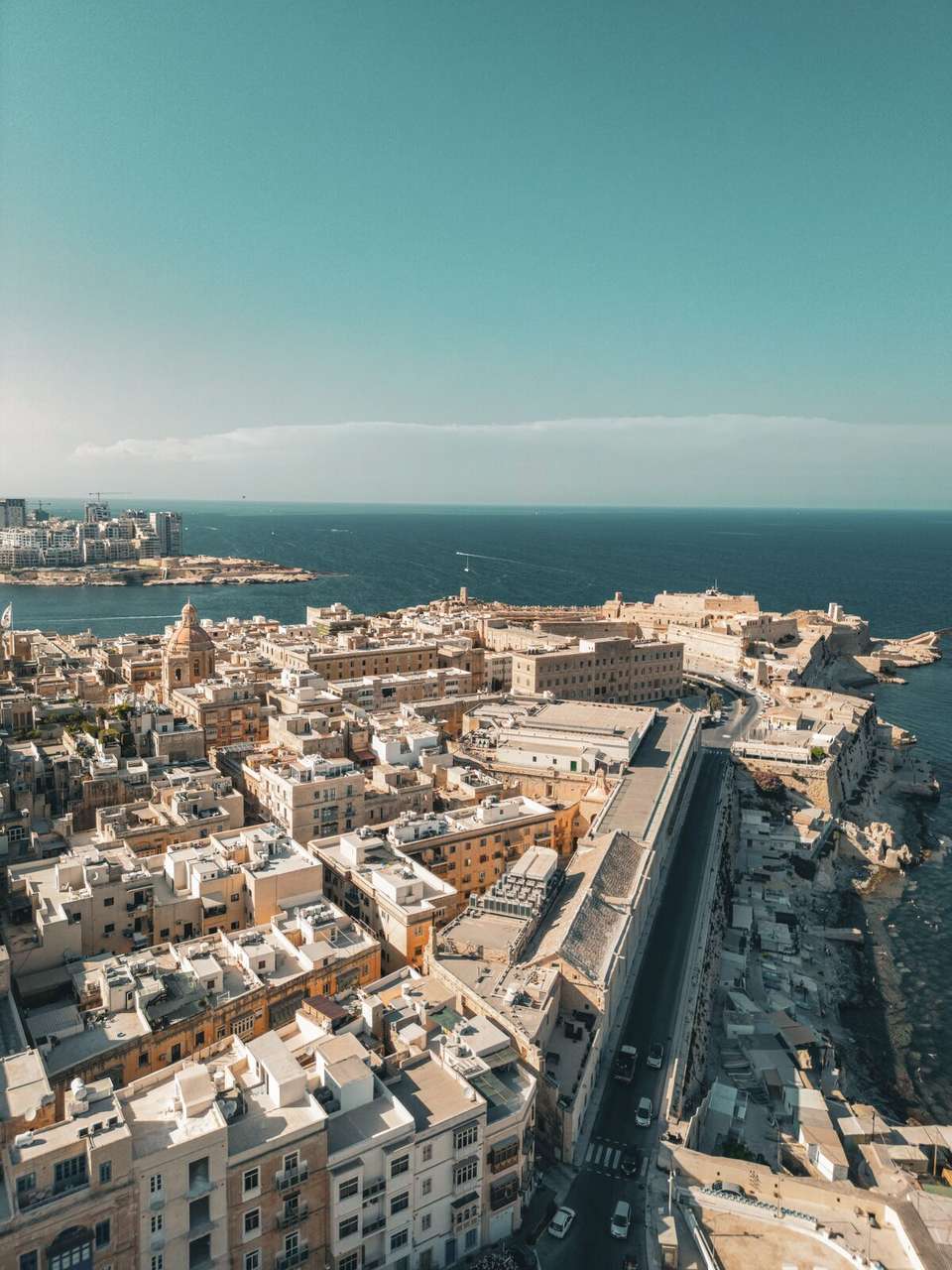
Tunisia and Malta are both Mediterranean destinations reachable from London in around three hours, both with Roman history, warm summers, and coastlines that work for beach holidays. But the experience they offer is quite different. Tunisia is vast (the size of France), cheap by European standards, and carries centuries of Carthaginian, Roman, Islamic, and Ottoman history across a landscape that stretches from the Mediterranean to the Sahara. Malta is tiny (316 km²), English-speaking, EU-regulated, and polished - a dot in the sea that punches well above its size for Baroque architecture, diving, and the postcard Blue Lagoon.
Choosing between them comes down to what you want from a Mediterranean break.
At a Glance
| Tunisia | Malta | |
|---|---|---|
| Size | 163,000 km² | 316 km² |
| Official languages | Arabic, French | Maltese, English |
| Currency | Tunisian Dinar (TND) | Euro (EUR) |
| EU member | No | Yes |
| Flight time from London | ~3–3.5 hours | ~3 hours |
| Mid-range hotel | From ~150 TND (~45 EUR)/night | From ~120 EUR/night |
| Sahara access | Yes | No |
| Major Roman ruins | Carthage, Dougga, El Jem | Mdina, Luqa |
| Diving quality | Good (Tabarka, Djerba) | Excellent (wrecks, 30m+ visibility) |
| English spoken | In tourist areas only | Everywhere (official language) |
| Best for | Value, history depth, adventure | Ease, diving, Blue Lagoon, weekend breaks |
| Avoid if | You want English everywhere | You want Sahara or serious budget travel |
Quick verdict: Tunisia wins for travellers who want more - more history, more landscape, more cultural depth, and much more for their money. Malta wins for those who want an easy, polished, English-speaking Mediterranean break, excellent diving, and the most spectacular shallow-water lagoon in the region.
Tunisia
What Tunisia offers
Tunisia is the most historically dense country in North Africa. Carthage - the city-state that rivalled Rome for dominance of the Mediterranean world before its destruction in 146 BCE - lies on the outskirts of Tunis. The Roman city of Dougga in the northern hills is arguably the best-preserved Roman town anywhere in Africa, with its 2nd-century Capitol, theatre, and forum largely intact. The amphitheatre at El Jem, built in the 3rd century CE to hold 35,000 spectators, is the third-largest in the Roman world and competes directly with the Colosseum for scale and atmosphere - entry to all three sites costs approximately 15 TND each as of 2026.
Below the Roman layer sits the medina of Tunis - a UNESCO-listed urban fabric of mosques, zaouias, and merchant houses that the Islamic city has occupied since the 7th century. And below Tunisia altogether lies the Sahara: the oasis towns of Tozeur and Douz give access to genuine desert - dunes, salt flats, camel treks - within a day’s drive of the Mediterranean coast. Nowhere else in the region packs this range into one itinerary. Explore the Sahara.
Cost
Tunisia’s price advantage over Malta is substantial. A guesthouse in the Tunis medina costs approximately 80–120 TND per night (roughly 25–38 EUR at 2026 rates). A mid-range hotel on Djerba runs 180–350 TND. A restaurant meal in Tunis costs approximately 20–35 TND including a local beer or juice. A day trip to Carthage and Sidi Bou Said - including TGM fares, entry fees, and lunch - costs under 40 TND. A Sahara tour from Tunis over three days including accommodation and meals runs approximately 350–600 TND per person. For context, that is often less than a single night in a mid-range Valletta hotel.
Hotels in Tunisia
- Dar El Medina (Tunis medina): traditional courtyard guesthouse, from approximately 120–200 TND per night - search Tunis hotels on Booking.com
- Hasdrubal Thalassa & Spa (Djerba): five-star thalassotherapy resort, from approximately 350–650 TND per night - search Djerba hotels on Booking.com
- Various Hammamet resorts: four-star beachfront all-inclusives, from approximately 200–400 TND per night per couple - search Tunisia hotels on Booking.com
For a broader overview, see our best hotels in Tunisia guide.
What Tunisia lacks
The challenges are real. English is spoken in tourist offices, Djerba resorts, and Tunis medina guesthouses, but it is not the default language - French or basic Arabic is useful outside the main tourist zones. Signage is in Arabic; navigation requires more engagement than Malta’s clearly signed English environment. Tunisia also requires more advance planning: the louage network is not intuitive, internal distances are long, and areas south of Sfax operate on a different pace and infrastructure level than the north.
For first-time visitors, see our first time in Tunisia guide.
Malta
What Malta offers
Malta is remarkable for its size. On an island you can drive end-to-end in 45 minutes, there are three UNESCO World Heritage Sites - the walled capital Valletta, the megalithic temples of Ħaġar Qim and Mnajdra (older than Stonehenge and the Egyptian pyramids), and the Hal Saflieni Hypogeum (a 5,000-year-old underground necropolis requiring advance ticket booking). The Knights of St John controlled Malta for 268 years and left Valletta’s Baroque streetscape and the Cathedral of St John as their most visible legacy.
Outside history, Malta’s main draws are underwater. The water around Malta and neighbouring Gozo is clear to 30 metres or more, with wrecks including the British minesweeper HMS Maori and the oil tanker Um El Faroud providing some of the most accessible dive sites in the Mediterranean. Snorkellers and non-divers get the Blue Lagoon at Comino: a channel of turquoise-to-teal water shallow enough to walk across in places, best reached by ferry from Ċirkewwa in the early morning before the day-trip boats arrive.
Cost
Malta is not cheap by Mediterranean standards. A mid-range guesthouse or boutique hotel in Valletta runs approximately 120–200 EUR per night. A restaurant meal in Valletta costs approximately 20–35 EUR per person. A day trip to Gozo by ferry costs approximately 5–7 EUR return; once there, food and entry costs are marginally lower than Valletta. Peak summer prices (July–August) rise significantly, and the Blue Lagoon is notoriously overcrowded in those months - spring (April–June) or October is a better time to go.
Hotels in Malta
- Rosselli – AX Privilege (Valletta): five-star boutique in a 17th-century palace, from approximately 220–380 EUR per night - search Valletta hotels on Booking.com
- The Phoenicia Malta (Valletta): historic grand hotel with gardens and pool, from approximately 160–280 EUR per night - search Valletta hotels on Booking.com
- Boutique guesthouses in Gozo: quieter, more rural character, from approximately 70–130 EUR per night - search Gozo hotels on Booking.com
What Malta lacks
Scale. Malta’s 316 km² fits inside most major European cities. Once you have done Valletta, Mdina, the Blue Lagoon, and the megalithic temples, the island’s sightseeing programme is largely complete inside four days. Travellers seeking the kind of landscape range - coast to desert, ancient medina to Roman ruin - that a week in Tunisia delivers will find Malta limiting. There is no Sahara, no equivalent of El Jem or Dougga, and no urban neighbourhood with the density and layering of the Tunis medina.
Direct Comparison: Key Questions
History depth
Tunisia wins on sheer scale. Carthage, Dougga, El Jem, Bulla Regia, and Kerkouane represent one of the most concentrated collections of ancient sites in the world. Malta’s megalithic temples are older but smaller in scale; Valletta’s Baroque is exceptional but covers a narrower historical period. For serious history travellers, Tunisia is not even close.
Beaches
It depends what you mean. For long, accessible sandy stretches, Tunisia wins - Djerba’s northeast coast runs for kilometres and the Hammamet strip is among the best beach infrastructure in North Africa. For the single most spectacular water colour in the region, Malta’s Blue Lagoon at Comino is unmatched. But the Blue Lagoon is extremely crowded from June to September; book the first morning ferry to beat the day-trip boats.
Diving
Malta wins. Visibility of 25–30 metres, water temperature 18–26°C depending on season, accessible wrecks within 10–20 minutes by boat, and a well-established dive centre industry across both Malta and Gozo. Tunisia’s diving - particularly around Tabarka in the north - is underrated, but Malta is one of the top ten dive destinations in Europe.
Ease of travel
Malta wins clearly. English is official, signage is bilingual, EU regulations apply to consumer standards and transport, and the island is small enough that getting lost is barely possible. Tunisia rewards more active engagement - the louage network, navigating medinas, ordering food in French or Arabic - and the payoff is richer, but the bar to entry is higher.
Value
Tunisia wins by a large margin. Even accounting for a lower-cost return flight to Malta (which can be cheaper due to more budget route competition), once you are on the ground, Tunisia stretches a travel budget 3–4 times further. A week in Tunisia including internal travel, accommodation, meals, and entry fees often costs less in euros than four nights in Malta.
Which Should You Choose?
Choose Tunisia if:
- Value is a genuine priority - you want more for less
- Roman and Islamic history are major interests
- You want the Sahara or genuine landscape diversity on the same trip
- You are happy navigating in French or basic Arabic
- You have at least 7 days and want a full itinerary
- You are a repeat Mediterranean traveller looking for something less familiar
Choose Malta if:
- English everywhere and EU-level familiarity matter to you or your group
- You are diving or want excellent snorkelling
- A short break (3–5 days) is all you have - Malta suits a long weekend
- The Blue Lagoon is specifically on your list
- You are travelling with first-time international travellers who want a lower-friction environment
- You want to combine with Italy or Sicily on a longer trip
Choose both if: You are planning a longer Mediterranean trip. Malta connects easily to Sicily by ferry (1.5 hours) and to Rome by short flight. Tunisia connects to Sardinia by ferry and to the rest of North Africa by bus or louage. A two-week itinerary that combines Malta for its first five days and Tunisia for its second week - or vice versa - is entirely doable and covers more historical ground than either destination alone.
For a deeper look at how Tunisia compares with other Mediterranean and North African alternatives, see our Tunisia vs Morocco comparison and Tunisia vs Egypt comparison. For best-time planning, see our when to visit Tunisia guide. For tours across the country’s main sites, see best tours in Tunisia.
Plan Your Trip
✈️ Book flights to Tunisia 🛡️ Get travel insurance 📱 Stay connected with an eSIM 🏨 Search Tunisia hotels on Booking.com