Search hotels in Tozeur on Booking.com
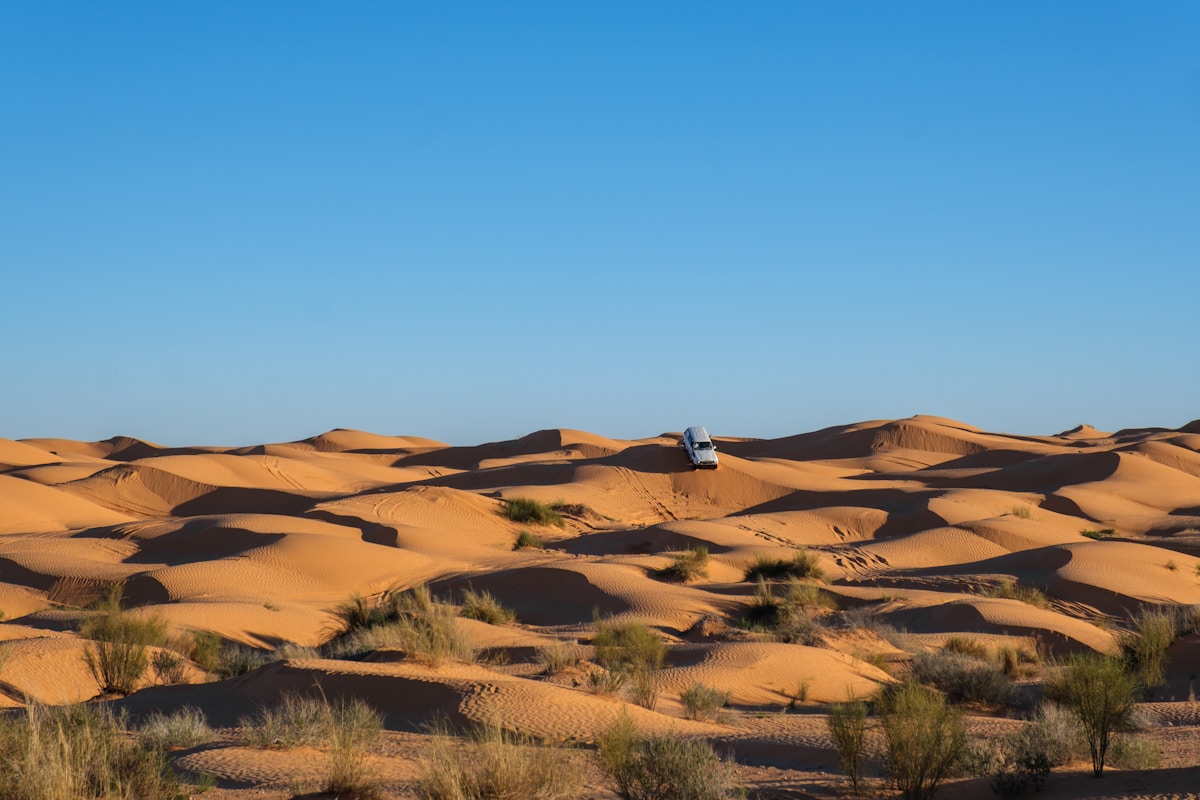
Tunisia’s portion of the Sahara is one of the most accessible stretches of the world’s largest hot desert. From the edge of a paved road south of Douz, the Grand Erg Oriental - a continuous sea of sand dunes covering roughly 600,000 square kilometres - extends south into Algeria. This guide covers every practical aspect of visiting: where to base yourself, what experiences are available, costs, how to get there, and when to go.
The landscape: what you’re actually looking at
The Sahara in southern Tunisia has three distinct landscape types worth understanding before you plan:
Grand Erg Oriental - the main dune field, reached most easily from Douz. Dunes here range from a few metres to over 100 metres high, shaped by prevailing winds into classic crescent (barchan) forms. The accessible dune edge starts at the Ofra field south of Douz, but the larger dune formations are reached by 4x4 or camel.
Chott el-Djerid - a vast salt lake west of Douz and south of Tozeur, covering approximately 5,000 square kilometres. For much of the year it is completely dry - a flat white crust that produces intense heat shimmer and occasional mirages. A paved causeway crosses it between Tozeur and Kebili, making it one of the most disorienting drives in North Africa.
Mountain oases (Chebika, Mides, Tamerza) - three villages in the Djebel en Negueb range north of Tozeur, each set in a narrow canyon with seasonal waterfalls and palm groves. Dramatically different from the flat erg - rocky, green, and photogenic.
Gateway towns: Douz vs Tozeur
These are the two main bases for the Saharan south. The choice depends on what you want to do.
Douz is the traditional gateway to the Grand Erg Oriental. The dunes literally begin at the edge of town. It is smaller and more functional than Tozeur, with most activity centred on camel treks, 4x4 excursions to Ksar Ghilane, and the annual Festival International du Sahara in late December. It is roughly 530 km from Tunis and 130 km east of Tozeur via Kebili.
Tozeur has more infrastructure - better hotels, a handful of good restaurants, a well-preserved old medina quarter (Ouled el-Hadef), and an airport with occasional flights from Tunis. It is the better base for the mountain oases circuit, the Chott el-Djerid crossing, and the Star Wars filming locations near Ong Jemel. The nearest dunes are accessible from here, but the Grand Erg proper is closer from Douz.
For a 3–5 day southern circuit, use Tozeur as an arrival base (fly or drive in) and include a night or two in Douz before heading back north.
Types of desert experience
Camel trekking from Douz
For a detailed planning guide to camel trekking, routes, operators, and what to expect, see our Sahara camel trek guide.
Short camel rides (1–2 hours, approximately TND 30–60 per person as of 2026) operate from the dune edge just south of Douz. These are suitable for families and first-timers, though the experience is relatively brief. For something more substantial, overnight camel treks follow traditional caravan routes into the Grand Erg Oriental, camping at fixed bivouac sites. Operators typically charge approximately TND 120–200 per person per day including meals and camp. Multi-day treks of 2–4 days are available from agencies in Douz such as Sahara Douz Excursions - book in advance October–March as group sizes are small and departures limited.
4x4 excursions to Ksar Ghilane
Ksar Ghilane is a remote desert oasis 90 km east of Douz. The journey takes 2–3 hours by 4x4 across flat reg (stony desert) and sand tracks. The oasis contains a natural hot spring warm enough to swim in year-round and the ruins of a Roman fort from the Limes Tripolitanus defensive line. Reaching it is the main event - the landscape on the way in is extraordinary. Day-trip excursions cost approximately TND 150–200 per person return from Douz as of 2026. Overnight stays add the camps listed below.
Overnight desert camping at Ksar Ghilane
Several permanent desert camps at Ksar Ghilane offer tented accommodation ranging from simple Bedouin-style bivouacs to furnished glamping setups with private bathrooms and generator power.
- Budget camp: shared tent, basic meals, no electricity - approximately TND 150–200 per person including transport from Douz as of 2026
- Mid-range camp: private tent, meals included, hot spring access - approximately TND 250–400 per person
- Luxury glamping (camps such as Dar Ksar Ghilane): furnished canvas suites, restaurant, pool fed by the hot spring - approximately TND 500+ per person per night
The best reason to stay overnight is the sky. Light pollution is near zero - the Milky Way is visible to the naked eye on clear nights.
Star Wars filming locations tour
The Mos Espa set near Ong Jemel (approximately 30 km north of Tozeur) is the largest remaining Star Wars landscape in Tunisia. The exterior of the Lars homestead moisture farm, the Tatooine slave quarters, and the Mos Espa market streets remain partially intact. Reaching the set requires a 4x4 or organised tour - the track is not suitable for standard hire cars. Most operators in Tozeur offer a combined Star Wars set and mountain oases day tour for approximately TND 150–250 per person as of 2026. See our full Star Wars filming locations guide for detail on every site.
Mountain oasis day trip (Chebika–Mides–Tamerza circuit)
This circuit from Tozeur visits three dramatic oasis villages built into canyon walls - the contrast with the open sand desert is remarkable. Tamerza has the largest waterfall (seasonal), Mides sits on the edge of a dramatic gorge overlooking Algeria, and Chebika has an accessible canyon walk with a small palm-filled valley. A guided 4x4 excursion covering all three costs approximately TND 80–120 per person as of 2026, or approximately TND 200–300 for a private vehicle with driver/guide. Allow a full day.
Getting to the Sahara
From Tunis by car: 6–7 hours to Tozeur via the A3 motorway south to Gafsa, then the P3. Add another 1.5–2 hours to reach Douz (via Kebili). A hire car is strongly recommended for exploring the region independently - compare car hire in Tunisia before you travel to get the best rates.
From Tunis by louage: Shared taxis (louages) depart Tunis Moncef Bey station for Tozeur (approximately TND 25–35 pp, 6–7 hours) and for Kebili (change there for Douz). This works for reaching the base towns but leaves you dependent on organised excursions for everything beyond.
By air to Tozeur: Tozeur-Nefta International Airport (TOE) has occasional charter and scheduled flights from Tunis (approximately 1 hour). In peak winter season, capacity is limited - book early.
From Djerba: Douz is approximately 250 km from Djerba - a 3–4 hour drive via Zarzis and Médenine. This makes a Djerba-to-Sahara leg a natural fit for a multi-destination southern circuit.
What to pack
- Sun protection: SPF 50+ sunscreen, UV-blocking sunglasses, a hat with a brim. The desert sun at ground level is more intense than the coast.
- Layers: Even in spring and autumn, night temperatures drop sharply. Bring a fleece or light jacket for evenings in camp. December–January nights can fall to 2–5°C.
- Closed shoes: Sand fills open sandals within minutes of walking on dunes. Trainers or light hiking shoes work better.
- Headscarf or buff: Useful in wind and useful for blocking sun and sand during 4x4 rides.
- Water: Carry at least 2 litres per person for any excursion. Operators should provide water, but carry extra.
- Cash: Most desert camps and operators are cash only. There are ATMs in Douz and Tozeur town centres, fewer elsewhere.
How much does it cost?
| Experience | Approximate cost per person (2026) |
|---|---|
| Short camel ride (1–2 hr), Douz | TND 30–60 |
| Mountain oases day trip from Tozeur | TND 80–120 |
| Ksar Ghilane day trip from Douz | TND 150–200 |
| Overnight desert camp (basic), incl. transport | TND 200–300 |
| Star Wars + oases combined day tour | TND 150–250 |
| Luxury glamping, Ksar Ghilane | TND 500+ |
| Multi-day camel trek (per day, incl. meals) | TND 120–200 |
For broader trip budgeting, our Tunisia travel budget guide covers costs across the country. Travellers who prefer a fully organised trip from Tunis can book the 3-day Sahara desert tour or the 3-day Sahara Explorer guided tour with meals and transfers. Getting travel insurance before any Sahara excursion is advisable - medical infrastructure in the deep south is limited and evacuation cover makes sense.
Best time to visit
October–April is the window for comfortable desert travel. Spring (March–April) is particularly good - warm days around 25°C, low winds, and golden light. November and February are quieter than the peak Christmas–New Year period.
December–January brings the Festival du Sahara in Douz (late December) and the busiest tourist period in the desert south. Book accommodation and tours at least 6–8 weeks ahead if travelling then.
May–September: daytime temperatures regularly exceed 40°C and can reach 50°C in July. Some operators suspend camel treks during the hottest weeks. If visiting in shoulder months (May or September), plan desert activities for early morning or late afternoon only.
Safety
The Tunisian Sahara is safe for travellers who exercise basic judgement:
- Use licensed operators: all legitimate tour companies are registered with the Tunisian National Tourism Office (ONTT). Ask for their registration number if in doubt.
- Tell someone your plans: inform your hotel of the excursion, operator name, and expected return time before setting out.
- Water: the principal practical risk in the desert is dehydration - carry more water than you think you need.
- Vehicle condition: if joining a 4x4 tour, verify the vehicle has a working spare tyre and a functioning radio or satellite phone for Ksar Ghilane excursions.
For a broader overview of travelling safely in Tunisia, see our is Tunisia safe guide.
Combining the Sahara with a wider Tunisia trip
The most natural pairings for a Sahara leg are:
- Northern Tunisia → Sahara → Djerba: the classic route covering the coast, culture, and desert in 7–10 days. See our 7 days in Tunisia itinerary for a detailed schedule.
- Sahara only (long weekend): fly Tunis → Tozeur, hire a car, spend 2 nights in Tozeur and 1–2 nights in Douz, fly back. Tight but achievable.
- Southern circuit: Tozeur → Douz → Matmata → Djerba, 4–5 days, looping through the desert interior and back to the coast.
Plan Your Trip
✈️ Book your flights to Tunisia 🛡️ Get travel insurance 📱 Stay connected with an eSIM 🚗 Rent a car