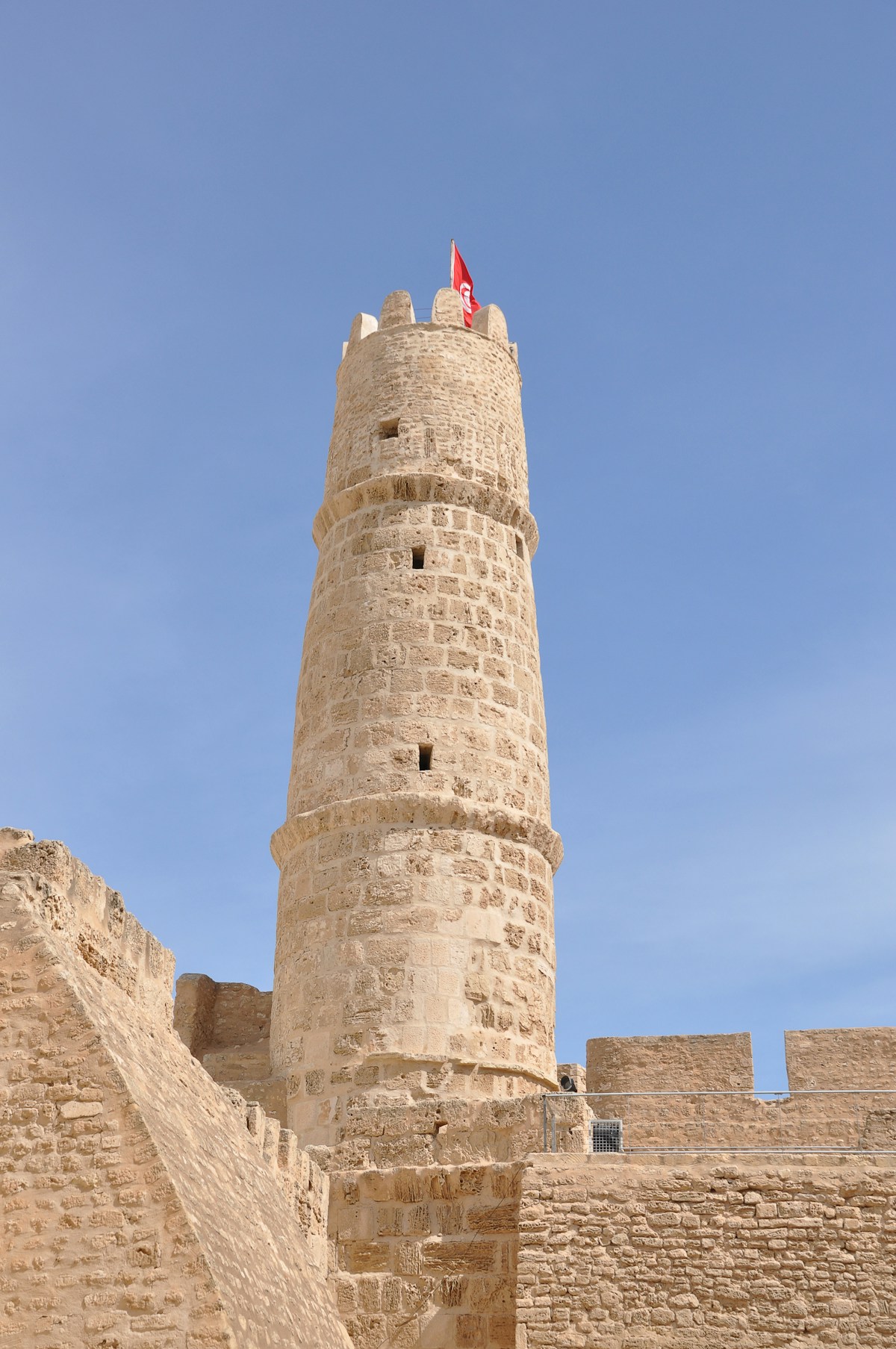
Monastir is one of Tunisia’s most rewarding coastal cities - compact enough to cover in a day or two but substantial enough to justify a longer stay. The Ribat fortress dominates the waterfront, the Bourguiba Mausoleum stands at the heart of the old city, and the beaches and marina make it easy to slow down between the sightseeing. It sees fewer independent visitors than Sousse to the north, which means the historic sites feel less crowded and the medina retains some genuine local atmosphere.
The Ribat of Monastir
The Ribat is the reason most visitors come to Monastir, and it delivers. Built in the late eighth century as a fortified monastery and coastal watchtower, it is one of the oldest and best-preserved ribats in the Islamic world. The main tower is intact and climbable - from the top, the views sweep across the medina rooftops, the Bourguiba Mausoleum, and the sea.
The Ribat has appeared in several film productions, most notably Monty Python’s Life of Brian (1979), which used the fortress as a stand-in for Jerusalem. Entry costs approximately 8 TND as of 2026, including access to the small museum inside that displays Islamic ceramics, coins, and calligraphy. Opening hours are roughly 8am to 6pm in summer, shorter in winter - confirm locally on arrival.
Bourguiba Mausoleum
The mausoleum of Habib Bourguiba, Tunisia’s first president and the man who led the country to independence from France in 1956, stands in the centre of Monastir’s cemetery district. The building is striking - a large golden dome flanked by two minarets, the whole complex surrounded by manicured gardens. Bourguiba was buried here after his death in 2000; other family members are interred in adjacent buildings.
Entry is free for the exterior and gardens; the interior of the mausoleum itself may require modest dress and occasional closure for private occasions. The surrounding cemetery, one of the largest in the region, is also historically significant and worth walking through.
Medina and Souks
Monastir’s medina is smaller and less labyrinthine than those of Tunis or Sousse, which makes it more approachable for visitors who find the larger medinas overwhelming. The covered souks sell the usual mix of textiles, ceramics, and silver jewellery - prices are negotiable and the atmosphere is less pressured than in the bigger tourist centres. The Great Mosque of Monastir, rebuilt in the ninth century on an earlier foundation, stands at the heart of the medina and is visually impressive from the outside.
Beaches
The main beach in Monastir city centre is small and convenient but backs onto the resort hotel strip. For a better experience, head to the Skanes area - roughly five kilometres north of the city centre - where broader sandy beaches front a cluster of four and five-star resorts. The water here is calm and clear outside peak summer months.
The Marina and Corniche
Monastir’s marina is one of the more pleasant public spaces on the central Tunisian coast — a well-maintained harbour with moored yachts, a paved corniche walk, and café terraces looking out to sea. The corniche path connects the marina to the city beach and runs for around a kilometre, with the Ribat visible at the far end. In the evenings the marina fills with local families and couples rather than tourists, which gives it a more authentic atmosphere than the Skanes resort strip.
Several cafés and casual restaurants line the marina promenade. A coffee or mint tea at one of the waterfront terraces costs approximately 3–5 TND; a cold Celtia beer runs around 8–10 TND.
Where to Stay in Monastir
For a curated selection of the best places to stay across different budgets, see our best hotels in Monastir guide.
Search hotels in Monastir on Booking.com
Iberostar Selection Kuriat Palace - A large five-star all-inclusive resort in Skanes, directly on the beach. Rates from approximately 350 TND per night as of 2026 in mid-season, lower in shoulder months. Good pools, multiple restaurants, and direct beach access. Iberostar Selection Kuriat Palace
Regency Hotel Monastir - A solid mid-range option in the city centre, closer to the Ribat and medina than the beach resorts. Rates typically from around 180 TND per night as of 2026. A practical base for visitors who prioritise sightseeing over beach time. Regency Hotel Monastir
Hotel Monastir Center - A budget-friendly option in the heart of the city. Basic rooms but a useful location for independent travellers. Rates from approximately 90 TND per night as of 2026. Hotel Monastir Center
The resort strip between Monastir and Skanes is dominated by all-inclusive packages, which suits package tour travellers but means independent travellers may find better value by looking at city-centre properties.
Where to Eat in Monastir
Restaurant de la Plage - On the seafront near the marina, serving freshly grilled fish and the standard Tunisian mezze of harissa, tuna salad, and brik. Fish main courses from approximately 35–55 TND as of 2026. Popular with locals at lunchtime.
Le Pirate - A marina-side restaurant with a slightly more polished presentation. Good for grilled seafood platters and a cold Celtia beer in the evening. Expect to pay approximately 50–70 TND per person including drinks as of 2026.
Café Sidi Bou Makhlouf - Not a restaurant but worth noting for mint tea and pastries after visiting the Ribat. Small, local, very inexpensive. Sits near the cemetery entrance.
For cheaper eating, the medina has several gargote (basic local eateries) serving couscous, Tunisian soup (lablabi), and sandwiches for well under 15 TND.
Getting to Monastir
From Tunis by train: SNCFT operates direct services on the Tunis–Sfax corridor that stop at Monastir. Journey time from Tunis is approximately 2 hours. Fares as of 2026 are approximately 15 TND in second class, 22 TND in first class. Trains depart from Tunis Ville station; check the SNCFT timetable as frequencies vary by season.
From Tunis by road: The AP1 motorway runs the length of the coast. Monastir is roughly a 2-hour drive from Tunis in normal traffic, 2.5 hours in summer. Car hire from Tunis is the most flexible option; see our getting around Tunisia guide for car hire tips. Compare car hire rates in Tunisia before you land to lock in better pricing than airport desks offer.
From Sousse: Sousse is 20 kilometres north of Monastir - an easy 25-minute drive or taxi ride (approximately 25–35 TND by taxi as of 2026). Louages (shared taxis) also run between the two cities from the Sousse louage station for a few dinars.
Monastir Airport: Monastir Habib Bourguiba International Airport (MIR) handles primarily charter traffic from European destinations, particularly UK and German operators. It is one of the main entry points for package tourists on the central coast. If your flight lands at Monastir, the city centre is only 8 kilometres from the terminal - a taxi costs approximately 15–20 TND as of 2026.
Getting Around Monastir
Monastir’s city centre is compact — the Ribat, mausoleum, medina, and marina are all within a 15-minute walk of each other. Most independent visitors cover the main sights on foot.
For the journey between the city centre and Skanes beach hotels, taxis are the most practical option. The fare runs approximately 10–15 TND as of 2026. From Monastir Airport to the city centre (8 kilometres), taxis cost approximately 15–20 TND; there is no reliable public bus connection between the airport and the main hotel strip, so most arrivals take a taxi.
The Sahel Metro (Réseau Ferroviaire Rapide du Sahel) light rail connects Monastir with Sousse and Mahdia — a cheap and useful option for day trips along the coast. A single ticket from Monastir to Sousse costs approximately 2–3 TND and the journey takes around 30 minutes. The Monastir station is centrally located near the port.
Day Trips from Monastir
Monastir pairs well with El Jem - the Roman amphitheatre at El Jem is one of Africa’s greatest ancient monuments and is just 60 kilometres south (around 50 minutes by road). Sousse is an easy 20-kilometre trip north. Kairouan, the holy city with its ninth-century Great Mosque, is roughly 60 kilometres inland and reachable in under an hour by car.
Best Time to Visit
April to June and September to October are the best months - warm enough for the beach, not oppressively hot, and less crowded than July and August. July and August are peak season: hotel rates rise sharply, beaches are crowded, and temperatures regularly exceed 35°C. November to March is quiet and mild, good for sightseeing with fewer tourists.
Monastir rewards the visitor who spends a night here rather than treating it as a day trip from Sousse. The evenings are calm, the restaurants fill with locals rather than tour groups, and the Ribat at dusk - when the day-trippers have left - is genuinely atmospheric.
For help deciding between Monastir and its coastal neighbours, see our Monastir vs Sousse guide and our Djerba vs Monastir comparison. For guided day trips from the coast, our Monastir tours guide covers the best options including El Jem visits, medina walks, and Kairouan circuits. Browse tours from Tunis that include Monastir and the central coast as part of a wider circuit.
Plan Your Trip
✈️ Book your flights to Tunisia 🛡️ Get travel insurance 📱 Stay connected with an eSIM 🚗 Rent a car