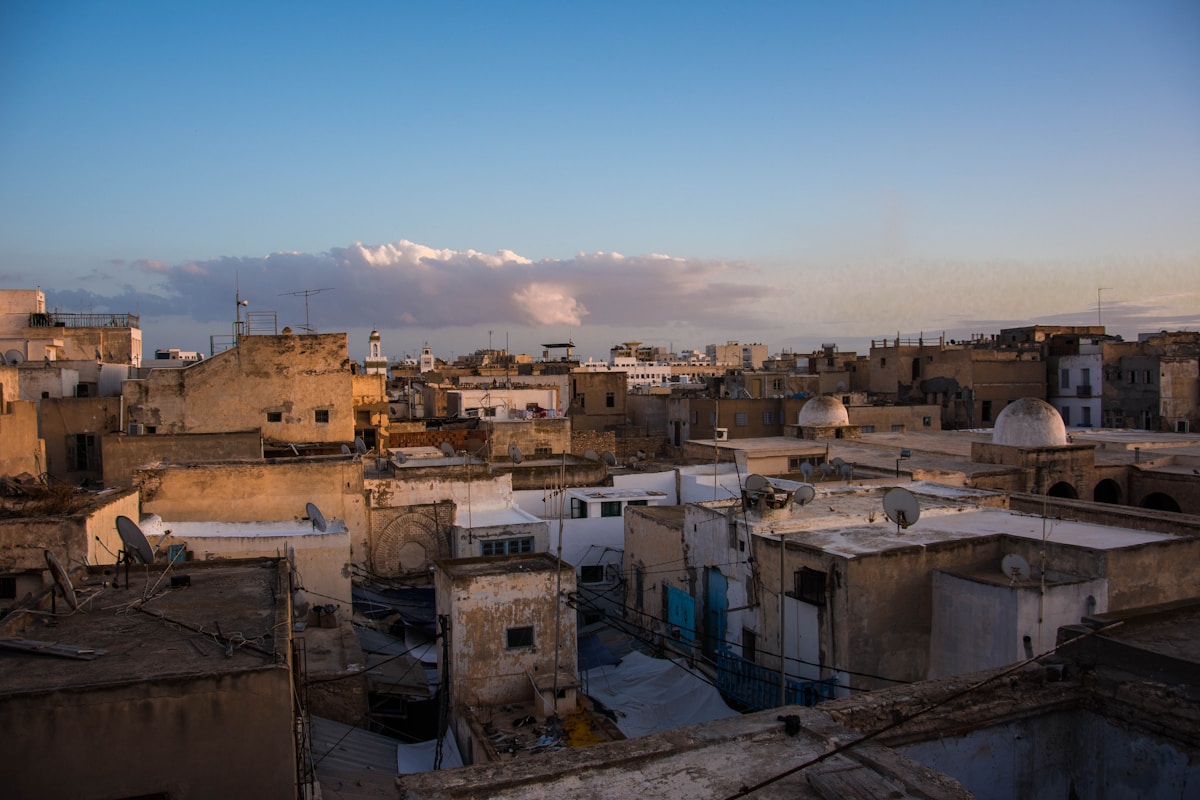
Sfax is Tunisia’s second city and one of the most important louage hubs in the country. Its station sits at a crossroads: routes run north to Sousse and Tunis, south to Gabès and the deep south, west to El Jem and Kairouan, and east toward the Kerkennah Islands ferry port. For travellers moving through central or southern Tunisia, Sfax is often a natural transfer point even if they do not stay here overnight.
The city itself has a reputation as a business and industrial hub — less visited than the beach resorts but with a well-preserved medina that rewards a few hours of exploration. The station is practical and busy, and services are more frequent than at smaller southern towns.
The Sfax louage station
The main louage station is located west of Sfax’s railway station, near the city centre. From the medina, it is around a 10-15 minute walk or a short taxi ride (3-5 TND). The station handles all major routes simultaneously, with separate bays for different directions.
On arrival in Sfax (whether from Tunis, Gabès, Kairouan, or El Jem), you will typically be set down at or near this station. Taxis from Sfax’s arrival points to the station are readily available and inexpensive.
English is rarely spoken at the station; French works well. Destination names alone — “Tunis”, “Sousse”, “Gabès”, “El Jem” — are enough to be directed to the right vehicle.
Routes from Sfax: overview
| Destination | Fare (TND) | Journey time | Notes |
|---|---|---|---|
| Tunis (direct) | 18-22 | ~3h30 | Via the A1 corridor; most frequent route |
| Sousse | 9-11 | ~1h30 | Connects to Monastir, Kairouan, Tunis |
| Gabès | 10-12 | ~1h30 | Gateway to Djerba, Matmata, Tataouine |
| El Jem | 6-7 | ~40 min | For the Roman amphitheatre |
| Kairouan | 16-18 | ~1.5-2h | Via the inland route |
| Monastir | 12-15 | ~2h | Often change at Sousse |
| Kerkennah ferry port | taxi, ~5 TND | ~15 min | For the Kerkennah Islands ferry |
Sfax to Tunis
The northbound Sfax–Tunis louage is one of the busiest long-haul routes in the network. Vehicles depart throughout the morning from the Sfax station. The route follows the A1 motorway north through Sousse and on to Tunis. Journey time is around 3 hours 30 minutes, fare 18-22 TND per seat.
Morning departures (before 10am) fill quickly; afternoon services are less frequent and can involve a longer wait. If you are heading to Tunis to catch a flight, add buffer time — the A1 can be slow through Sousse in peak hours.
See the Louage Tunis–Sfax guide for the complete route description and station details in Tunis.
Sfax to Sousse
Sousse is around 130 kilometres north of Sfax and one of the most frequently served routes from the Sfax station. Fare is approximately 9-11 TND, journey time around 1 hour 30 minutes. Vehicles run regularly from mid-morning.
From Sousse you can connect to Monastir (4-6 TND, 30-40 minutes), Kairouan (8-10 TND, 45 minutes to 1 hour), or catch an onward louage toward Tunis. Sousse’s louage station is outside the medina; allow a short taxi ride to reach the old town.
See the Louage Sousse–Monastir guide if that connection is relevant to your route.
Sfax to Gabès
Gabès is the essential southbound connection from Sfax and the staging point for all deep-south destinations. Fare is 10-12 TND, journey time around 1 hour 30 minutes. The road runs south through flat terrain with little of note en route — this leg is a transfer, not a sightseeing opportunity.
From Gabès you can connect to:
| Destination | Fare from Gabès | Time from Gabès |
|---|---|---|
| Djerba (via Jorf ferry) | 10-14 TND | ~1h15-1h30 |
| Matmata | 5-7 TND | ~45 min |
| Tataouine | 10-14 TND | ~1h15 |
| Médenine | 8-10 TND | ~1h |
Timing matters here. The Sfax–Gabès leg takes 1h30, so if you leave Sfax at 9am you arrive in Gabès by 10:30am — enough time to catch morning services to Matmata or Tataouine. Afternoon arrivals in Gabès risk missing the last louages to those southern destinations.
See the Gabès louage hub guide for the full list of connections from that station.
Sfax to El Jem
El Jem, home to one of the best-preserved Roman amphitheatres in the world, is around 65 kilometres northwest of Sfax. The louage takes around 40 minutes and costs 6-7 TND. This is the easiest and cheapest way to reach the site from Sfax — far more practical than trying to connect via Sousse or Kairouan.
Vehicles to El Jem depart from the Sfax station through the morning. El Jem itself is small — most visitors spend 2-3 hours at the amphitheatre and the small archaeological museum before returning. Return louages to Sfax are available from El Jem’s station through the afternoon.
See the Louage Sfax–El Jem guide for full details including the return journey.
Sfax to Kairouan
Kairouan, Tunisia’s most important Islamic city, is accessible from Sfax by louage on an inland route northwest. Fare is approximately 16-18 TND, journey time 1.5 to 2 hours. The route passes through relatively underpopulated agricultural land and is less scenic than the coastal corridor.
Kairouan is also well served from Sousse — if you are routing via the coast, it may be more practical to take a Sousse louage first, then connect to Kairouan from there. See the Louage Sousse–Kairouan guide for that option.
Sfax to the Kerkennah Islands
The Kerkennah Islands are reached by ferry from Sfax port. The Sfax–Kerkennah ferry runs multiple times daily (approximately 7am and 1pm for the main departures, with additional morning services in peak season). The crossing takes around 1 hour to Sidi Youssef on Kerkennah.
The ferry terminal is around 15 minutes from the Sfax louage station by taxi (approximately 5 TND). The ferry is run by CTN (Compagnie Tunisienne de Navigation) — tickets are purchased at the terminal and cost around 1-2 TND for foot passengers. For accommodation and practical details, see the Kerkennah Islands destination page.
Sfax as a base and destination
Most travellers pass through Sfax without stopping. That is a reasonable choice for a transit-focused itinerary, but the Sfax medina is one of the best-preserved and least touristy in Tunisia — authentic commercial activity, a functioning souk, well-maintained fortifications, and almost no carpet touts. It is worth two to three hours if your timing allows.
The Sfax Archaeological Museum, housed inside the old kasbah, holds a strong collection of Roman mosaics from the El Jem region. Entry costs around 5-8 TND as of 2026.
The city is primarily a commercial hub — Sfax produces most of Tunisia’s olive oil — so the local food culture is good. A lunch at one of the restaurants around the medina is an easy addition to a transit stop.
Search hotels in Sfax on Booking.com
Tips for the Sfax station
Use it as a southbound staging point. If you are heading from the coast to the deep south, stopping in Sfax to break the journey makes logistical sense. Leave Tunis early, arrive in Sfax by midday, have lunch in the medina, then continue to Gabès in the early afternoon.
Morning departures for long routes. The Tunis and Gabès services run most reliably in the morning. For El Jem, services run through mid-afternoon.
Confirm the via for northbound services. Most Sfax–Tunis louages go direct via the A1. Some older vehicles stop at Sousse. Confirm the route before boarding if you need to connect at Sousse specifically.
Taxis from the station to the medina are negotiated. Agree a fare (3-5 TND) before getting in, or use the meter if available.
For the full overview of how the louage system works in Tunisia, see the louage guide for Tunisia.
Plan Your Trip
🎟️ Tours in Sfax ✈️ Book your flights to Tunisia 🛡️ Get travel insurance 📱 Stay connected with an eSIM 🚗 Rent a car in Tunisia