Search hotels in Tabarka on Booking.com
Tabarka Tours & Activities
Browse guided tours and activities in Tabarka on GetYourGuide - verified operator listings including coral reef diving, boat excursions, and guided circuits of northern Tunisia.
The headline verified option is the Tabarka: Scuba Diving Experience by Boat - a guided coral reef dive from the marina suitable for certified divers, taking in the reef formations and marine life that make Tabarka the standout dive destination on the Tunisian coast.
Tabarka sits where the Kroumirie mountains meet the northwest coast - the greenest, most forested corner of Tunisia, and one of the most consistently undervisited. The combination of coral reef diving, cork oak hiking, Roman ruins, and a laid-back port town makes it a rewarding stop for travellers who want something genuinely different from the resort towns further east.
This page covers diving, hiking, day trips, and guided tours from Tabarka, with realistic prices in TND and practical transport notes.
Scuba Diving and Snorkelling
Tabarka is the best diving destination in Tunisia, and among the more rewarding in the western Mediterranean. The offshore reef has coral formations, sea fans, and a healthy marine population - grouper, moray eels, octopus, sea bream, and bass are common sightings. Visibility is generally good in spring and autumn (10–20 metres on clear days), dropping in summer when boat traffic and sirocco winds stir the water.
The Tabarka Scuba Diving Experience by Boat is the verified guided option - a boat dive on the reef system suitable for certified divers, departing from the marina.
Local dive centres in the marina area (as of 2026):
- Tabarka Diving Center: single dives from approximately 50–60 TND; PADI Open Water courses available
- Aquatica Diving: similar pricing; day packages for multiple dives include boat and equipment
The Galite Islands - a protected archipelago 60 km north of Tabarka - are the premium dive destination in Tunisian waters, with monk seal sightings documented in the area. Liveaboard dive trips to the Galites operate from Tabarka; ask at the marina dive centres for current availability and pricing (typically 400–700 TND for a full-day Galite excursion as of 2026).
Snorkelling is possible from the rocky beaches north of Tabarka town and around Les Aiguilles headland, where the reef begins close to shore. No guided tours needed - the water is accessible from shore at several points.
Kroumirie Hiking and Ain Draham
The hinterland directly behind Tabarka is unlike anywhere else in Tunisia. The Kroumirie mountains receive the highest rainfall in the country and support dense forests of cork oak and pine - green, cool, and genuinely wild. The contrast with the Saharan south is complete.
Ain Draham is the main base for forest walking, 26 km southeast of Tabarka at approximately 800 metres elevation. The town is small - a market, some guesthouses, a few restaurants - but the surroundings are the draw. Forest trails run through the cork oak into the higher ridges, with views south across the Tell Atlas.
The most popular walk is a forest loop from Ain Draham: approximately 8–12 km, 3–4 hours, following waymarked paths through cork oak and past a viewpoint over the Tell Atlas. Difficulty: moderate; proper walking shoes recommended. No formal guided tour infrastructure - ask at guesthouses in Ain Draham for current trail conditions.
Getting to Ain Draham from Tabarka:
- Car: 26 km on the GP17, approximately 30 minutes. The mountain road through the cork forests is scenic and in good condition
- Louage: shared taxis from Tabarka run when full; approximately 8–12 TND per person, 30–40 minutes
- Private taxi from Tabarka: approximately 30–45 TND each way as of 2026
Staying in Ain Draham: Several small guesthouses operate in town from approximately 80–150 TND per night - a good option for an early morning start on the forest trails.
Day Trip to Bulla Regia
Bulla Regia is the most impressive archaeological site within day-trip distance of Tabarka, and one of the most unusual Roman sites anywhere in the world. Located near Jendouba, approximately 70 km southeast, it is known for its underground villas - wealthy residents of the Roman town built their reception rooms partly below ground level to escape the North African summer heat, and these subterranean chambers survive with their mosaic floors intact.
What to see:
- House of the Hunt: the best-preserved of the underground houses, with an in-situ hunting mosaic across the floor of the underground triclinium
- House of Amphitrite: named for the mosaic depicting the sea goddess in the subterranean reception room
- House of the Peacock and House of Fishing: additional underground complexes with mosaic fragments
- Above-ground ruins: forum, theatre, baths, and the Apollo temple remain visible at surface level
Entry: approximately 8 TND as of 2026. Open Tuesday–Sunday, 08:00–18:00 (summer), 08:30–17:00 (winter). Allow 2–3 hours for a thorough visit.
Getting there: Car is the practical option - no direct public transport runs Tabarka to Bulla Regia. The GP17 to Jendouba (about 55 km), then 7 km on a local road to the site. Hire car from Tabarka (see car rental) or a private taxi (approximately 150–200 TND return from Tabarka, including wait time, as of 2026). Many visitors combine Bulla Regia with the drive through Ain Draham in a single loop.
The Genoese Fort
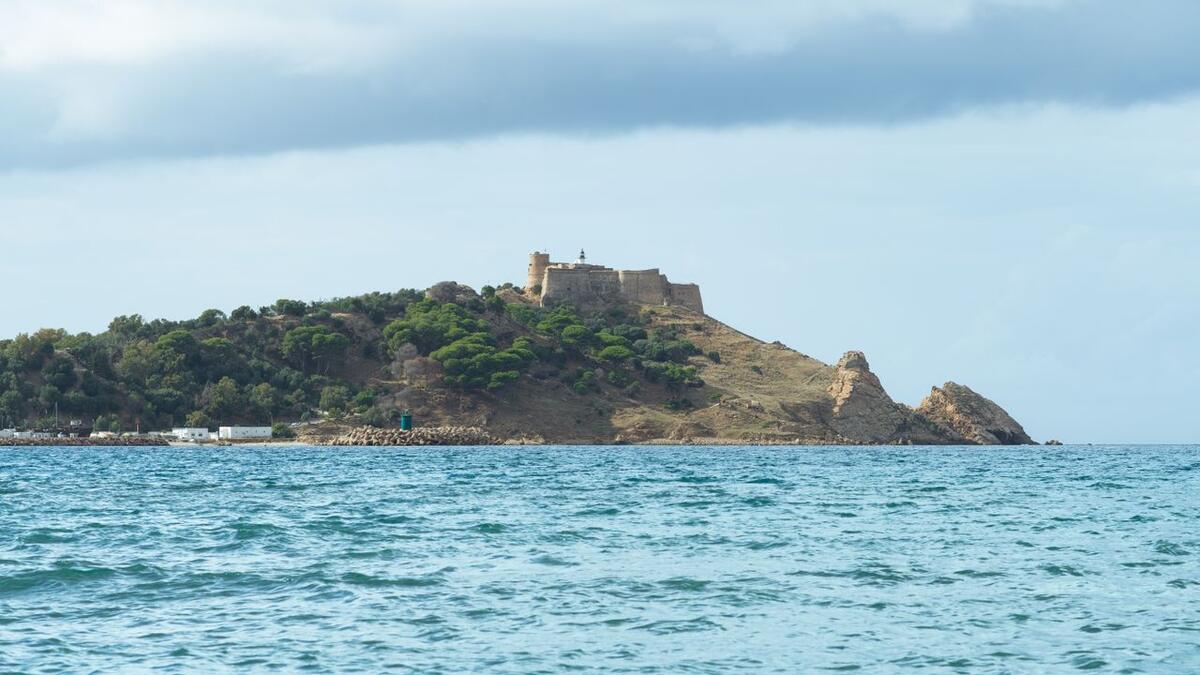
Tabarka’s defining landmark is the 16th-century Genoese fort on its rocky offshore island, reached by a causeway from the harbour. The Lomellini family of Genoa built the original fortification after acquiring coral-fishing rights from the Spanish crown - an early modern commercial outpost that later passed to Ottoman control.
The fort is self-guided. The interior has some interpretation covering its history, and the rampart walls give wide views along the coastline and back to the Kroumirie mountains. Entry: approximately 5 TND as of 2026. The walk along the causeway and around the rock takes 30–45 minutes.
Les Aiguilles - a series of red sandstone pinnacles on the headland east of Tabarka - are a 20-minute walk from town along the coast path, and good for snorkelling around their base.
The Tabarka Jazz Festival
Every July, Tabarka hosts an international jazz festival that has been running for over 30 years, using venues including the Roman theatre at Bulla Regia and stages in the town itself. The festival draws international and North African artists and runs for approximately one week.
During the festival week, Tabarka hotel prices increase significantly and accommodation books out months in advance. If the festival is the reason for your visit, reserve early; if you want quieter conditions, avoid late July.
Getting to Tabarka
By car from Tunis: GP7 via Jendouba, approximately 3 hours (175 km). The final stretch through the Kroumirie mountains is scenic.
By bus from Tunis: Tunis Bab Alioua terminal, approximately 3.5 hours. Fares approximately 12–15 TND as of 2026.
From Ain Draham: Louages run several times daily, approximately 30 minutes, 8–12 TND per person.
Search guided tours and activities in Tabarka on GetYourGuide. For broader northern Tunisia planning, our 10-day Tunisia itinerary includes Tabarka in a full northern loop. Ensure you have travel insurance in place before any diving or hiking activities.
Plan Your Trip
Book your flights to Tunisia Get travel insurance Stay connected with an eSIM Rent a car