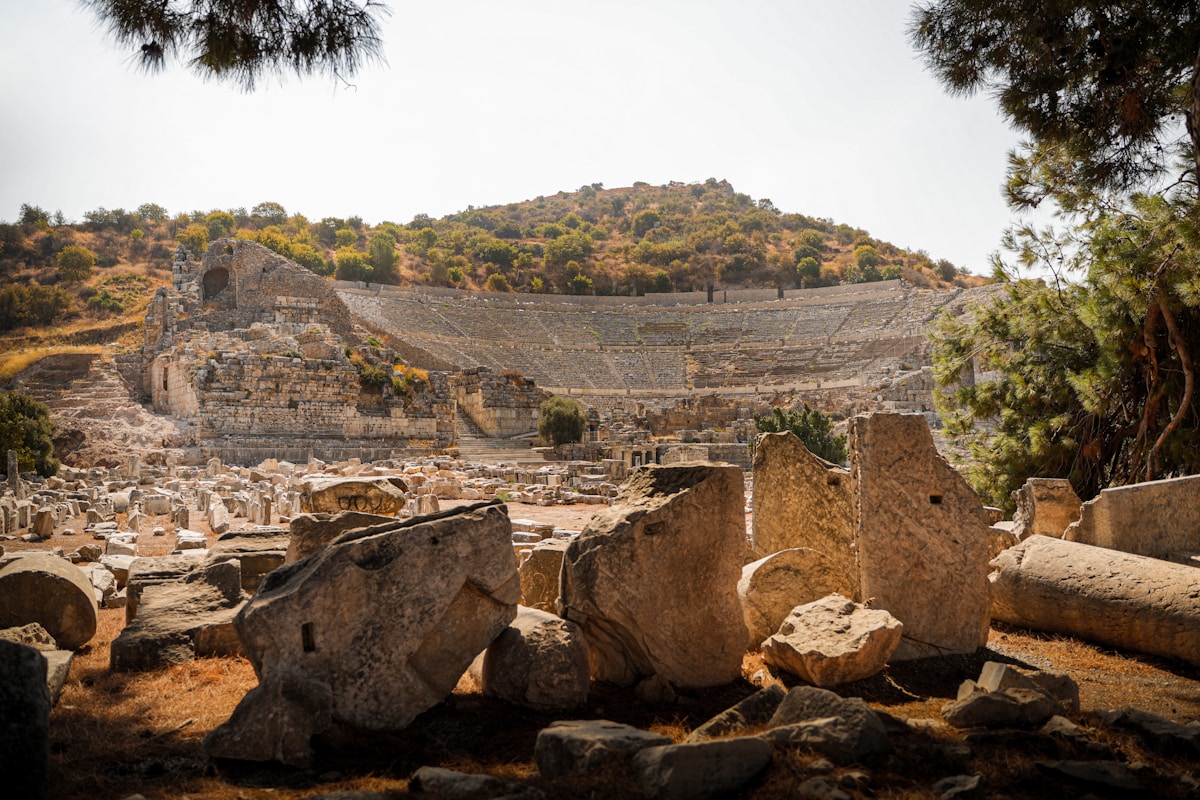
Tunisia has 8 UNESCO World Heritage Sites spread across the north and centre of the country. They span three distinct periods: the Punic and Numidian era before Rome, the Roman imperial period from the 2nd to 5th centuries CE, and the Islamic era from the 7th century onward. No other country in North Africa has this concentration of inscribed sites across such different civilisations.
This guide covers all 8 sites with entry fees, practical visit information, and links to detailed guides for the most-visited locations.
1. Medina of Tunis (inscribed 1979)
The Medina of Tunis is one of the oldest and best-preserved medieval cities in the Arab world, with over 700 registered monuments including palaces, mosques, mausoleums, and hammams. The Great Mosque of Zitouna at its heart dates from 703 CE and its minaret is visible from most of the medina.
Walking the medina is free. The Zitouna Mosque courtyard and hypostyle hall are open to non-Muslim visitors for approximately 3 TND. The souks around it, selling carpets, spices, and crafts, are free to browse.
The medina is a 15-minute walk from Tunis Ville train station or accessible via metro line 1. Full guide: Medina of Tunis.
2. El Jem Amphitheatre (inscribed 1979)
El Jem holds the third-largest Roman amphitheatre ever built, with a capacity of approximately 35,000 spectators. It stands in a small market town in central Tunisia, 220 km south of Tunis, and is remarkable for surviving to almost its full original height on three sides.
Entry (as of 2026): approximately 12 TND per adult (includes the archaeological museum next door)
Getting there: train from Tunis (2.5 hours) or Sousse (1 hour)
Full visitor guide: El Jem amphitheatre. For guided tours: El Jem tours.
3. Ichkeul National Park (inscribed 1980)
Ichkeul is a wetland ecosystem in northwest Tunisia, centred on Lake Ichkeul and the marshes surrounding it. The site is a critical stopover for hundreds of thousands of migratory birds travelling between Europe and sub-Saharan Africa, including thousands of ducks, flamingos, storks, and waders. In winter the lake can hold over 200,000 waterbirds.
Entry (as of 2026): approximately 7 TND per adult
Getting there: approximately 30 km west of Bizerte; car or organised tour required as no public transport serves the park entrance
The best time to visit is late autumn to early spring when migratory populations are at peak numbers. Summer visits see much lower bird activity.
4. Punic Town of Kerkuane (inscribed 1985)
Kerkuane, on the Cap Bon peninsula, is the only Punic city to have survived substantially intact. Other Punic settlements in Tunisia were either built over by Roman cities or destroyed in the wars between Rome and Carthage. Kerkuane was abandoned in the 3rd century BCE and never reoccupied, preserving its street plan, house layouts, and bath complexes to a degree found nowhere else.
Entry (as of 2026): approximately 8 TND per adult
Getting there: approximately 65 km northeast of Tunis via Nabeul; reachable by louage toward Kelibia with a short taxi transfer, or by car
The site has a small museum containing objects excavated on site including jewellery, household items, and examples of the distinctive Punic bathtubs found in nearly every house.
5. Kairouan (inscribed 1988)
Kairouan is Africa’s oldest Arab city and one of Islam’s most significant, founded in 670 CE. The city’s status as a place of pilgrimage means it has been continuously maintained and expanded for over 1,300 years. Its medieval core contains the Great Mosque of Uqba (one of the oldest mosques in the world still in active use), the Aghlabid Basins (9th-century water storage cisterns), the Zaouia of Sidi Sahbi, and one of the most complete Arab medinas in North Africa.
Entry: the medina is free to walk; Great Mosque courtyard approximately 3 TND for non-Muslims; Aghlabid Basins approximately 3 TND
Getting there: direct louage from Tunis Bab Alioua station (approximately 1.5 hours) or from Sousse
Full visitor guide: Things to do in Kairouan. For guided tours and operators: Kairouan tours.
6. Medina of Sousse (inscribed 1988)
Sousse’s medina is one of the best-preserved 9th-century Islamic urban ensembles in North Africa. Its ribat (fortified monastery and lookout post) dates from 821 CE and offers rooftop views over the medina and down to the sea. The Great Mosque dates from the same period and follows a simpler form than later Tunisian mosques.
Entry: ribat approximately 4 to 5 TND; Great Mosque approximately 2 to 3 TND for non-Muslims
Getting there: train from Tunis (2 hours) or from Sfax and El Jem
Full guide: Sousse activities and medina.
7. Medina of Sfax (inscribed 1988)
Sfax is Tunisia’s second city and its medina is among the most intact medieval Arab cities in the country. Unlike Tunis and Sousse, Sfax’s medina functions primarily for local residents rather than tourism, and its streets see far fewer visitors. The Great Mosque dates from the 9th century; the medina walls are among the best-preserved in Tunisia.
Entry: walking the medina is free; Great Mosque is closed to non-Muslims
Getting there: train from Tunis (3 hours) or from Sousse (1.5 hours)
Full guide: Things to do in Sfax.
8. Dougga (Thugga) (inscribed 1997)
Dougga is the most complete surviving Roman city in North Africa. It sits on a hillside in northwest Tunisia above the Medjerda valley and covers approximately 75 hectares. Its main monuments include the Capitol temple (166 CE), a Roman theatre with a 3,500-person capacity, the forum, several bathhouses, and a Numidian mausoleum predating Roman occupation.
Entry (as of 2026): approximately 8 TND per adult
Getting there: no direct public transport; car or guided tour from Tunis (2 hours)
Full visitor guide: Dougga things to do. For guided tours: Dougga tours.
Planning a UNESCO Heritage Circuit
Tunisia’s 8 UNESCO sites divide naturally into regional groupings:
Tunis base (day trips):
- Medina of Tunis (walkable from the city)
- Dougga (2 hours northwest by car)
- Bulla Regia (not UNESCO listed, but pairs well with Dougga)
Central Tunisia circuit:
- Kairouan (1.5 hours from Tunis or Sousse)
- El Jem (2.5 hours from Tunis; 1 hour from Sousse)
- Medina of Sfax (1 hour south of El Jem)
Coast and Cap Bon:
- Medina of Sousse (2 hours from Tunis)
- Kerkuane (65 km from Tunis)
North:
- Ichkeul National Park (near Bizerte, 2 hours from Tunis)
A realistic circuit covering all 8 inscribed sites requires a minimum of 5 to 6 days. With a hire car, 7 to 8 days allows comfortable pacing without rushing. See our 7-day Tunisia itinerary and 10-day Tunisia itinerary for suggested routes that include several of these sites.
Guided Tours for the UNESCO Sites
For visitors who prefer guided visits, several operators based in Tunis and Sousse offer day trips and multi-day circuits covering the main sites. Search GetYourGuide for English-speaking guides for El Jem, Kairouan, and Dougga specifically. Group day trips are more cost-effective for individual travellers; private tours give more flexibility on timing and stops.
For the Medina of Tunis, walking tours with local guides are bookable directly on site and give context on architecture, history, and craftwork that is difficult to find in guidebooks.
Book Your Trip
Flights — search and compare on Aviasales eSIM — stay connected with Airalo Travel insurance — get covered with EKTA Airport transfers — book with Kiwitaxi Car rental — compare with GetRentaCar Hotels — compare and book accommodation on Booking.com Tours and activities — browse GetYourGuide