Mahdia’s sights are concentrated on a small cape, so you can see most of them on foot in a single day. The route below runs from the medina gate to the tip of the peninsula and back along the sea. For background on the town, our Mahdia travel guide covers history, seasons and getting there.
1. Skifa el-Kahla and the medina
The Skifa el-Kahla (the “Dark Gate”) is the main entrance to the old town and the natural place to start. The gatehouse follows the plan of the original Fatimid gate, although the present structure was rebuilt in the 16th century. Walk through its vaulted passage and you are in the medina’s main street, lined with cafés, small shops and craft workshops.
Mahdia has a long weaving tradition, and you can still see looms working in some of the lanes. Prices in the medina are lower and the pressure to buy is lighter than in Tunis or Sousse. Next to the gate, a small museum displays Roman and Byzantine mosaics, together with objects from the Fatimid and Zirid periods. Check opening hours on arrival, as they vary by season and day.
2. The Great Mosque
Founded in the early 10th century by the first Fatimid caliph, Ubayd Allah al-Mahdi, the Great Mosque is one of the oldest Fatimid monuments in North Africa. Its massive plain entrance portal is the most distinctive feature. The building was reconstructed in the 20th century on its original plan after centuries of damage. Non-Muslim visitors are usually limited to viewing the exterior and courtyard, so ask politely before entering and dress modestly.
3. Borj el Kebir
At the high point of the cape, Borj el Kebir is a substantial fortress built in the late 16th century over earlier foundations. Its thick walls look straight down on the sea. A small entry fee applies, usually a few dinars as of 2026. Walk the ramparts for the best views of the medina roofs, the fishing boats and the long beaches to the north. Allow 30-45 minutes.
4. The Fatimid port
On the cape’s north shore, a rectangular basin was carved into the rock to shelter the Fatimid fleet. Some historians suggest it may reflect earlier Phoenician or Carthaginian use. It is a short walk from the fortress and free to view. The port is easiest to understand from the nearby wall, where you can see the cut channel opening to the sea.
5. Cap d’Afrique, the lighthouse and the cemetery
The tip of the cape is open and exposed. A red and white lighthouse stands among the white-domed tombs of the old cemetery, and the walk out along the rocks is the best sunset spot in town. Wear sturdy shoes, because the ground is uneven. Photographers will appreciate the contrast of whitewashed walls, rock and sea.
6. The fishing port
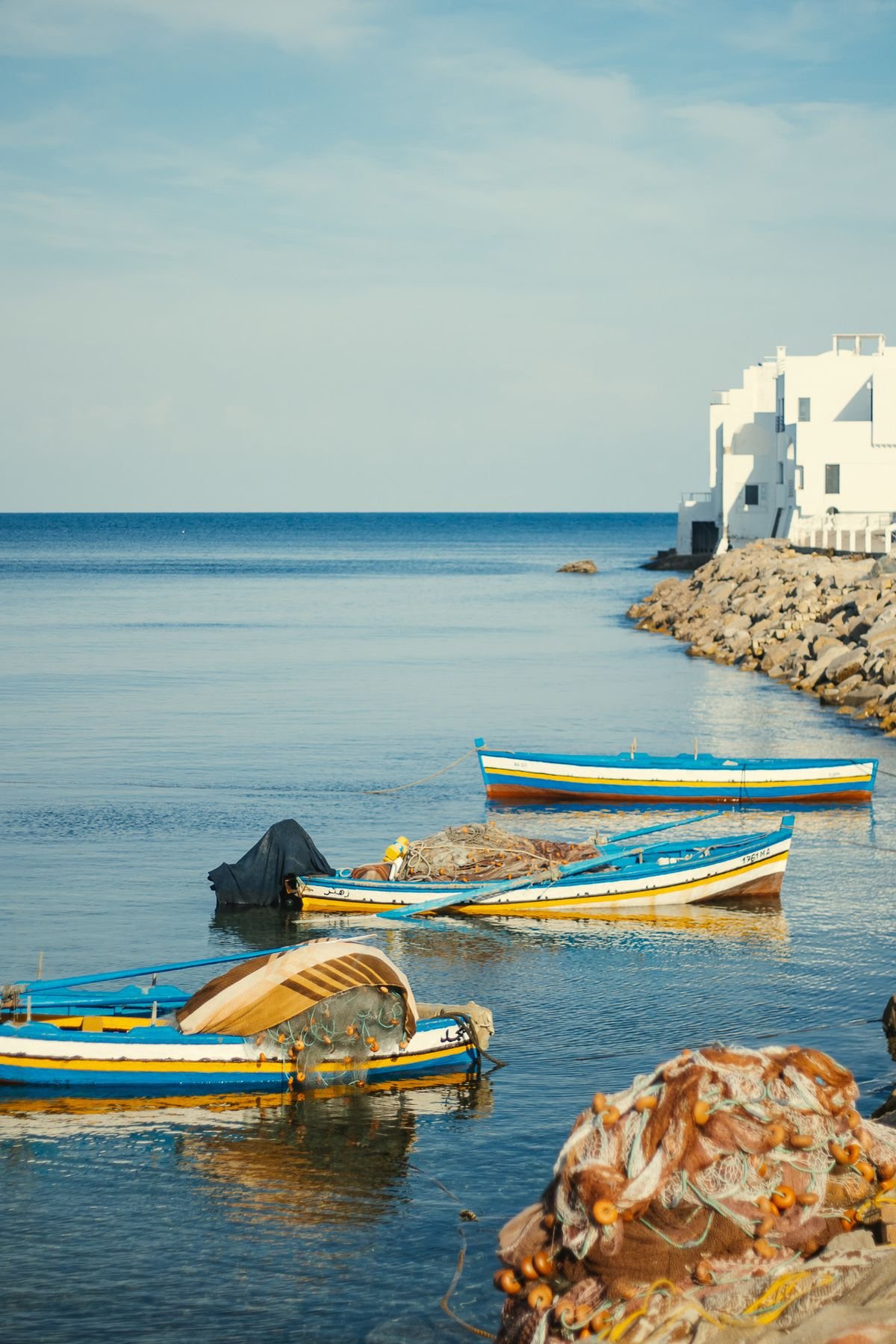
Mahdia is still an active fishing harbour. Blue, white and yellow boats come in during the afternoon, and the seafood stalls and restaurants nearby serve the catch. Expect to pay around 25-45 TND per person for a fish meal as of 2026. Order by weight and agree the price first.
7. Beaches and water sports
North of the cape, long sandy beaches stretch toward the hotel zone. The water is clean and shallow, which suits families. Public beach access is free, though loungers and umbrellas are charged by the day. Windy conditions make the coast a popular spot for kitesurfing, and schools in the hotel area offer lessons and equipment hire. Visit between late May and mid-October for the best sea temperatures.
If you want to base yourself by the beach, our guide to the best hotels in Mahdia lists the resort and medina options, and you can compare Mahdia hotels on Booking.com.
Day trips from Mahdia
El Jem
The amphitheatre at El Jem is about 35 km inland, roughly 40 minutes by car. It is Tunisia’s finest Roman monument and easily combined with a morning in Mahdia. See our things to do in El Jem and El Jem guide. A guided El Jem tour is useful if you have no car.
Monastir
The Ribat, Bourguiba Mausoleum and marina are about 40 km north. Our things to do in Monastir page has a half-day route. The Monastir tours page lists guided options.
Sousse
Sousse’s medina, kasbah and seafront are about an hour north. See Sousse for a full guide, and our Sousse to Monastir louage guide for how shared taxis work on this coast.
For all organised options in the region, browse tours near Mahdia on GetYourGuide. Most start from Monastir or Sousse.
A one-day Mahdia route
- Morning. Arrive by louage or taxi, walk through Skifa el-Kahla, browse the medina and see the Great Mosque.
- Late morning. Climb to Borj el Kebir and the ramparts.
- Midday. Visit the Fatimid port, then lunch at a harbour-side restaurant.
- Afternoon. Walk to the lighthouse and cemetery, then take a swim or stroll on the northern beach.
- Evening. Return by louage or taxi, or stay for sunset on the cape.
Practical tips
- Timing. Go early in summer. The cape has little shade between noon and 4pm.
- Cash. Bring small dinar notes for entry fees, louages and cafés.
- Dress. Cover shoulders and knees in the medina and around religious buildings.
- Transport. Louages are cheapest, but the beach hotels are 10 minutes by taxi from the medina, so ask your hotel for a fair fare.
- Official information. Discover Tunisia is the national tourism office’s site and lists regional events and sites.
Prices are approximate as of 2026 and can change.