The 8 best Tunisian dishes to try are brik, couscous, lablabi, ojja, fricassé, mechouia salad, kafteji and bambalouni. Most cost a few dinars from a street stall or small cafe. Almost all use harissa, so ask for it on the side if you prefer less heat.
Tunisian cooking blends Berber, Arab, Ottoman, French and Italian influences, and the result is bolder than most of North Africa. This list focuses on the dishes we would send a first-time visitor to find, with what to expect and where. For the wider picture, see our Tunisian food guide.
1. Brik: the crisp egg pastry
Brik is a thin pastry sheet folded round a raw egg, tuna, capers and parsley, then deep-fried until crisp. The trick is to bite from the corner so the yolk stays runny. It is served as a starter at almost every restaurant and iftar table.
Price: approximately 3 to 6 TND as of 2026. Where: any local restaurant, and street stalls in the Tunis medina. Squeeze lemon over it before the first bite.
2. Couscous: the national dish
Tunisian couscous is steamed semolina with a broth of tomato, chickpeas and vegetables, topped with lamb, chicken or fish. On the coast, couscous with fish is the standard Friday lunch. The broth is brick-red and noticeably hot.
Price: approximately 12 to 25 TND for a main course. Where: family restaurants in Sfax, Sousse and Tunis. Our best restaurants in Tunis and best restaurants in Sousse guides name places to start.
3. Lablabi: the chickpea soup breakfast
Lablabi is a garlicky chickpea soup poured over stale bread, finished with cumin, harissa, olive oil and often a soft-poached egg and tuna. It is workers’ food, eaten at counters from early morning, and it is very filling.
Price: approximately 3 to 6 TND as of 2026. Where: small lablabi shops in medinas, especially in Tunis and Sfax. Eat early, since many close by lunchtime.
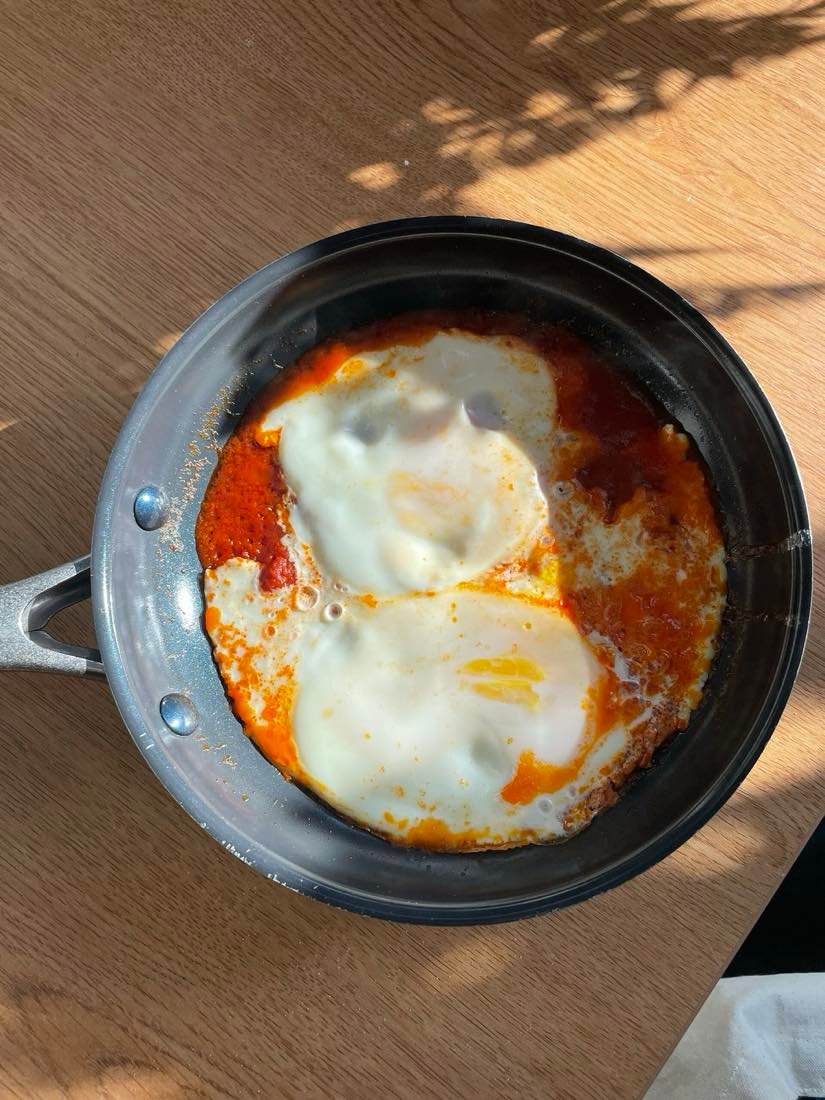
4. Ojja: eggs in spicy tomato sauce
Ojja is eggs cracked into a bubbling sauce of tomato, peppers and harissa, usually with merguez sausage or prawns. It is a vegetarian-friendly option if you order it plain, and one of the best-value hot dishes.
Price: approximately 8 to 15 TND. Where: the coast, especially Hammamet and Djerba. Our best restaurants in Djerba lists places that serve it well.
5. Fricassé: the fried sandwich
Fricassé is a small fried bread roll stuffed with tuna, egg, olives, potato and harissa. It is the standard cheap street snack, eaten on a walk around the beach or medina.
Price: approximately 1.5 to 3 TND as of 2026. Where: bakeries and stalls near beaches in Hammamet, Sousse and Monastir. Order it “sans harissa” if you do not want the heat.
6. Mechouia salad: grilled peppers and tomato
Mechouia is a salad of charred peppers and tomatoes, mashed with garlic, olive oil and caraway, and often served with tuna and a boiled egg. It is served cold with bread and is a staple starter.
Price: approximately 4 to 8 TND. Where: almost any restaurant. It is one of the best choices for vegetarians if you ask for it without tuna.
7. Kafteji: fried vegetables with egg
Kafteji is a mix of fried peppers, potatoes, courgettes and pumpkin, chopped finely with eggs and spices. It is a specialty of Tunis and the northeast, usually served in small cafes.
Price: approximately 5 to 10 TND. Where: small cafes in the Tunis medina. A food tour in Tunis is a good way to try it with a local guide.
8. Bambalouni: the Tunisian doughnut
Bambalouni is a fried ring of dough, rolled in sugar and eaten hot, typically at breakfast or from beach stalls. It is the most popular street sweet and a good way to end any meal.
Price: about 1 to 2 TND as of 2026. Where: beach stalls in Sousse, Hammamet and Monastir. Nabeul, the harissa and pottery town, is also known for its sweet stalls; see our Nabeul guide.
Tips for ordering
Ask for harissa on the side, drink bottled water and eat where locals queue. During Ramadan, daytime dining is limited outside tourist zones, which our Ramadan in Tunisia guide explains. To try several dishes in one go, book a Tunis food and culture tour. You can also look at Tunisia tours that include local meals.
Photo: Una723 / Wikimedia Commons, CC BY 4.0.
